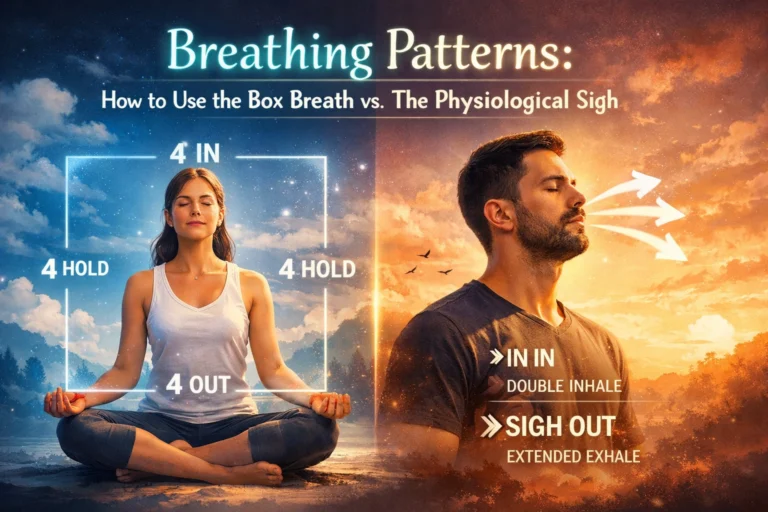
By 2026, the concept of "biohacking" has moved from the fringes of Silicon Valley into the daily routines of anyone looking to survive a high-stress world. While we often focus on expensive supplements or high-tech wearables, the most potent tool for regulating your internal state is something you do approximately 22,000 times a day: breathing.
However, not all breaths are created equal. In the realm of performance psychology and neuroscience, two specific patterns have emerged as the "Gold Standards" for nervous system regulation: Box Breathing and the Physiological Sigh.
This guide provides a technical deep dive into the mechanics, benefits, and data-driven differences between these two protocols so you can deploy them with clinical precision.
The Biological Foundation: The Autonomic Nervous System (ANS)
To understand why these breathing patterns work, we must first look at the "hardware" they manipulate. Your Autonomic Nervous System is divided into two main branches:
- The Sympathetic Nervous System (SNS): The "Gas Pedal." It triggers the fight-or-flight response, increasing heart rate, cortisol, and alertness.
- The Parasympathetic Nervous System (PNS): The "Brake." It triggers the rest-and-digest response, lowering heart rate and promoting cellular repair.
Breathing is the only autonomic function that is both unconscious and under direct voluntary control. By changing the depth, rhythm, and ratio of your breath, you are essentially "hacking" the Vagus nerve to send a signal to your brain that it is safe to downregulate.
Deep Dive 1: Box Breathing (Square Breathing)
Box Breathing gained mainstream fame through its use by US Navy SEALs and elite athletes. It is a symmetrical breathing pattern designed for sustained calm and heightened focus under extreme pressure.
The Technical Mechanism
Box Breathing works by balancing the levels of oxygen ($O_2$) and carbon dioxide ($CO_2$) in the blood. When you hold your breath (the "retention" phase), you allow a slight buildup of $CO_2$. This isn't dangerous; rather, it triggers the "Bohr Effect," which helps release oxygen from hemoglobin into your tissues and brain more efficiently.

How to Perform Box Breathing
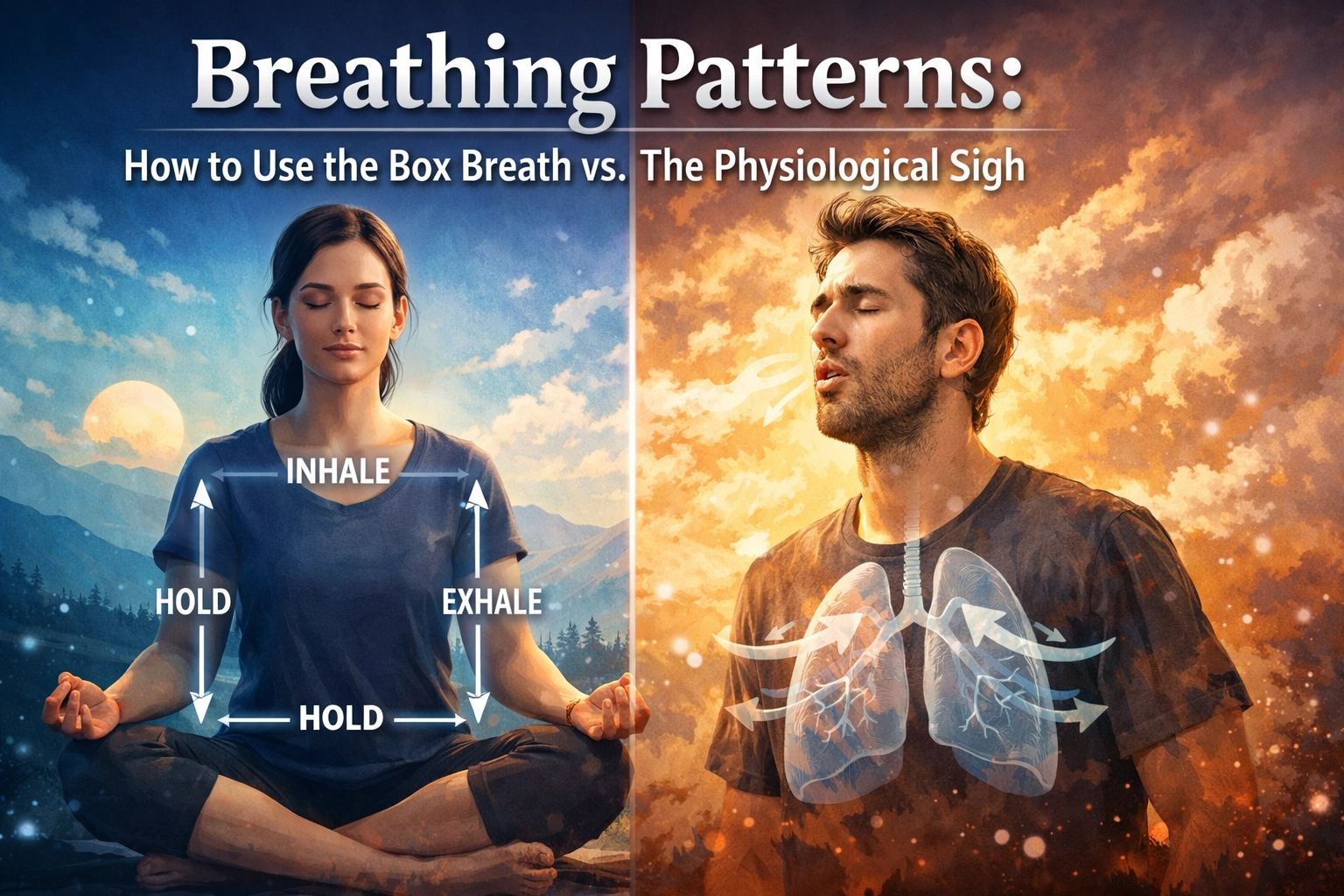
The protocol follows a 4-part square:
- Inhale (4 seconds): Breathe in slowly through the nose, filling the belly.
- Hold (4 seconds): Keep the air in without straining your throat.
- Exhale (4 seconds): Release the air smoothly through the mouth or nose.
- Hold (4 seconds): Stay empty before the next inhale.
Data-Driven Benefits
- Cortisol Reduction: A 2023 study published in Frontiers in Psychology showed that just 5 minutes of rhythmic box breathing significantly lowered salivary cortisol levels compared to a control group.
- Cognitive Enhancement: By delivering steady oxygen to the prefrontal cortex, box breathing prevents the "amygdala hijack," allowing for better decision-making during crises.
- HRV Improvement: Consistent practice increases Heart Rate Variability (HRV), a primary marker of resilience and longevity.
Deep Dive 2: The Physiological Sigh
While Box Breathing is about sustained stability, the Physiological Sigh is about immediate relief. Popularized in recent years by Stanford neurobiologist Dr. Andrew Huberman, this is a biological reflex humans (and dogs) perform naturally during sleep or after crying.
The Technical Mechanism
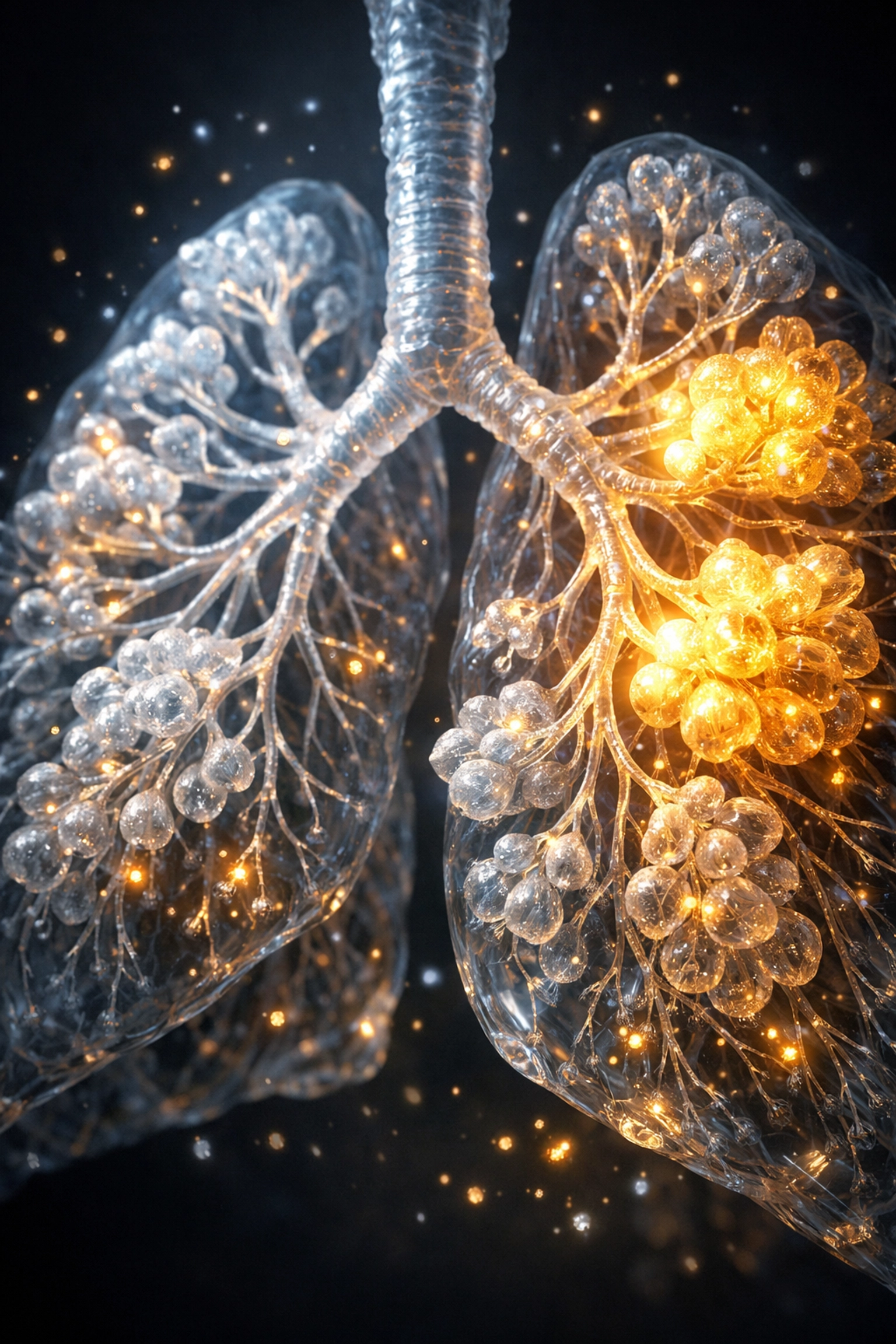
The secret of the Physiological Sigh lies in the Alveoli: the tiny air sacs in your lungs where gas exchange happens. Under stress, these sacs can collapse or "deflate" like a wet balloon. This reduces the surface area available for offloading $CO_2$.
The "double inhale" of the physiological sigh uses a second, shorter breath to pop those collapsed alveoli back open. The subsequent long, slow exhale then offloads a massive amount of $CO_2$ at once, signaling the brain's "calm down" center (the parafacial nucleus) to drop the heart rate almost instantly.
How to Perform the Physiological Sigh
- Inhale: Take a deep breath in through your nose.
- Second Inhale: At the very top, take another sharp, short sniff to max out lung capacity.
- Extended Exhale: Breathe out through your mouth very slowly, making the exhale significantly longer than the inhale.
Data-Driven Benefits
- Rapid De-stressing: Research from the Huberman Lab (2023/2024) indicates that the physiological sigh is the fastest known way to lower autonomic arousal in real-time.
- CO2 Offloading: It is 20-30% more effective at lowering carbon dioxide levels in the blood than a standard deep breath.
- Heart Rate Deceleration: The long exhale stimulates the vagus nerve to release acetylcholine, which slows the sinoatrial node (the heart's pacemaker).
Box Breathing vs. Physiological Sigh: A Direct Comparison
Choosing the right tool depends on your specific needs at the moment. Use the table below to determine which protocol fits your 2026 wellness goals.
| Feature | Box Breathing | Physiological Sigh |
|---|---|---|
| Primary Goal | Sustained focus & stability | Immediate stress reduction |
| Key Mechanism | $CO_2$ tolerance & rhythm | Alveoli reinflation & $CO_2$ offloading |
| Best Use Case | Before a meeting or workout | During a panic attack or mid-argument |
| Time Required | 3–5 minutes | 1–3 breaths (30 seconds) |
| Nervous System | Balances SNS and PNS | Aggressively activates PNS |
| Difficulty | Moderate (requires counting) | Low (intuitive reflex) |
Advanced 2026 Strategy: The "Breathwork Toolkit"
To truly optimize your healthspan, you shouldn't just pick one. You should integrate both into a daily "Nervous System Regulation" toolkit.
1. The Morning "Primer" (Box Breathing)
Upon waking, your cortisol is naturally high (the Cortisol Awakening Response). Use 5 minutes of Box Breathing to channel that energy into focused productivity rather than scattered anxiety.
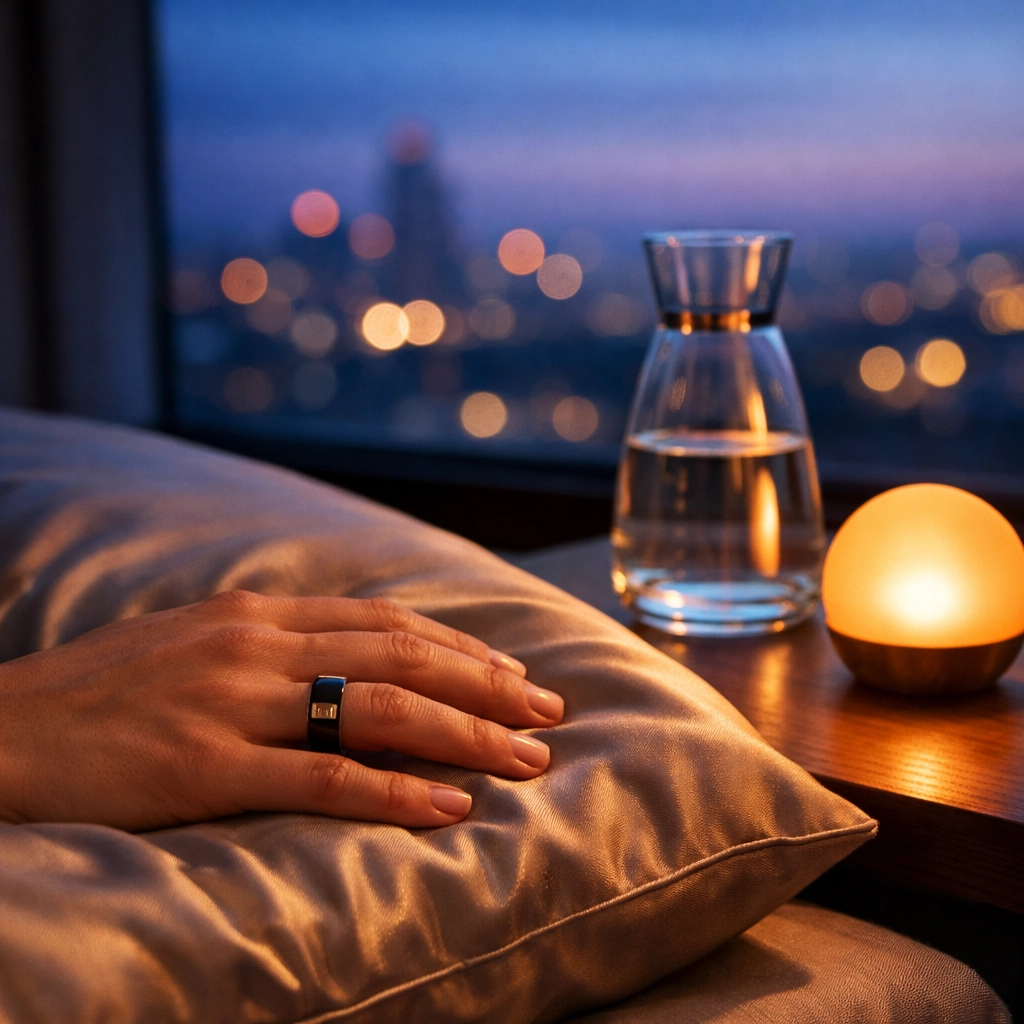
- Tip: Use a wearable like an Oura Ring or Apple Watch to track your HRV during this session. You should see a steady upward trend over 4 weeks.
2. The Mid-Day "Reset" (Physiological Sigh)
Whenever you feel that "tight chest" sensation after a flurry of emails or a stressful commute, perform 3 rounds of the Physiological Sigh.
- Tip: Do this while standing. The vertical alignment of the spine allows the diaphragm to move more freely, enhancing the $CO_2$ offloading effect.
3. The Evening "Wind Down" (Extended Exhales)
While both techniques are great, leaning toward the Physiological Sigh’s long exhale is superior for sleep. As you lie in bed, focus on exhales that are twice as long as your inhales to prepare the brain for Delta-wave sleep.
Common Pitfalls and How to Avoid Them
Even "simple" breathing can be done incorrectly. Watch out for these common errors:
- Chest Breathing: If your shoulders move up toward your ears when you inhale, you are chest breathing. This actually increases stress. Focus on "diaphragmatic breathing," where your lower ribs and belly expand outward.
- Straining the Hold: In Box Breathing, if the 4-second hold feels like you're gasping, reduce it to 2 or 3 seconds. The goal is relaxation, not a test of willpower.
- Forgetting the Second Sniff: In the Physiological Sigh, that tiny second inhale is crucial. Without it, you aren't re-inflating the alveoli, and the technique loses half its power.
Conclusion: Breathing as a Performance Metric
In the age of personalized medicine, we track our steps, our calories, and our sleep. However, the quality of your breath is the most immediate indicator of your health. Mastery of the Box Breath and the Physiological Sigh gives you "manual override" over your biology.
Whether you are preparing for a high-stakes presentation or simply trying to lower your "Biological Age," these patterns are your most accessible, science-backed assets. Start with one today, and watch how your physiology follows your lead.
About the Author: Malibongwe Gcwabaza
CEO of blog and youtube
Malibongwe Gcwabaza is a visionary leader in the health and wellness space, dedicated to bridging the gap between complex clinical research and everyday lifestyle optimization. With a background in performance coaching and a passion for longevity science, Malibongwe focuses on "Minimum Effective Dose" strategies that help busy professionals reclaim their vitality in the 2026 digital landscape. Under his leadership, blog and youtube has become a premier destination for data-driven wellness insights.
About the Author