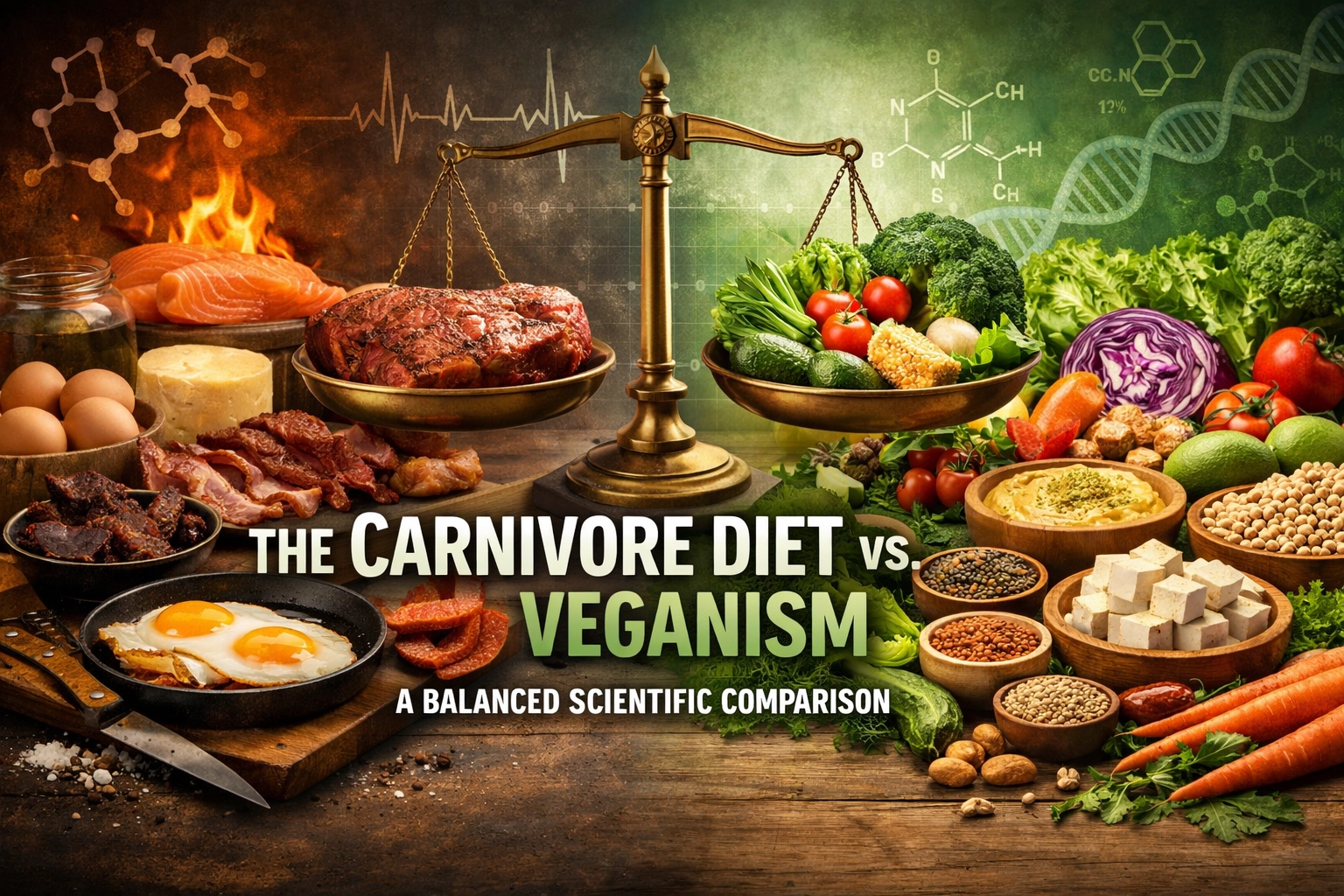
In the world of nutrition, we are currently witnessing a massive ideological rift. On one side, we have the Carnivore diet: an ultra-restrictive regimen consisting entirely of animal products. On the other, we have Veganism: a plant-exclusive lifestyle rooted in ethics and long-term epidemiological data. Both claim to be the "ancestral" or "optimal" way for humans to eat, yet they couldn't be more different.
To cut through the noise, we need to move past the anecdotes and look at the hard science: bioavailability, metabolic markers, gut microbiome diversity, and long-term outcomes. This guide provides a technical, data-driven comparison of these two dietary extremes.
1. The Nutritional Architecture: Macro and Micro Profiles
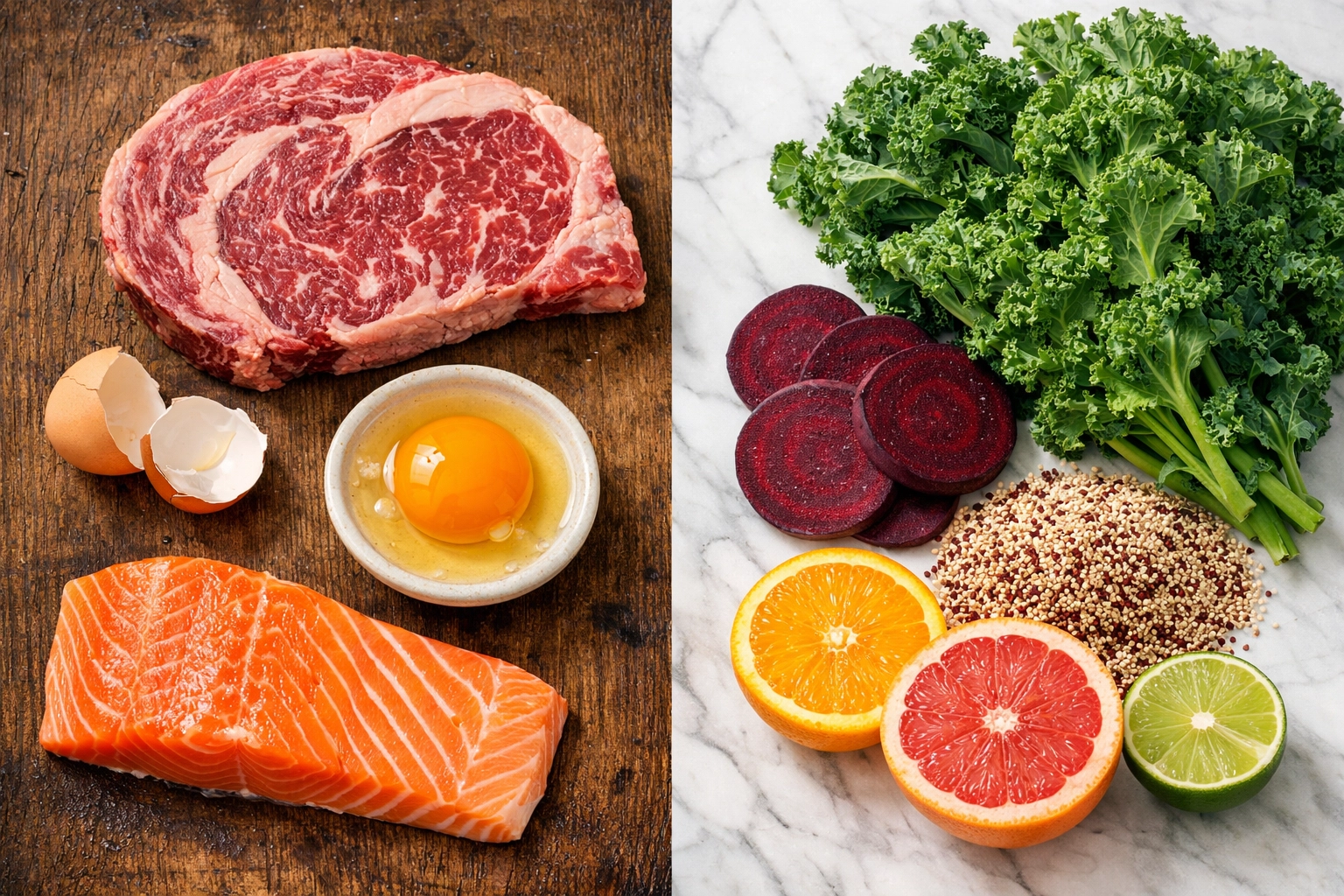
The most obvious difference lies in the macronutrient distribution. A typical Carnivore diet is high-fat, moderate-to-high protein, and nearly zero-carbohydrate, often inducing a state of nutritional ketosis. Conversely, a Vegan diet is generally high-carbohydrate, moderate protein, and lower in fat, depending on the intake of nuts, seeds, and oils.
Micronutrient Bioavailability
One of the most technical aspects of this debate is bioavailability: how much of a nutrient your body actually absorbs.
- Iron: Carnivore dieters consume heme iron, found in meat, which has an absorption rate of 15-35%. Vegans consume non-heme iron from plants, which has an absorption rate of only 2-20%. Furthermore, plant compounds like phytates and tannins can further inhibit non-heme iron absorption.
- Vitamin B12: Essential for neurological function. It is naturally occurring only in animal products. While many vegans supplement or eat fortified foods, the Carnivore diet provides massive, highly bioavailable doses of B12 naturally.
- Vitamin C and Fiber: These are the "missing links" for the Carnivore diet. While some argue that the need for Vitamin C drops when carbohydrate intake is zero (due to glucose and Vitamin C competing for the same transporters), there is no long-term data to support the safety of zero-fiber intake for the gut lining.
2. Metabolic Impact and Blood Sugar Regulation
Both diets have shown success in reversing markers of Metabolic Syndrome, but through different mechanisms.
The Carnivore Mechanism: Insulin Suppression
The Carnivore diet essentially eliminates glycemic variability. By removing all sugars and starches, the body maintains a flatline blood sugar response. This is particularly effective for those with severe Type 2 Diabetes or insulin resistance. Without the "insulin spikes," the body shifts to fat oxidation (lipolysis).
The Vegan Mechanism: Insulin Sensitivity
Vegan diets improve metabolic health by reducing "intramyocellular lipids" (fat inside muscle cells), which is a primary driver of insulin resistance. High-fiber plant diets promote a healthy weight and improve the gut's production of short-chain fatty acids (SCFAs), which enhance insulin sensitivity.
| Feature | Carnivore Diet | Vegan Diet |
|---|---|---|
| Primary Fuel Source | Fatty Acids / Ketones | Glucose / Glycogen |
| Blood Sugar Profile | Extremely Stable (Flat) | Variable (Fiber-buffered) |
| Muscle Synthesis | High (Leucine-rich) | Moderate (Requires protein combining) |
| Inflammation Markers | Mixed (High CRP for some, low for others) | Generally Low (High antioxidants) |
3. The Gut Microbiome: Diversity vs. Specificity
The "Health of the Gut" is a major battleground.
The Vegan Argument: Fiber is the primary fuel for beneficial gut bacteria. A diverse intake of plant fibers leads to a diverse microbiome. These bacteria ferment fiber into Butyrate, a short-chain fatty acid that prevents colon cancer and heals the gut lining.
The Carnivore Argument: Many plant compounds: like lectins, oxalates, and phytates: are "anti-nutrients" that can irritate the gut lining in sensitive individuals (such as those with Crohn's or IBS). By removing these, many Carnivore dieters report a total resolution of bloating and digestive distress. However, long-term exclusion of fiber may lead to a reduction in microbial diversity, which is historically linked to poorer health outcomes.
4. Cardiovascular Health and Longevity: What the Data Says
When we look at long-term studies, the Vegan diet currently holds the upper hand in terms of peer-reviewed evidence.
The EPIC-Oxford Study Insights
The EPIC-Oxford study is one of the most comprehensive dietary investigations ever conducted. It found that:
- Diabetes Risk: Vegans had a 47% lower risk of developing Type 2 Diabetes compared to meat-eaters (though this gap closes slightly when adjusted for BMI).
- Cancer Risk: The risk of all cancers combined was 18% lower in vegans.
- Ischemic Heart Disease: Vegans generally show lower LDL cholesterol and blood pressure levels.
The Carnivore Counter-Point
The Carnivore community argues that these epidemiological studies suffer from "Healthy User Bias." People who eat meat in these studies often also smoke, drink, and eat processed "Western" foods. They argue that "Clean Carnivore" (grass-fed beef, water, salt) has not been studied long-term and likely doesn't carry the same risks as a standard high-meat diet.
5. Bone Health and Fracture Risk
A significant technical drawback for the Vegan diet surfaced in the EPIC-Oxford data regarding bone density.
- Vegans were found to have a 50% higher risk for all fractures and a staggering 164% higher risk for hip fractures compared to meat-eaters.
- This is often attributed to lower calcium intake and lower BMI.
- Conversely, the Carnivore diet is rich in collagen, protein, and Vitamin K2 (found in fatty meats and fermented dairy), which are the building blocks of bone matrix.

6. Environmental and Ethical Sustainability
We cannot compare these diets without looking at the footprint they leave.
- Veganism: Generally considered the "gold standard" for environmental sustainability. It requires significantly less land and water. A plant-based diet can reduce an individual’s food-related carbon footprint by up to 73%.
- Carnivore: Animal agriculture: especially industrial grain-fed beef: is resource-intensive. However, proponents of Regenerative Agriculture argue that well-managed cattle can actually sequester carbon into the soil, making certain types of meat-eating potentially carbon-negative. However, this is not the standard for the majority of meat consumed globally.
7. The Verdict: Which Science Wins?
Science doesn't provide a "one-size-fits-all" answer. Instead, it suggests that both diets can be used as powerful therapeutic tools:
- Use Carnivore if: You suffer from severe autoimmune issues, refractory IBS, or extreme insulin resistance where even "healthy" carbs trigger flares. It is best viewed as a high-intensity elimination diet.
- Use Veganism if: Your primary goals are heart health, longevity, and lowering your risk of chronic diseases like cancer. It is a proven, long-term strategy supported by decades of epidemiological data.
Comparison Summary
| Metric | Carnivore | Vegan |
|---|---|---|
| Nutrient Density | High (B12, Iron, Zinc) | High (C, Folate, Magnesium) |
| Ease of Adherence | Low (Socially difficult) | Moderate (Increasingly common) |
| Scientific Validation | Anecdotal / Emerging | Robust / Longitudinal |
| Risk Factors | Scurvy (rare), high LDL | B12 deficiency, bone fractures |
Ultimately, the "Ultimate Guide" to your health depends on your unique biomarkers. Whether you choose the garden or the ranch, regular blood work and a focus on whole, unprocessed foods are the only non-negotiables.
Author Bio: Malibongwe Gcwabaza
CEO of blog and youtube
Malibongwe Gcwabaza is a seasoned health researcher and the CEO of blog and youtube. With over a decade of experience in dissecting nutritional science and metabolic health, Malibongwe focuses on translating complex biochemical data into actionable insights for the modern health enthusiast. He is a staunch advocate for evidence-based living and bio-individual nutrition. When not analyzing clinical trials, he can be found exploring the intersection of technology and wellness.
About the Author