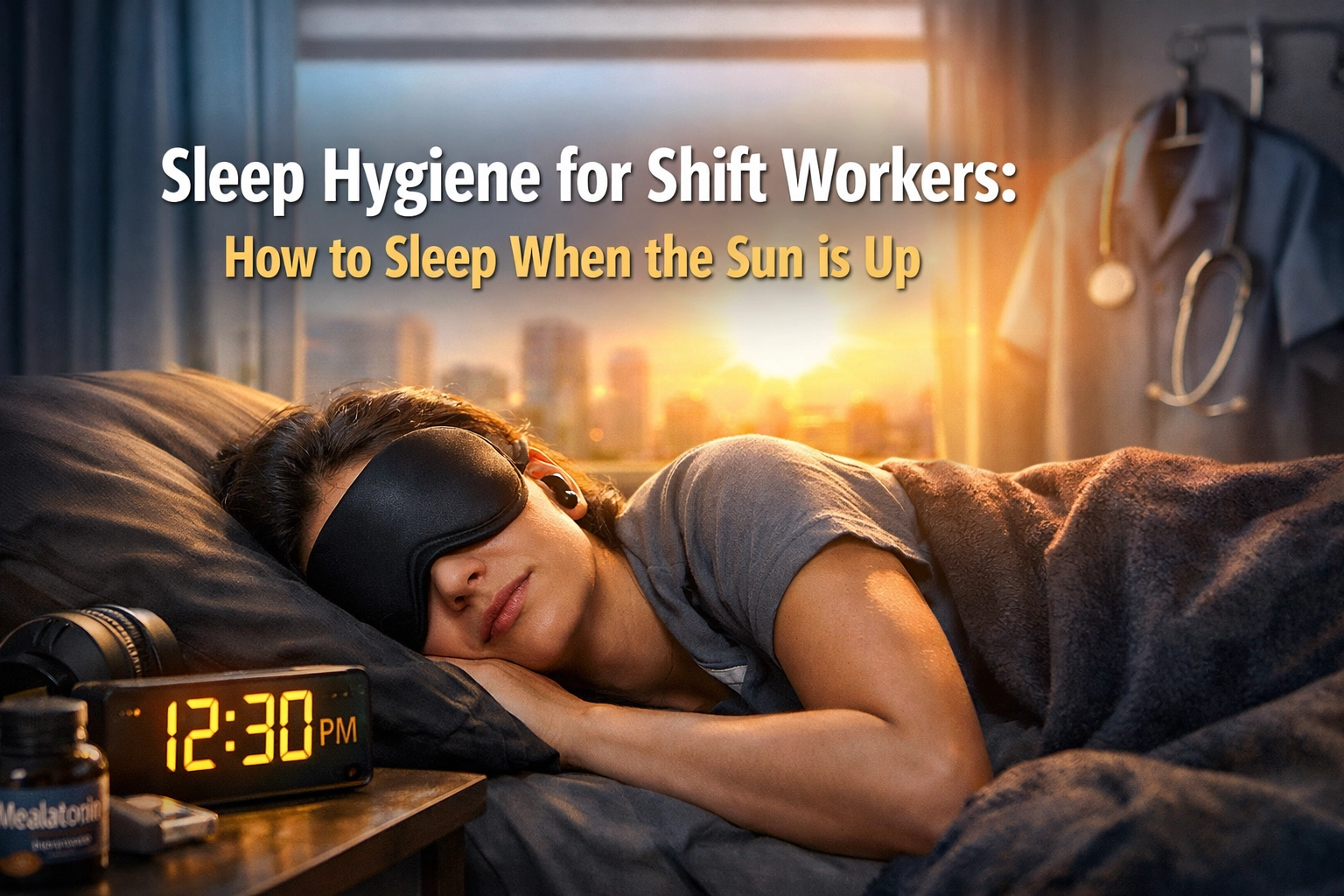
In our 24/7 global economy, the traditional 9-to-5 is increasingly becoming a relic of the past. For millions of nurses, first responders, factory workers, and software engineers, the "workday" begins when the sun goes down. However, humans are evolutionarily hardwired to be diurnal: meaning we are biologically programmed to be active during the day and restorative at night.
When you flip that script, you aren't just fighting "tiredness"; you are engaging in a physiological battle with your Suprachiasmatic Nucleus (SCN), the master clock in your brain. This guide dives deep into the science of circadian misalignment and provides a technical, data-backed blueprint for mastering sleep hygiene when your world is upside down.
The Science of Circadian Misalignment
Your body operates on a roughly 24-hour cycle known as the circadian rhythm. This system regulates everything from core body temperature and hormone secretion to heart rate and glucose metabolism. The primary "zeitgeber" (time-giver) for this system is light.
When blue light (specifically in the 450-480nm range) hits the melanopsin-containing ganglion cells in your retina, it signals the SCN to suppress melatonin and spike cortisol. For a shift worker, trying to sleep at 8:00 AM means your body is receiving peak "wake up" signals just as you are trying to shut down. This leads to Shift Work Disorder (SWD), which increases the risk of metabolic syndrome by 300% and significantly elevates the risk of cardiovascular disease.
The Adenosine vs. Circadian Conflict
To understand why you wake up after only 4 hours of sleep following a night shift, you need to understand the two-process model of sleep regulation:
- Process S (Sleep Pressure): This is the buildup of adenosine in the brain. The longer you stay awake, the higher the pressure.
- Process C (Circadian Rhythm): This is the internal clock mentioned above.
By 7:00 AM after a night shift, your Process S is incredibly high (you’re exhausted), but your Process C is ramping up for the day. You fall asleep quickly due to adenosine, but as that pressure dissipates over 3–4 hours, your internal clock (Process C) kicks in with "wake" signals, causing you to jar awake mid-morning. Mastering shift work is about manipulating these two processes.

1. Light Architecture: The Master Switch
Managing light is the most critical lever a shift worker can pull. It isn’t just about making it "dark" when you sleep; it’s about strategic exposure throughout your entire 24-hour cycle.
The Triple-Phase Light Protocol
| Phase | Timeframe | Action | Goal |
|---|---|---|---|
| Phase 1: Shift Start | First 2-3 hours of work | High-intensity blue light (10,000 lux) | Suppress melatonin and boost alertness. |
| Phase 2: Shift End | 2 hours before clock-out | Dim lights; wear blue-blocking glasses (amber/red) | Begin the biological "sunset" transition. |
| Phase 3: The Commute | Leaving work to arriving home | Dark sunglasses (Polarized) | Prevent the morning sun from resetting your clock. |
Technical Tip: Invest in 100% blue-light blocking glasses, not the clear "computer glasses." You need lenses that filter out wavelengths below 550nm. Research shows that even 15 minutes of unprotected exposure to morning sunlight can suppress melatonin production for the next several hours.
2. Building the "Biological Cave"
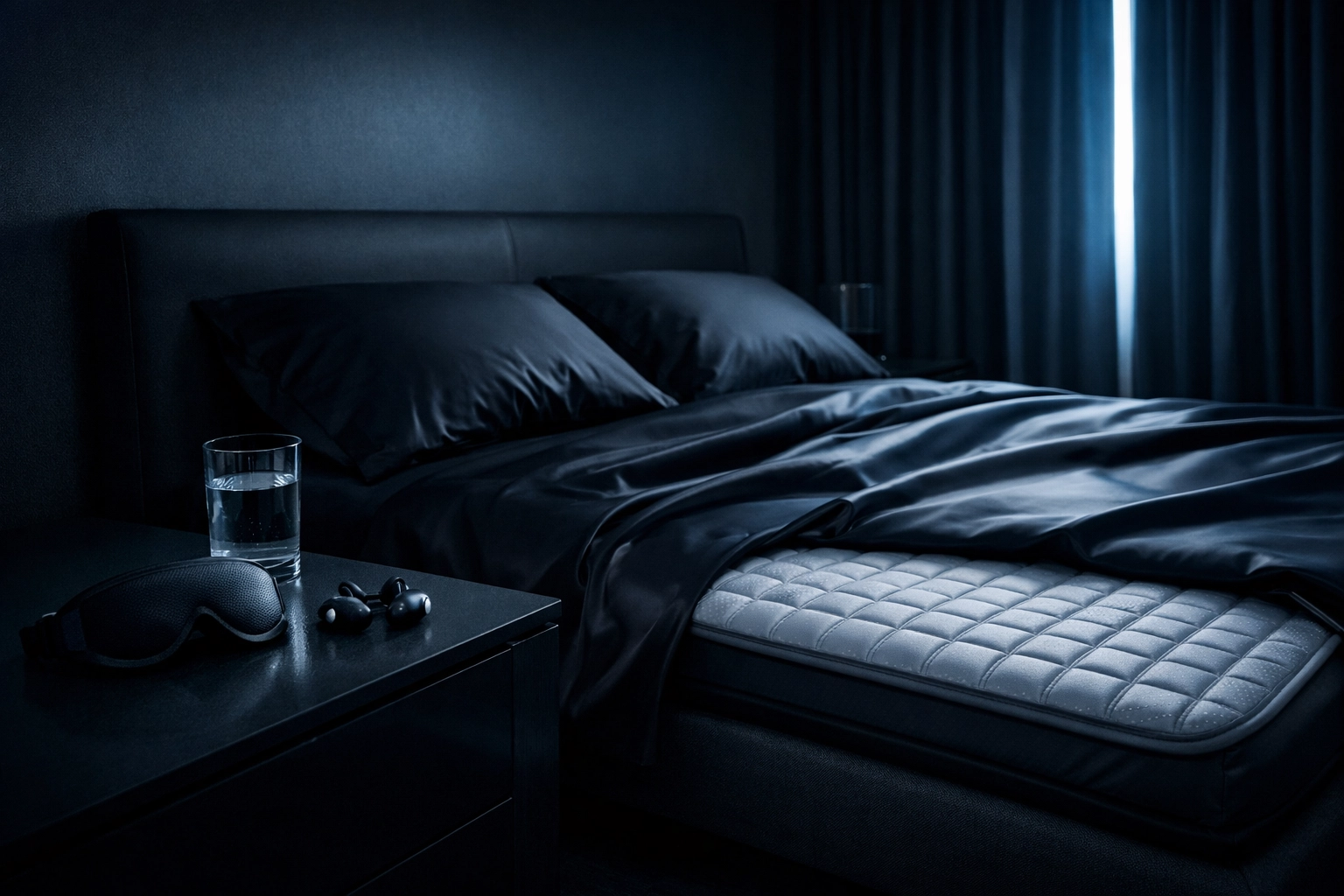
To sleep during the day, your bedroom must mimic the conditions of the deep night. This involves three critical variables: light, temperature, and sound.
Darkness (0 Lux Policy)
Even a tiny amount of light: the glow from a smoke detector or a sliver of light from the side of a curtain: can be sensed through your eyelids, interfering with the depth of your REM cycles.
- Blackout Curtains: Use industrial-grade blackout tracks or "blackout EZ" covers that Velcro directly to the window frame.
- Eye Masks: Use a contoured 3D sleep mask (like Manta) that doesn't put pressure on your eyeballs but provides a 100% seal.
Temperature (The 18°C Rule)
Your core body temperature must drop by about 1°C (2°F) to initiate and maintain deep sleep. During the day, ambient temperatures rise, making this difficult.
- Active Cooling: Consider a mattress cooling system (like Eight Sleep or ChiliPad). These allow you to set your bed temperature to a constant 16–19°C (60–66°F) regardless of the sun's heat.
- Post-Shift Shower: Take a hot shower 90 minutes before bed. The subsequent "vasodilation" (blood rushing to the surface) causes your core temperature to plummet once you step out, triggering the sleep mechanism.
3. Nutritional Timing and Metabolic Health
Shift workers are prone to insulin resistance because the body is not meant to process glucose in the middle of the biological night.
- The "Big Meal" Myth: Do not eat your largest meal at 3:00 AM. Your insulin sensitivity is at its lowest. Focus on a high-protein, moderate-fat "snack" to maintain stable blood sugar.
- The Caffeine Half-Life: Caffeine has a half-life of about 5–6 hours. If you finish your shift at 7:00 AM, your last cup of coffee should be no later than 1:00 AM.
- The Pre-Sleep Snack: Going to bed hungry can cause a cortisol spike that wakes you up. A small, low-glycemic snack (like a handful of walnuts or a small bowl of Greek yogurt) provides the amino acids (like Tryptophan) necessary for neurotransmitter synthesis without causing a massive insulin spike.
4. The 2026 Supplement Stack for Shift Workers
Always consult with a medical professional before starting a regimen, especially since shift work already puts stress on the cardiovascular system.
- Micro-Dose Melatonin (0.3mg – 1mg): Most over-the-counter melatonin is sold in 5mg or 10mg doses, which is supra-physiological and can lead to morning grogginess. Research suggests that 0.3mg is often more effective for "phase-shifting" the circadian clock without the hangover effect.
- Magnesium Bisglycinate (300mg – 400mg): Magnesium helps regulate the neurotransmitter GABA, which calms the nervous system. The bisglycinate form is highly bioavailable and less likely to cause digestive upset.
- L-Theanine (200mg): Found naturally in tea, this amino acid promotes "relaxed alertness." When taken before sleep, it can help counteract any lingering effects of caffeine consumed during the shift.

5. The "Anchor Sleep" Strategy
One of the biggest mistakes shift workers make is trying to return to a "normal" schedule on their days off. This phenomenon, known as Social Jetlag, keeps the body in a permanent state of flux.
The Solution: Anchor Sleep.
Identify a 4-hour window that you can keep consistent every single day, whether you are working or off. For example, if you always sleep from 8:00 AM to 12:00 PM, your body can begin to anchor its hormonal secretions to that window. You can then "supplement" the remaining sleep hours as needed, but that anchor remains the biological constant.
6. Communicating with the "Day World"
The psychological stress of shift work often comes from the friction with those on a standard schedule.
- The Signage Protocol: Put a "Shift Worker Sleeping" sign on your front door to prevent deliveries or neighbors from knocking.
- Phone Management: Set your phone to "Do Not Disturb" (DND) with an "Emergency Bypass" for only 2 or 3 critical contacts.
- The Social Contract: Explain to friends and family that a 10:00 AM phone call to you is the equivalent of a 2:00 AM phone call to them.
Summary Checklist for Daytime Sleep Mastery
- Block Blue Light: Wear amber glasses 2 hours before the shift ends.
- Polarized Shades: Wear them the moment you step outside into the morning sun.
- Cool the Core: Set the bedroom to 18°C or use a cooling mattress pad.
- Zero Light Leakage: Use blackout curtains and a 3D eye mask.
- Mask the Noise: Use a dedicated white noise machine (not just a phone app) to drown out daytime traffic.
- Consistency: Keep your "Anchor Sleep" window even on weekends.
Shift work is undeniably taxing, but it doesn't have to be a death sentence for your health. By treating your sleep as a highly technical, non-negotiable biological requirement rather than a secondary thought, you can maintain high performance and longevity, even when the rest of the world is just waking up.
About the Author: Malibongwe Gcwabaza
CEO of blog and youtube
Malibongwe Gcwabaza is a seasoned health technology strategist and the CEO of blog and youtube. With over a decade of experience in analyzing human performance and metabolic health, Malibongwe focuses on bridging the gap between clinical research and actionable lifestyle interventions. A self-professed "bio-harmonizer," he is dedicated to helping professionals in high-stress industries optimize their biology for long-term healthspan. When he isn't deep-diving into the latest longevity data, he's exploring the intersection of AI and preventative wellness.
About the Author