![[HERO] Breast Health Beyond Screening: Lifestyle Habits for Prevention](https://cdn.mar4blism.com/glUgV9h2M7X.webp)
Screening technologies like 3D mammography and AI-enhanced ultrasounds are better than ever in 2026, but they share one fundamental limitation: they are designed to detect cancer, not prevent it. While early detection saves lives, the true frontier of breast health lies in primary prevention: the daily lifestyle choices that influence our biological environment.
Research suggests that a significant portion of breast cancer cases are linked to modifiable risk factors. By understanding the interplay between metabolic health, hormone regulation, and environmental exposures, we can move from a reactive "wait and see" approach to a proactive "build and protect" strategy. This guide explores the deep-level lifestyle habits that scientifically reduce risk and optimize breast tissue health.
1. Metabolic Flexibility and the Adipose-Estrogen Link
The most critical factor in post-menopausal breast health is metabolic status. After menopause, the ovaries stop producing estrogen, and the primary source of the hormone becomes adipose (fat) tissue through a process called aromatization.
Excess body fat: specifically visceral fat: acts as an active endocrine organ. It produces inflammatory cytokines and an enzyme called aromatase, which converts precursor hormones into estrogen. High levels of circulating estrogen are a known driver for estrogen-receptor-positive (ER+) breast cancers.
The Role of Insulin and IGF-1
Metabolic dysfunction doesn't just impact estrogen. It also raises levels of insulin and Insulin-like Growth Factor-1 (IGF-1). High levels of these growth factors can signal cells to divide more rapidly and inhibit apoptosis (programmed cell death), which is the body’s way of clearing out damaged cells before they become cancerous.
| Metabolic Marker | Impact on Breast Health | Goal for 2026 |
|---|---|---|
| Fastng Insulin | High levels promote cell proliferation. | Maintain < 5 uIU/mL |
| HbA1c | Reflects long-term glucose; high levels increase inflammation. | Maintain 4.8% – 5.2% |
| HOMA-IR | A measure of insulin resistance. | Aim for < 1.0 |
Actionable Habit: Focus on protein-forward meals and fiber to stabilize blood glucose. Consider a Continuous Glucose Monitor (CGM) for a month to see how your specific body reacts to various carbohydrates.

2. The Exercise Prescription: Intensity Matters
Physical activity is perhaps the most powerful tool in the prevention toolkit. It works through multiple pathways: lowering systemic inflammation, improving insulin sensitivity, and physically altering how the body metabolizes estrogen.
Research indicates that regular exercise can reduce breast cancer risk by 12% to 25%. However, "moving more" is a vague instruction. To maximize breast health, a dual-intensity approach is required:
Zone 2 Aerobic Training
Low-intensity, steady-state cardio (where you can still hold a conversation) improves mitochondrial function. Healthy mitochondria are essential for energy production and preventing the oxidative stress that can lead to DNA damage in breast tissue.
Resistance Training
Building lean muscle mass is essential for glucose disposal. Muscle acts as a "glucose sink," pulling sugar out of the bloodstream and preventing the insulin spikes that drive IGF-1.
The 2026 Weekly Protocol:
- 150–300 minutes of moderate-intensity aerobic activity.
- 2–3 sessions of heavy resistance training focusing on major muscle groups.
- Vigorous "Snacks": Short bursts of high-intensity movement to improve VO2 Max, which is a strong proxy for overall cellular resilience.
3. Targeted Nutrition: Beyond "Clean Eating"
While there is no single "superfood" that prevents cancer, certain dietary patterns and specific compounds provide the building blocks for healthy breast cells.
Cruciferous Vegetables and Estrogen Metabolism
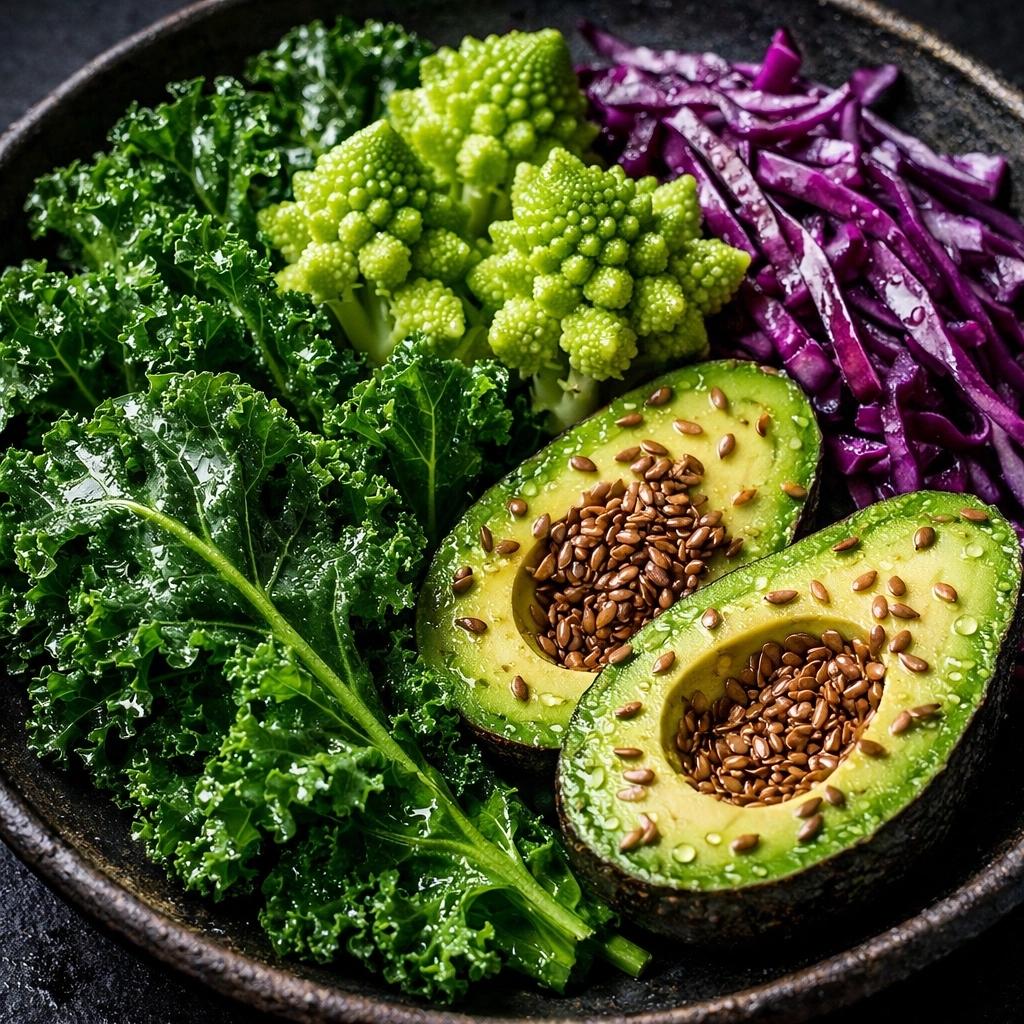
Vegetables like broccoli, cauliflower, Brussels sprouts, and kale contain a compound called Indole-3-Carbinol (I3C). When digested, I3C is converted into Diindolylmethane (DIM). DIM helps the liver metabolize estrogen through the "2-hydroxy" pathway (the safer pathway) rather than the "16-hydroxy" pathway, which is associated with higher cancer risk.
The Fiber Factor
Fiber is not just for digestion; it is an estrogen-binding agent. Excess estrogen is processed by the liver and excreted into the intestines. If your diet is low in fiber, that estrogen can be reabsorbed into the bloodstream.
- Target: 35–50 grams of fiber per day from whole food sources (legumes, raspberries, avocado, chia seeds).
Omega-3 to Omega-6 Ratio
Chronic inflammation is a hallmark of cancer development. The modern diet is often overloaded with Omega-6 fatty acids (found in seed oils) and deficient in Omega-3s (found in fatty fish).
- Insight: Aim for an Omega-3 index of 8% or higher to maintain a low-inflammatory state.
4. Mitigating Environmental Endocrine Disruptors (EDCs)
We live in a world filled with synthetic chemicals that mimic our natural hormones. These are known as Xenoestrogens. They can bind to estrogen receptors in breast tissue, sending "growth" signals when the body hasn't requested them.
Common Sources of Exposure:
- Phthalates and Parabens: Often found in conventional lotions, perfumes, and shampoos.
- BPA and BPS: Found in plastic containers and thermal cash register receipts.
- PFAS ("Forever Chemicals"): Found in non-stick cookware and water-resistant fabrics.
Prevention Strategy:
- Filter your water: Use a high-quality filter (reverse osmosis or carbon block) to remove PFAS and heavy metals.
- Swap your cookware: Transition to stainless steel, cast iron, or 100% ceramic.
- Check your labels: Use apps to scan personal care products for hormone-disrupting chemicals.
5. Circadian Rhythm and Melatonin Production
Sleep is often overlooked in breast health, but the connection is biological. Melatonin, the hormone that regulates sleep, is also a potent antioxidant and an anti-estrogenic agent. It has been shown to inhibit the growth of certain types of breast cancer cells in laboratory settings.
Disrupting your circadian rhythm: either through shift work or excessive blue light exposure at night: suppresses melatonin production. This is why the World Health Organization has classified night-shift work as a "probable carcinogen."
Optimization Checklist:
- Morning Sunlight: View 10–20 minutes of direct sunlight within an hour of waking to set your internal clock.
- Darkness at Night: Use blackout curtains and avoid screens 90 minutes before bed.
- Consistency: Go to bed and wake up within the same 30-minute window every day, even on weekends.

6. Alcohol: The Hard Truth
If there is one lifestyle habit that provides the most immediate reduction in risk, it is limiting or eliminating alcohol. Alcohol increases the levels of estrogen and other hormones associated with hormone-receptor-positive breast cancer. It also damages DNA in cells and reduces the body's ability to process and absorb vital nutrients like folate.
The data is clear: even moderate drinking (3–6 drinks per week) is associated with a 15% increase in breast cancer risk. For every additional drink per day, the risk increases by another 10%.
7. Breastfeeding and Parity: The Biological Window
From a biological perspective, pregnancy and breastfeeding "mature" the breast cells. During pregnancy and lactation, breast cells undergo a full cycle of differentiation. Once cells are fully differentiated, they are less susceptible to the mutations that lead to cancer.
Furthermore, breastfeeding reduces the total number of menstrual cycles a woman experiences in her lifetime, thereby reducing her cumulative exposure to endogenous (internal) estrogen.
Summary Checklist for Breast Health Prevention
To make these technical insights actionable, follow this daily and weekly checklist:
- Daily: Consume at least one serving of cruciferous vegetables and 35g of fiber.
- Daily: Get 20 minutes of morning sunlight and 7–9 hours of dark, cool sleep.
- Weekly: Achieve 150 minutes of Zone 2 cardio and 2 full-body strength sessions.
- Monthly: Audit your personal care products for "fragrance" (a common loophole for phthalates).
- Ongoing: Limit alcohol to special occasions or eliminate it entirely.
- Ongoing: Maintain a healthy waist-to-hip ratio to manage aromatase activity.
Author Bio
Malibongwe Gcwabaza is the CEO of blog and youtube and a dedicated advocate for longevity and preventive health. With a focus on translating complex biological research into actionable lifestyle protocols, Malibongwe helps readers navigate the rapidly evolving landscape of 2026 wellness. When not analyzing health data, he focuses on community-building through fitness and education.
About the Author