Magnesium is often called the "master mineral," and for good reason. As of 2026, clinical research has confirmed its involvement in over 600 enzymatic reactions in the human body, ranging from DNA repair to protein synthesis and muscle function. However, the wellness industry has moved past the era of "just take a magnesium pill."
The modern health seeker faces a complex landscape of chelated forms, liposomal deliveries, and synthetic complexes. If you’ve ever felt like your magnesium supplement wasn't "doing anything," it’s likely because you were using the wrong molecular form for your specific physiological needs. Not all magnesium is created equal; the "ligand" (the molecule attached to the magnesium) determines exactly where that mineral goes in your body.
The Bioavailability Crisis: Why Your Standard Pill is Failing
Most over-the-counter supplements rely on magnesium oxide. While technically high in elemental magnesium, its bioavailability is abysmally low: often cited at around 4%. The rest remains in the GI tract, where it acts as an osmotic laxative. In 2026, biohacking and personalized nutrition demand higher precision.
To achieve systemic saturation, you need to understand the 7 primary forms that target different organ systems. By combining these forms, you bypass the "bottleneck" effect of the body’s mineral transporters, ensuring that while one form saturates the muscles, another is crossing the blood-brain barrier.
Deep Dive: The 7 Essential Forms of Magnesium
1. Magnesium Bisglycinate: The Stress Killer
Magnesium Bisglycinate is magnesium bound to two molecules of glycine, an amino acid that acts as an inhibitory neurotransmitter. This form is the gold standard for 2026 sleep hygiene.
- The Science: Because glycine has a calming effect on the brain, this chelate is highly effective at crossing the blood-brain barrier. It doesn't compete for the same pathways as other minerals, making it highly absorbable without the "disaster pants" side effects of cheaper forms.
- Primary Use: Anxiety reduction, insomnia, and systemic relaxation.
2. Magnesium Citrate: The Metabolic Regulator
Often misunderstood as just a laxative, Magnesium Citrate is actually a vital tool for metabolic health. It is magnesium bound with citric acid.
- The Science: Research indicates that this form is particularly effective at supporting healthy arterial flow and blood pressure regulation. In the context of the 2026 obesity and metabolic health crisis, its role in supporting insulin sensitivity has become a focal point of functional medicine.
- Primary Use: Digestion, blood sugar management, and arterial health.
3. Magnesium Malate: The Energy Catalyst
If you struggle with "brain fog" or chronic fatigue, Magnesium Malate is the specific tool you need. It is bound to malic acid, a key player in the Krebs cycle (the process by which your cells create ATP).
- The Science: Malate is highly bioavailable and stays in the bloodstream longer than other forms. It is specifically researched for its ability to help those with fibromyalgia and chronic muscle pain by flushing out aluminum and supporting cellular energy production.
- Primary Use: ATP (energy) production, muscle soreness, and heavy metal detoxification.
4. Magnesium Chelate: The Recovery Specialist
"Chelated" is a broad term, but in high-end formulations, it refers to magnesium bound to a full spectrum of amino acids that mimic the mineral structure found in whole foods.
- The Science: This form is specifically designed for muscle tissue repair. It is the form most utilized by the body after high-intensity resistance training or "The Centenarian Decathlon" style longevity training.
- Primary Use: Muscle building, hypertrophy, and connective tissue recovery.

5. Magnesium Taurate: The Heart Protector
This form is magnesium bound to the amino acid taurine. Both magnesium and taurine have significant cardiovascular benefits, making this a synergistic powerhouse.
- The Science: Taurine acts as a membrane stabilizer. When paired with magnesium, it helps regulate heart rhythm and prevents the vascular calcification that leads to cardiovascular disease.
- Primary Use: Heart health, blood pressure stabilization, and vascular integrity.
6. Magnesium Orotate: The Longevity Molecule
Magnesium Orotate is the "elite" form often used by professional athletes and longevity researchers. It consists of magnesium bound to orotic acid.
- The Science: Orotic acid is a precursor to RNA and DNA synthesis. This form is unique because it can penetrate the membranes of mitochondria (the powerplants of your cells) more effectively than almost any other form, making it crucial for heart tissue repair and endurance.
- Primary Use: DNA repair, athletic endurance, and mitochondrial health.
7. Sucrosomial Magnesium: The Absorption Revolution
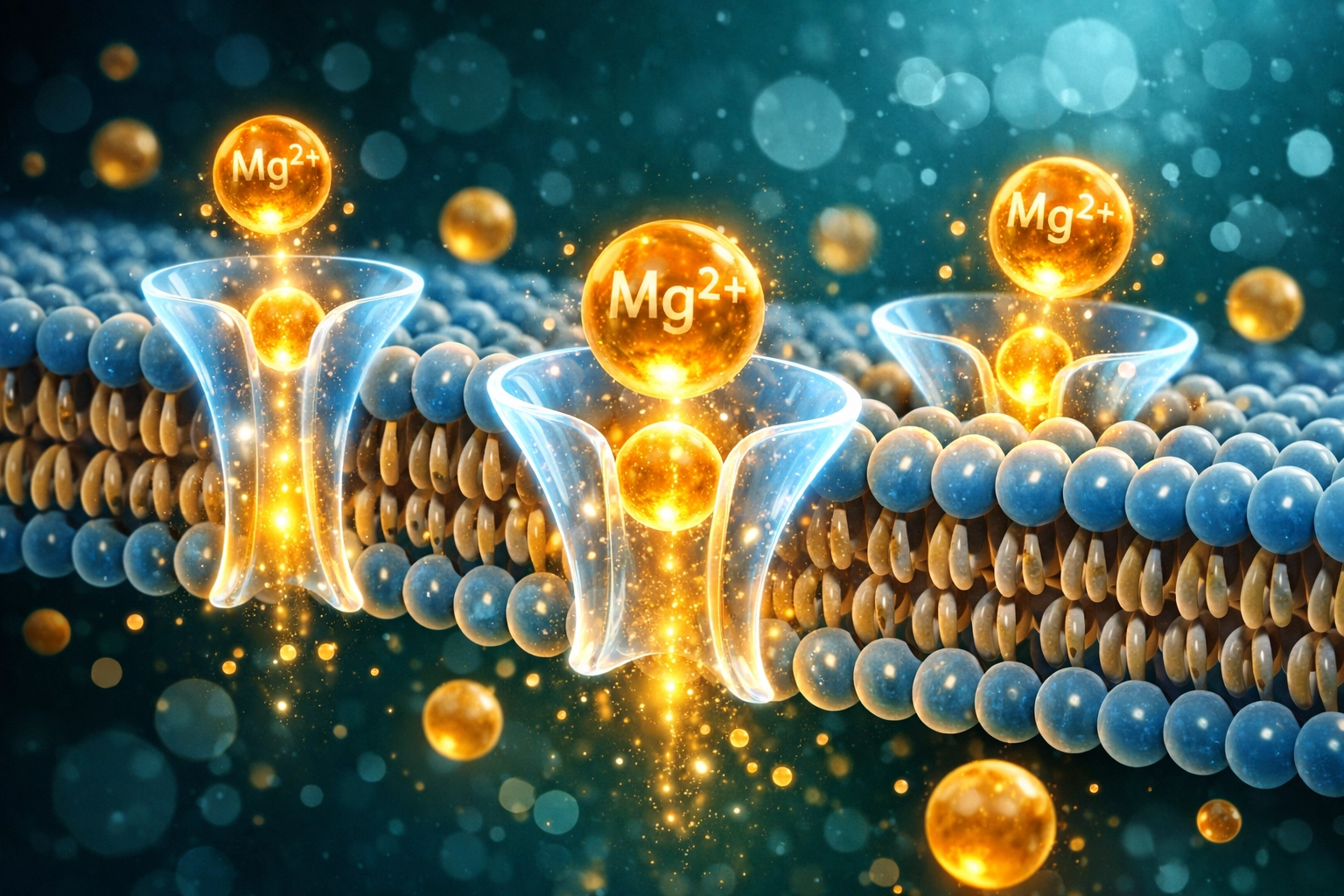
The newest addition to the 2026 supplement stack is Sucrosomial Magnesium. This is magnesium oxide encased in a phospholipid bilayer and a sucrose ester.
- The Science: This "stealth" delivery system allows the magnesium to pass through the gastric environment untouched, preventing GI distress and significantly increasing red blood cell (RBC) magnesium levels compared to traditional salts.
- Primary Use: Correcting deep-seated deficiencies quickly and supporting the immune system.
Technical Comparison: Which Form Should You Prioritize?
| Magnesium Form | Target System | Bioavailability | Best Time to Take |
|---|---|---|---|
| Bisglycinate | Nervous System / Brain | Very High | Evening / Bedtime |
| Citrate | Metabolic / GI Track | Moderate | With Meals |
| Malate | Mitochondria / Muscles | High | Morning / Pre-workout |
| Taurate | Heart / Vasculature | High | Anytime |
| Orotate | Heart / Genetic Repair | High | Pre-workout / Evening |
| Sucrosomial | Systemic Blood Levels | Extreme | Anytime |
| Chelate | Muscle / Recovery | High | Post-workout |

The "Magnesium-Cortisol" Loop
In 2026, we understand that stress doesn't just feel bad: it's a nutrient thief. When the body enters a "fight or flight" state, it dumps magnesium into the bloodstream, which is then excreted via the kidneys. This creates a vicious cycle: stress causes magnesium depletion, and magnesium depletion makes you more reactive to stress.
To break this loop, a multi-form approach is superior to a single-form dose. By hitting different pathways simultaneously, you ensure that even if your "stress-dumping" mechanism is active, your intracellular levels remain stable.
How to Test Your "Real" Magnesium Levels
Most doctors still use the Serum Magnesium Test, which is largely useless. Only about 1% of your body’s magnesium is in your blood; the rest is in your bones and soft tissues. The body will pull magnesium out of your bones to keep blood levels stable, meaning you could have a "normal" blood test while being severely deficient at a cellular level.
The 2026 Standard: Ask for an RBC Magnesium Test (Red Blood Cell Magnesium).
- Optimal Range: 6.0 to 7.0 mg/dL.
- If you are below 5.0 mg/dL, you are in a "deficit state" and should prioritize the high-absorption forms like Sucrosomial and Bisglycinate immediately.
Synergistic Co-Factors: What to Take with Your Magnesium
Magnesium doesn't work in a vacuum. To maximize the 7 forms mentioned above, you must ensure your co-factors are balanced:
- Vitamin B6 (as P-5-P): Acts as a chaperone, pulling magnesium into the cell where it's needed most.
- Vitamin D3 & K2: Magnesium is required to convert Vitamin D into its active form. Taking high-dose Vitamin D without magnesium can actually cause a magnesium deficiency.
- Boron: Helps reduce the amount of magnesium excreted in your urine.

The Bottom Line
If you are optimizing for longevity in 2026, you cannot rely on a generic mineral supplement. Your heart needs Taurate and Orotate; your brain needs Bisglycinate; your energy levels need Malate. A comprehensive "Magnesium Breakthrough" approach: incorporating all 7 forms: ensures that no matter what your daily stressor is, your cellular machinery has the fuel it needs to keep running.
Start with a full-spectrum complex, monitor your sleep quality and recovery scores on your wearable device, and adjust based on your RBC test results.
Author Bio: Malibongwe Gcwabaza
Malibongwe Gcwabaza is the CEO of blog and youtube and a leading voice in the 2026 longevity and biohacking movement. With a background in health tech and a passion for data-driven wellness, Malibongwe focuses on translating complex physiological research into actionable protocols for high-performers. When he isn't diving deep into mitochondrial health, he can be found testing the latest in cold-plunge technology and wearable bio-monitors. His mission is to simplify the science of living better, not just longer.
About the Author