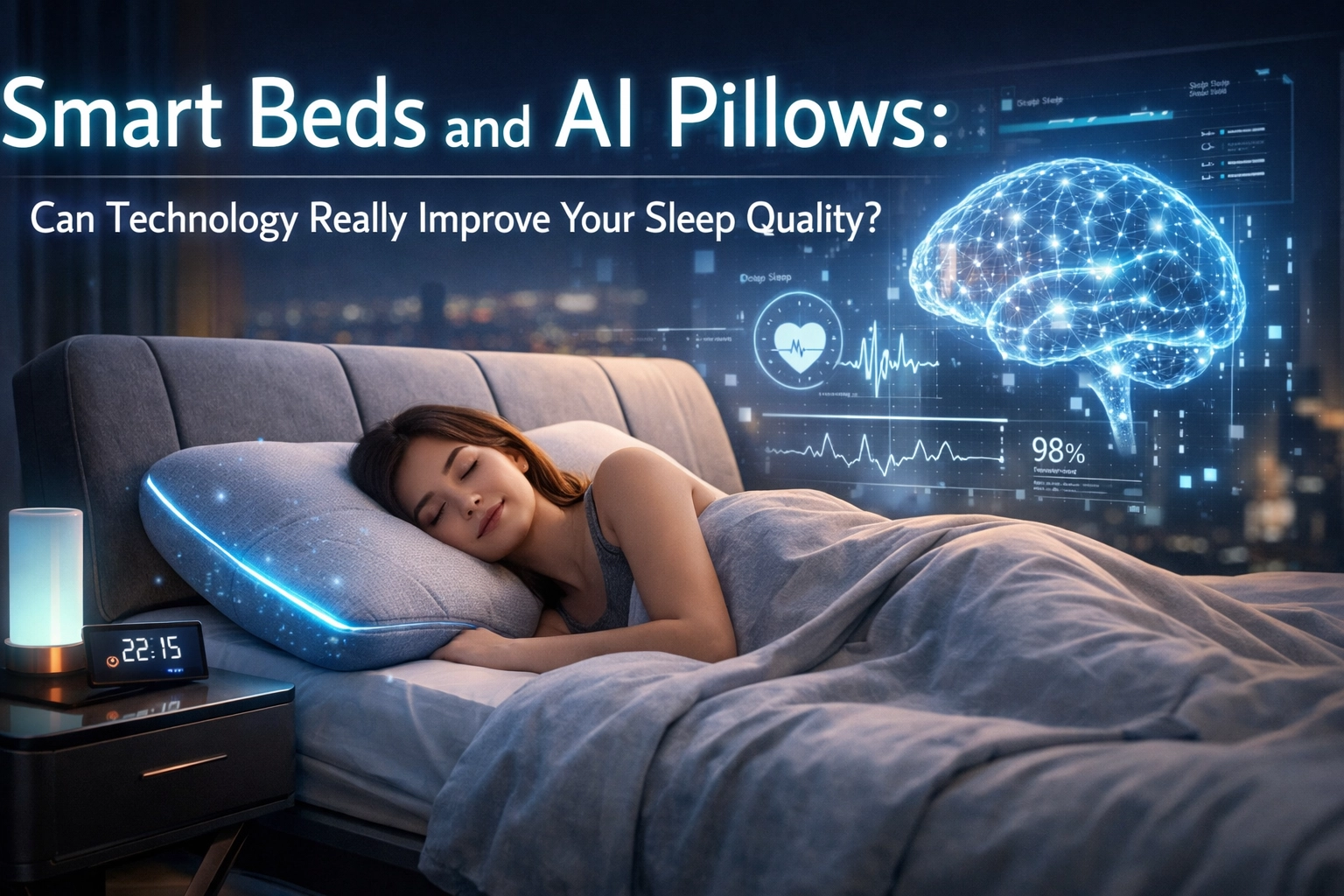
By 2026, the concept of a "dumb" mattress: a simple slab of foam or springs: has started to feel as antiquated as a rotary phone. Sleep is no longer viewed as a passive state of unconsciousness but as a high-performance recovery phase that can be engineered, monitored, and optimized.
The global sleep tech market is projected to exceed $40 billion by the end of this year, driven largely by the integration of Artificial Intelligence (AI) into our bedding. But as these price tags climb into the thousands, the critical question remains: Is a smart bed actually improving your physiological recovery, or is it just a glorified heart rate monitor with a heater?
The Anatomy of a 2026 Smart Bed: More Than Just a Mattress
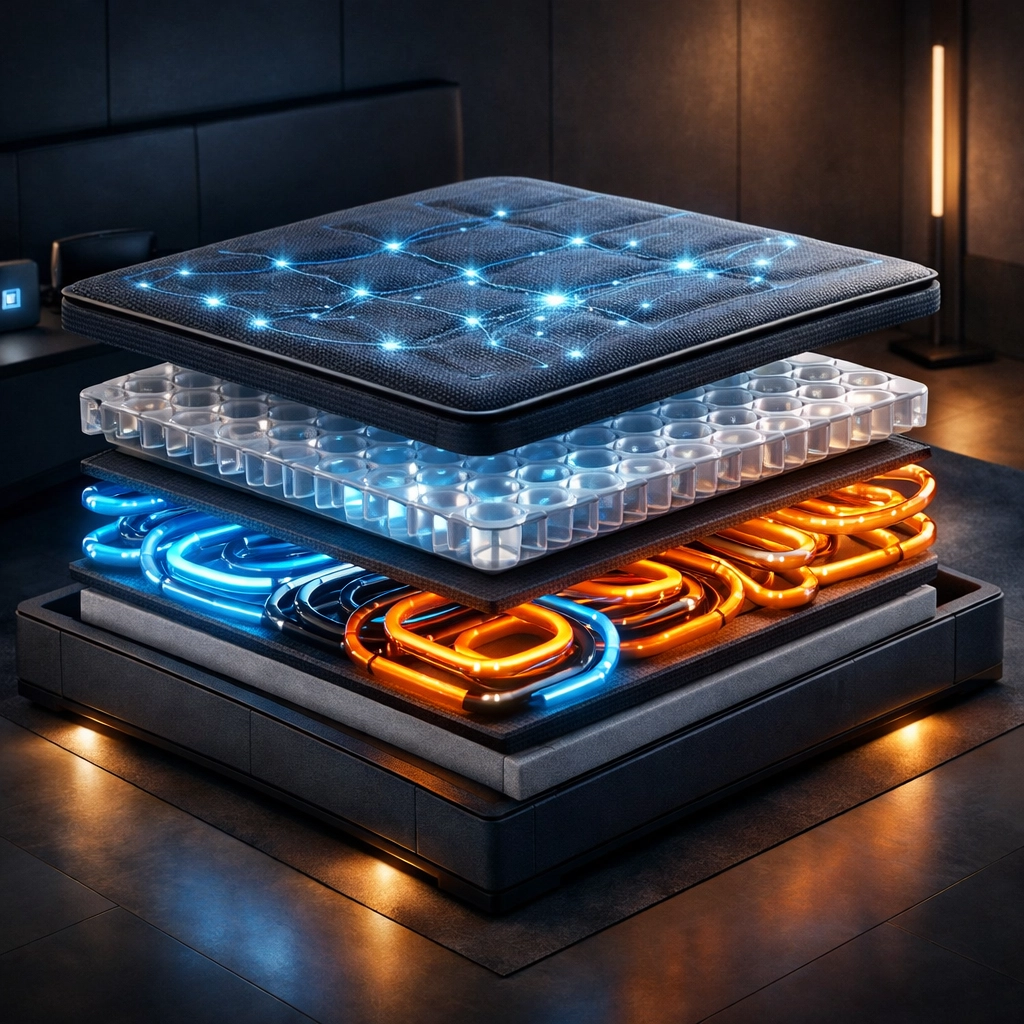
To understand if the tech works, we have to look at what’s actually inside. Modern smart beds from industry leaders like Eight Sleep, Sleep Number, and Bryte are no longer just furniture; they are complex biometric labs.
1. Ballistocardiography (BCG) Sensors
Unlike a smartwatch that uses optical sensors (PPG) to track heart rate, smart beds often use piezoelectric sensors or "ribbons" under the sheets. These measure Ballistocardiography, which detects the micro-movements of your body caused by the mechanical ejection of blood from the heart into the aorta. This is significantly more accurate for tracking Heart Rate Variability (HRV) and respiratory rate because it doesn't rely on skin contact or wrist movement.
2. Multi-Zone Thermal Engines
The most impactful tech in 2026 is active thermal regulation. These beds use water-powered "hubs" or thermoelectric cooling to shift the temperature of the sleeping surface. Research has shown that a drop in core body temperature is a primary biological trigger for sleep onset.
3. Dynamic Firmness Actuators
Using air chambers that inflate or deflate based on real-time pressure mapping, these beds adjust their support levels as you move. If you roll onto your side, the bed detects increased pressure on the shoulder and hip and softens those zones to maintain spinal alignment.
The Science of Temperature: Why Your Bed Needs an "Engine"
If there is one feature that justifies the investment in smart sleep tech, it is thermal regulation. Human biology is tied to a circadian rhythm that requires our core temperature to drop by roughly 2 to 3 degrees Fahrenheit (1.2 to 1.7 degrees Celsius) to initiate and stay in deep sleep.
Traditional foam mattresses are notorious for "heat "trapping," which causes micro-awakenings: brief moments of consciousness that wreck your sleep architecture even if you don’t remember them.
How AI Manages Your "Thermal Valley"
Current AI models in smart beds create a "Thermal Valley" profile.
- Phase 1 (Onset): The bed cools down rapidly to help you fall asleep faster.
- Phase 2 (Deep Sleep): The temperature remains low to encourage the release of growth hormone.
- Phase 3 (REM): The bed warms up slightly, as the body’s ability to thermoregulate is impaired during REM.
- Phase 4 (The Wake-up): The bed increases temperature to suppress melatonin and trigger a natural cortisol spike, waking you up without a jarring alarm.
| Feature | Impact on Sleep Quality | Scientific Validation |
|---|---|---|
| Active Cooling | Reduces Sleep Onset Latency (SOL) | High – Strong correlation with core temp drop |
| Active Heating | Promotes morning alertness | Moderate – Aids in circadian entrainment |
| HRV Tracking | Measures systemic recovery | High – BCG is medically recognized |
| Auto-Snore Response | Reduces partner disturbance | Moderate – Mechanical tilt helps airway |
AI Pillows: The Missing Link in Spinal Alignment
While the bed handles the body, the AI pillow handles the most delicate part of the recovery equation: the cervical spine. In 2026, AI pillows have moved beyond simple memory foam.
Smart Loft Adjustment
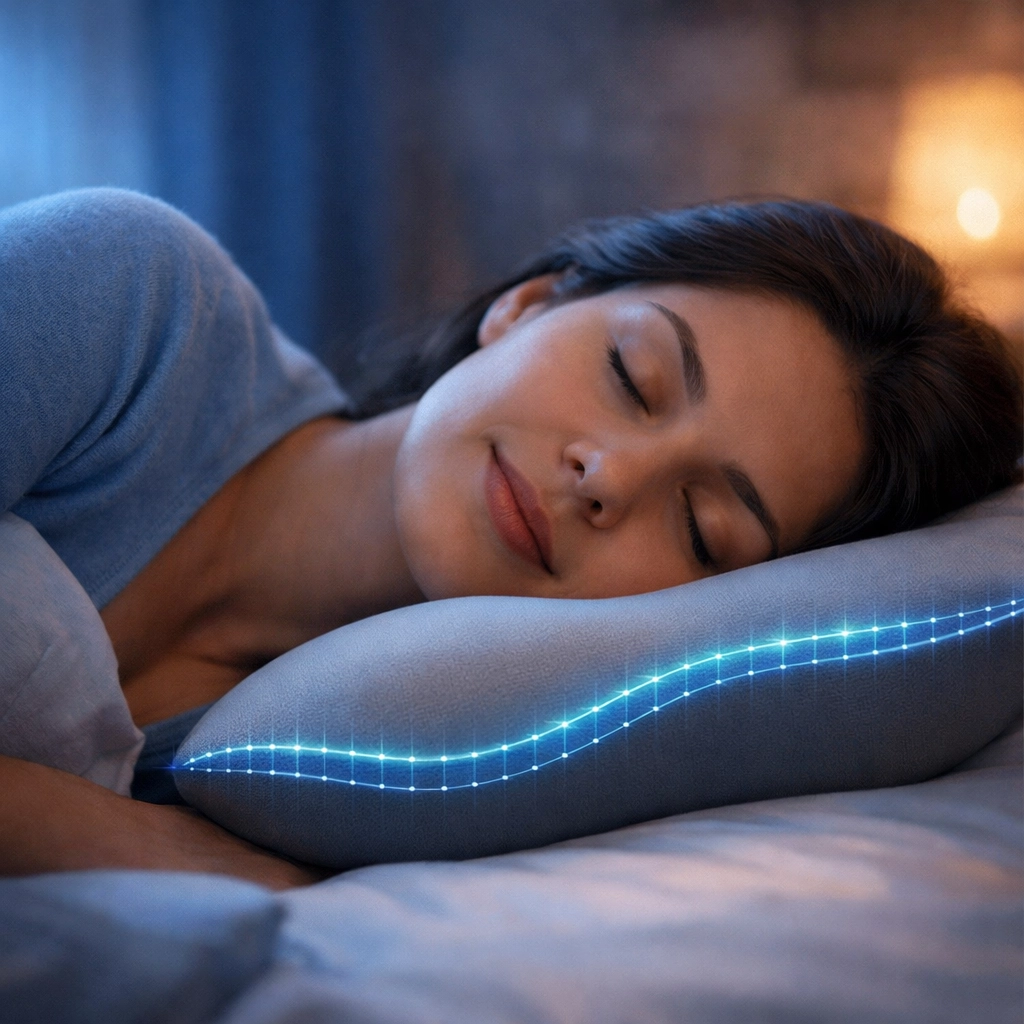
The primary reason people wake up with neck pain is "loft failure." A pillow that is the right height for back sleeping is almost always too low for side sleeping. AI pillows use internal air bladders and sensors to detect your head position. Within milliseconds of you rolling onto your side, the pillow increases its loft (height) to fill the gap between your ear and the mattress, keeping your neck neutral.
Snore Intervention Haptics
AI pillows now come equipped with sensitive microphones and machine learning algorithms that can distinguish between a partner's snoring and your own. When the pillow detects your specific snore frequency, it gently vibrates or shifts its angle to encourage you to change positions or open your airway, often stopping the snore without waking you up.
Data-Driven Insights: Accuracy vs. Reality
One of the biggest hurdles for AdSense-worthy tech reviews is addressing the "accuracy" gap. Can a bed really replace a clinical sleep study (Polysomnography)?
Not entirely, but it’s getting close. A 2025 study comparing SleepIQ technology to medical-grade PSG found a moderate to strong correlation (approx. 85-92% accuracy) for detecting sleep stages (Light, Deep, REM). While it may miss the exact minute you transition into REM, the trend data over 30 days is far more valuable for the average person than a single night in a lab with 20 wires attached to their head.
The Problem of "Orthosomnia"
We must address a psychological downside: Orthosomnia. This is the clinical term for a perfectionist obsession with sleep data. Some users find that seeing a "Sleep Score" of 65 makes them feel more tired than they actually are. The tech is most effective when it is "invisible": meaning the bed makes adjustments automatically without the user needing to obsess over the app every morning.
Is the Investment Worth It? A 2026 ROI Analysis
Smart beds range from $2,500 to $12,000. To determine the ROI, we look at the "Marginal Gain" in recovery.
- For High-Performance Athletes: The ability to track HRV without wearing a ring or watch is a massive plus. The cooling tech can reduce recovery time by lowering systemic inflammation faster. For this group, the bed is a "Must-Buy."
- For Chronic Pain Sufferers: The dynamic pressure adjustment can be the difference between a functional day and a day lost to back spasms.
- For the "Average" Sleeper: If you have no trouble falling asleep and don't wake up hot, a $5,000 smart bed is likely overkill. You would be better off investing $200 in blackout curtains and a high-quality (non-smart) latex mattress.
Tips for Integrating Sleep Tech Without the Overwhelm
If you decide to take the plunge into AI-enhanced sleep, follow these protocols to ensure you’re getting the most out of the technology:
- The Two-Week Baseline: Don't change any habits for the first 14 days. Let the bed track your "natural" state to build an accurate AI profile.
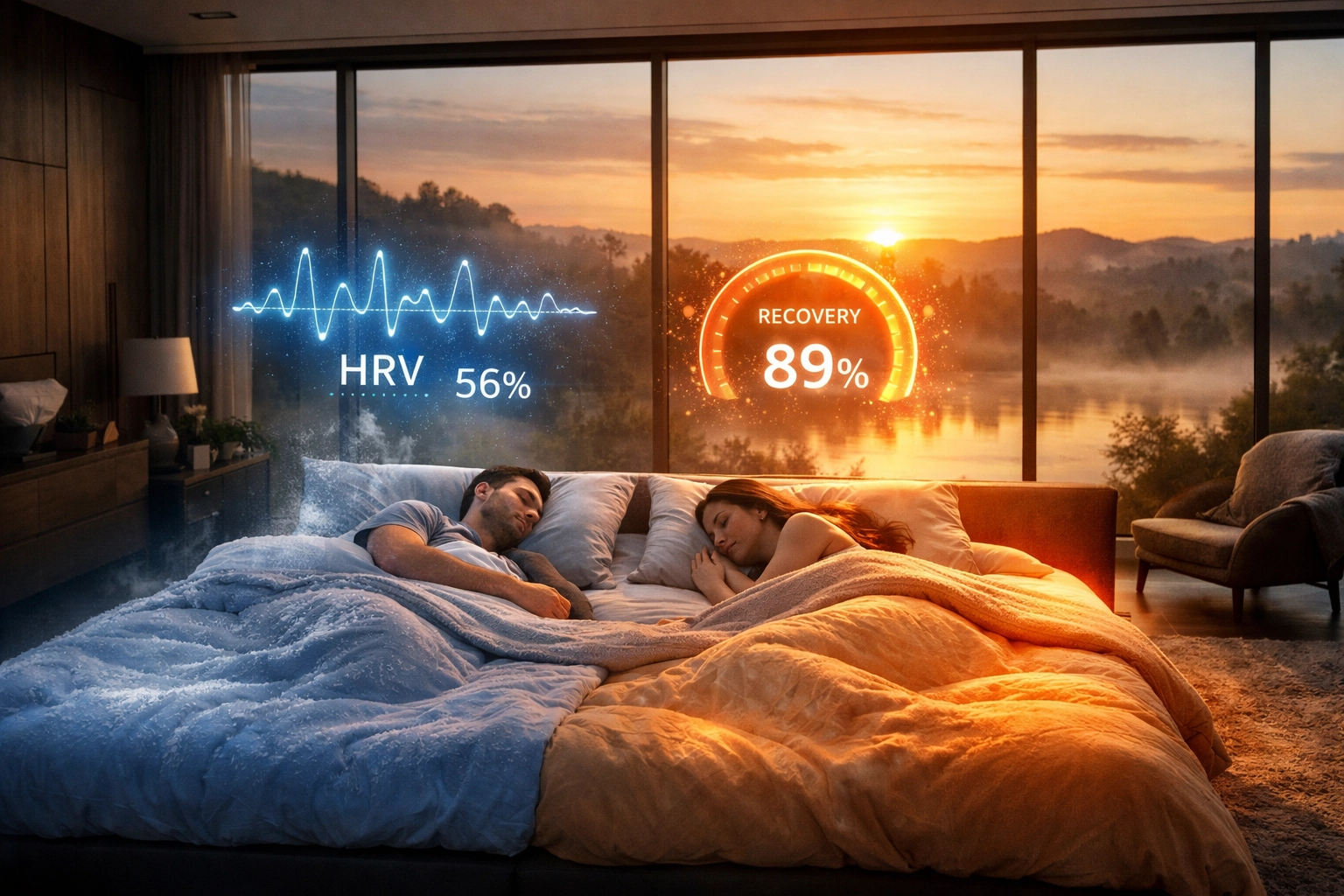
- Focus on HRV, Not Sleep Scores: The "Sleep Score" is a marketing metric. Heart Rate Variability (HRV) is a biological metric. Use HRV to determine if your training or diet is actually working.
- Use the Split-Zone Feature: If you have a partner, don't force your settings on them. The biggest benefit of smart beds for couples is ending the "thermostat wars."
- Hardware Over Software: Prioritize beds with active cooling/heating over beds that just offer "tracking." You can track sleep for $50 with an app; you can only change your thermal environment with hardware.
Final Verdict
Smart beds and AI pillows are not magic bullets for a bad lifestyle. If you drink caffeine at 4 PM and stare at blue light until midnight, no $10,000 mattress can save you. However, as a tool for environmental optimization, the technology is finally catching up to the hype.
In 2026, the ability to automate your body’s cooling cycle and maintain perfect spinal alignment via AI is the single greatest leap in sleep hygiene since the invention of the inner-spring mattress.
About the Author: Malibongwe Gcwabaza
Malibongwe Gcwabaza is the CEO of blog and youtube, a leading platform dedicated to the intersection of longevity, fitness, and emerging technology. With over a decade of experience in the wellness industry, Malibongwe focuses on translating complex biotechnological advancements into actionable insights for high-performers. His mission is to help people leverage the "Bio-Hacking" tools of 2026 to achieve a longer, healthier, and more productive life. When he isn't analyzing the latest biometric data, he can be found testing the "Centenarian Decathlon" training protocols in his home gym.
About the Author