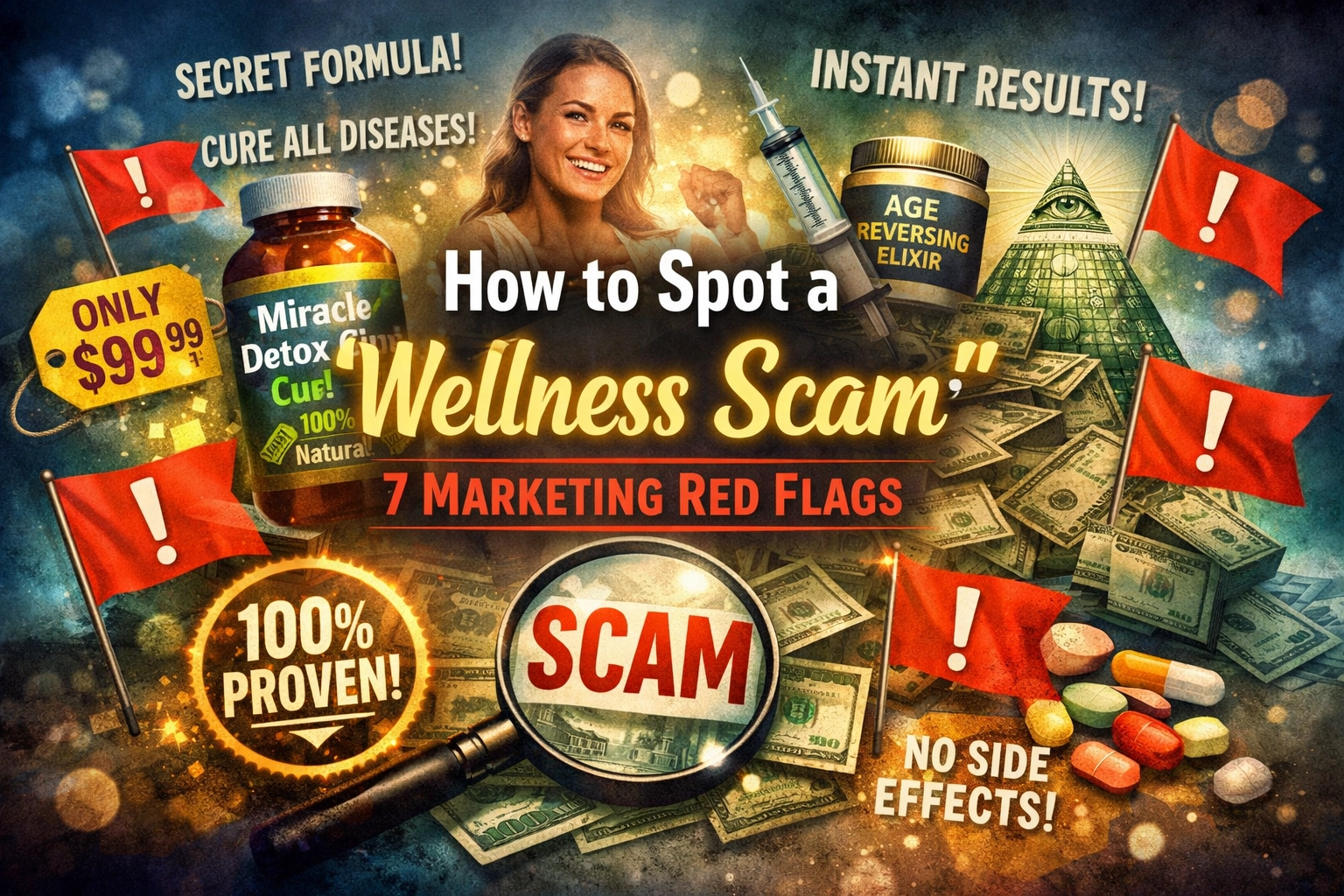
The global wellness industry is projected to exceed $7 trillion by the end of 2026. While that growth has brought us incredible breakthroughs in longevity and personalized nutrition, it has also turned the health market into a digital Wild West. Today, scammers aren’t just selling "snake oil" out of the back of a wagon; they are using sophisticated AI-driven marketing, deepfake influencers, and hyper-targeted social media ads to sell products that range from useless to dangerous.
If you’ve ever felt a twinge of skepticism while scrolling through a 20-minute VSL (Video Sales Letter) about a "forgotten Himalayan berry" that melts fat while you sleep, your gut was probably right. In this deep dive, we’re going to pull back the curtain on the most common psychological triggers and marketing dark patterns used by wellness scammers.
The Evolution of the Wellness Scam in 2026
Before we hit the red flags, we need to understand the environment. In 2026, the "Health-Washing" of products is at an all-time high. Companies use buzzwords like bio-available, mitochondrial-supportive, and neuro-protective to dress up basic caffeine pills or overpriced sugar water.
The goal isn't just to get you to buy once; it’s to lock you into a "lifestyle ecosystem" where you feel that without their specific proprietary blend, your health will inevitably decline.
Red Flag #1: The "Miracle Cure" and Instant Results
Biology is slow. Whether you are trying to build muscle, repair your gut lining, or optimize your VO2 max, the human body operates on a timeline of weeks, months, and years: not minutes.
Any product claiming "instant" detoxification or a "24-hour metabolic reset" is lying. These claims exploit our biological desire for the path of least resistance.
Common Phrases to Watch For:
- "Scientific breakthrough yields results in under 48 hours."
- "The one thing doctors don't want you to know."
- "Melt away 10 pounds of stubborn fat in a week without exercise."
The Reality: High-quality wellness interventions: like Zone 2 training or hypertrophy work: take consistent effort. If a pill claims to do the work of a treadmill, it’s a scam.
Red Flag #2: Pseudoscientific Jargon (The "Quantum" Trap)
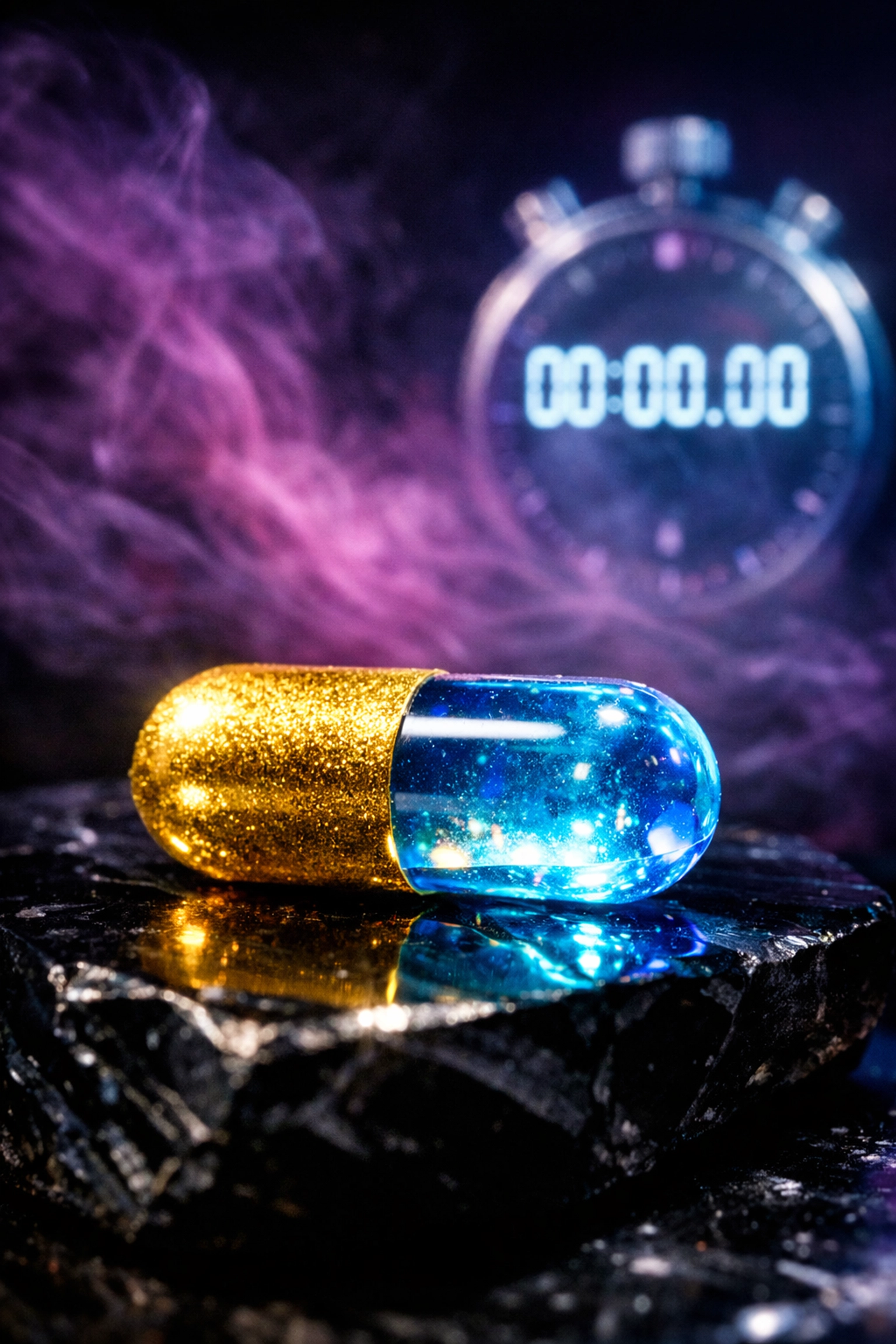
In 2026, scammers have moved past "all-natural" and into the realm of fake physics. You will often see products using scientific-sounding words in ways that make zero sense to an actual researcher. This is designed to bypass your critical thinking by making you feel like you aren't "smart enough" to understand the tech, so you should just trust the "experts."
The "Word Salad" Checklist
| Term used by scammers | What it actually means in their context | The Scientific Reality |
|---|---|---|
| Quantum Frequency | Magic vibes | A branch of physics that has nothing to do with your supplement. |
| Bio-Dynamic Alignment | Sounds expensive | A marketing term with no clinical definition. |
| Cellular Memory Reset | Forgetting you were scammed | Cells do have "memory" (epigenetics), but a powder won't "reset" it. |
| Toxin Flush | A laxative | Your liver and kidneys are your primary "flush" system. |
If a product page is heavy on "quantum," "nano-vibrational," or "energetic" claims without a single link to a peer-reviewed study in a reputable journal (like Nature or The Lancet), keep your credit card in your wallet.
Red Flag #3: The "Proprietary Blend" Transparency Gap
Transparency is the gold standard of the 2026 wellness market. Legitimate companies are moving toward "open-source" labeling, where every milligram of every ingredient is listed.
Scammers, however, love the "Proprietary Blend." This allows them to list a bunch of high-end ingredients (like Lion's Mane or NMN) on the label but hide the fact that they only included a "dusting" of the ingredient: far below the dosage required for clinical efficacy. This is known in the industry as "Label Dressing."
What to look for instead:
- Third-party testing: Look for NSF Certified for Sport or Informed-Choice seals.
- Certificate of Analysis (COA): Reputable brands will provide a batch-specific COA upon request, proving the product is free of heavy metals and microplastics.
Red Flag #4: AI-Generated "Experts" and Deepfake Endorsements
This is the newest and most dangerous red flag in 2026. With the rise of hyper-realistic AI video, scammers are now creating fake doctors or using "deepfaked" versions of famous health influencers to endorse their products.
You might see a video of a famous longevity doctor seemingly praising a specific brand of magnesium. Often, these are stolen clips with AI-dubbed audio.
How to Verify an Endorsement:
- Check the Official Source: Go to the influencer’s actual verified social media page or website. If they haven't posted about it there, the ad is likely a fake.
- Look for "The Glitch": AI-generated videos often have slight sync issues around the mouth or unnatural blinking patterns.
- Check the Link: Does the ad send you to a reputable site, or a weird URL like
health-news-2026-updates.net?

Red Flag #5: High-Pressure "Dark Patterns"
Legitimate wellness is an invitation; scams are a high-pressure sales pitch. Scammers use "Dark Patterns": UI/UX designs intended to manipulate you into making a rushed decision.
Common Dark Patterns in Wellness:
- The Fake Countdown: A timer at the top of the page saying "Offer expires in 04:59." If you refresh the page and the timer starts over, it's a scam.
- The Social Proof Pop-up: "Janet from Johannesburg just bought 6 bottles!" These are almost always randomized scripts designed to trigger your Fear Of Missing Out (FOMO).
- The "Only 3 Left in Stock" Warning: A classic tactic to bypass the rational brain and trigger the scarcity reflex.
Red Flag #6: The "Free Trial" Subscription Trap
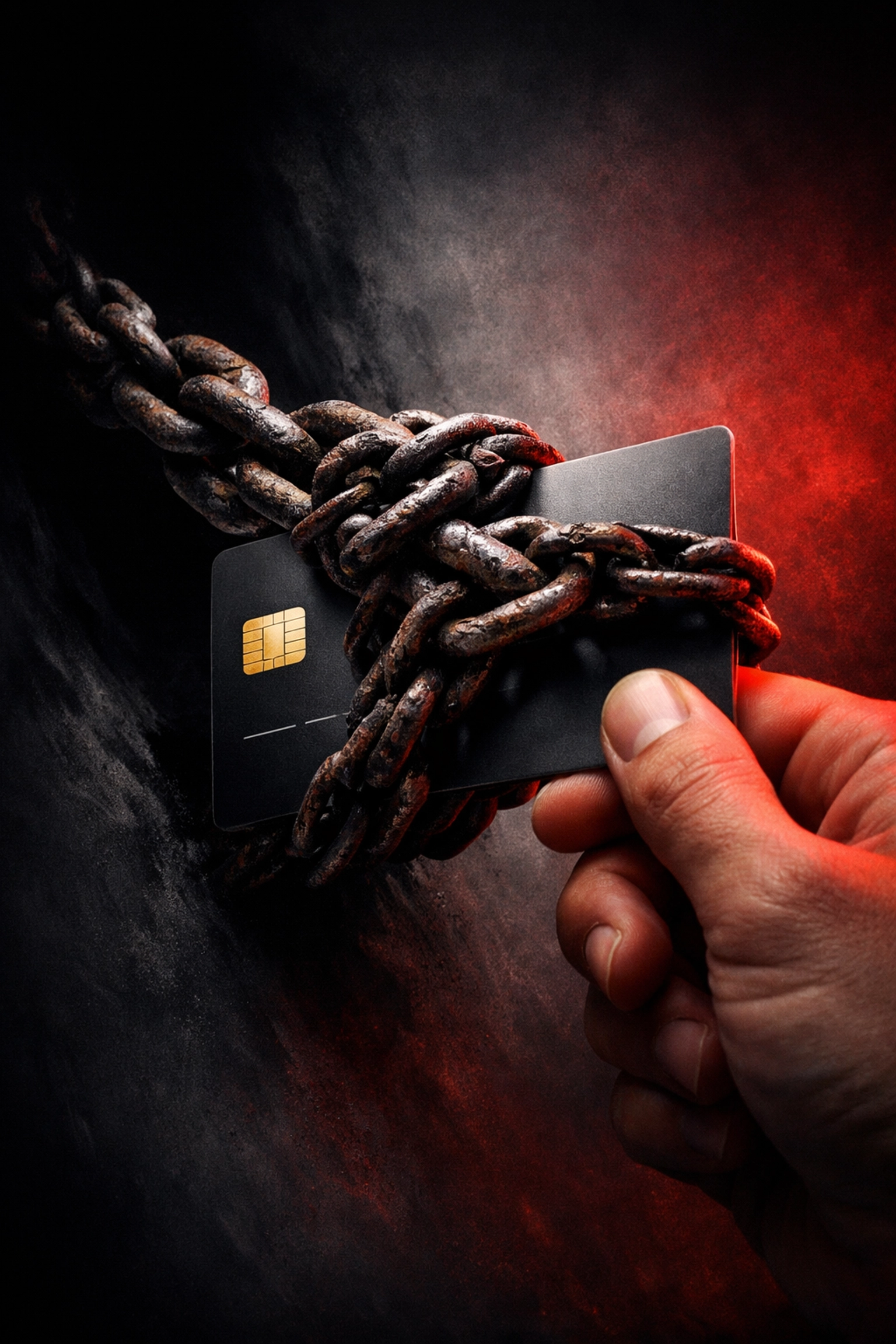
This is arguably the most financially damaging scam. You see an ad for a "Free Bottle" of a new nootropic or longevity supplement. All you have to do is pay $4.95 for shipping.
The Catch: Hidden in the 5,000-word Terms and Conditions is a clause stating that by paying for shipping, you are agreeing to a monthly "VIP Membership" that bills you $99.99 every 30 days. These companies make it notoriously difficult to cancel, often requiring you to call a non-functional phone number or mail a physical letter to a PO Box in another country.
Pro-Tip: If a "free" offer asks for your credit card, use a virtual card (like Revolut or Privacy.com) with a spending limit of $5. This prevents them from hitting you with the hidden subscription fee.
Red Flag #7: Anecdotal Evidence Over Clinical Data
"It worked for me!" is not science. Scammers rely heavily on emotional testimonials because they don't have clinical data to back up their claims.
While testimonials are a great way to see how a product might feel, they should never be the primary evidence for a health claim. In 2026, many of these testimonials are "bot-generated" or bought in bulk from click farms.
What Real Evidence Looks Like:
- Double-Blind, Placebo-Controlled Studies: The gold standard of research.
- Peer-Reviewed Publications: Research that has been vetted by other experts in the field.
- Human Trials: Be wary of products that only cite "In-Vitro" (test tube) or "Animal" (rat) studies. What happens in a petri dish rarely translates perfectly to the human body.
The "Wellness Scam" Sniff Test
Before you buy your next supplement or bio-hacking gadget, run it through this quick checklist:
- Does it promise to fix a complex problem (like aging or weight loss) overnight?
- Does the price seem drastically higher than similar products with the same ingredients?
- Is the "expert" endorsing it a real person you can verify?
- Are the ingredients hidden behind a "proprietary blend"?
- Does the website use high-pressure tactics like countdown timers?
If you answered "Yes" to two or more of these, you are likely looking at a marketing-heavy scam rather than a health-heavy solution.
The Bottom Line
True wellness in 2026 isn't found in a "secret" bottle or a "quantum" patch. It is found in the basics: sleep hygiene, metabolic flexibility, functional movement, and high-quality, whole-food nutrition. Supplements and tech should be exactly that: supplements to a solid foundation.
Be a cynical consumer. Your health: and your wallet: will thank you for it.
About the Author: Malibongwe Gcwabaza
CEO of blog and youtube
Malibongwe Gcwabaza is a seasoned health tech strategist and wellness advocate with over a decade of experience navigating the intersection of digital marketing and human performance. As the CEO of "blog and youtube," Malibongwe is dedicated to de-coding complex health trends and providing clear, actionable insights for the modern bio-hacker. His mission is to empower individuals to take control of their healthspan through data-driven decisions and transparent information. When he's not auditing the latest longevity tech, you can find him practicing Zone 2 training or exploring the latest in functional fitness.
About the Author