
Getting your biology right isn't just about expensive supplements or 3:00 AM gym sessions. Sometimes, the most powerful tool for peak cognitive performance is sitting right outside your window: and it’s completely free. Morning sunlight is the most underrated "brain hack" in existence.
When we talk about mental clarity, we aren’t just talking about "feeling awake." We are talking about the optimization of neurochemical pathways, the precision of your internal clock, and the physical structural health of your brain. In this guide, we’re going deep into the science of how light photons hitting your retinas can determine whether your afternoon is spent in a "brain fog" or in a state of high-output flow.
The Photobiotic Mechanism: How Light Hits the Brain
To understand why morning light matters, we have to look past the "vision" part of our eyes. Your eyes are actually an extension of your central nervous system. Inside your retina, there is a specific group of cells called intrinsically photosensitive retinal ganglion cells (ipRGCs).
Unlike the rods and cones that help you see your coffee mug, these cells have one primary job: sensing the presence of specific wavelengths of blue light (around 480nm) found in the morning sun. These cells contain a photopigment called melanopsin. When melanopsin is triggered, it sends an electrical signal directly to the Suprachiasmatic Nucleus (SCN): your body’s master clock located in the hypothalamus.

The Suprachiasmatic Nucleus (SCN) and You
The SCN acts as the "conductor" for every cell in your body. Every organ has its own peripheral clock, but they all take their cues from the SCN. When you view sunlight within 30 to 60 minutes of waking, you effectively "reset" this master clock. This process, known as circadian entrainment, tells your body exactly what time it is, ensuring that your hormones are released at the right moments for the next 24 hours.
The Hormone Dance: Cortisol, Melatonin, and the Pulse of Alertness
The most immediate effect of morning light exposure is the regulation of two critical hormones: Cortisol and Melatonin.
The Cortisol Awakening Response (CAR)
Most people think of cortisol as a "stress hormone," but it is actually essential for alertness. Shortly after you wake up, your body produces a natural "pulse" of cortisol. By getting outside and viewing sunlight, you enhance this Cortisol Awakening Response.
- The Benefit: A sharp, early peak in cortisol provides immediate mental clarity and sets a timer for when you will feel tired later.
- The Risk: If you miss this early light, your cortisol peak may happen later in the day, leading to "tired but wired" feelings at night and brain fog in the morning.
The Melatonin Countdown
The light you see at 7:00 AM determines when you will fall asleep at 10:00 PM. Morning sunlight exposure suppresses melatonin production immediately, clearing the "sleep pressure" from your brain. Simultaneously, it triggers a biological countdown. Approximately 12 to 14 hours after that first light exposure, your brain will begin to secrete melatonin again.

Neurochemical Synthesis: Serotonin and Dopamine
Beyond just waking you up, morning sun is a precursor to the "feel-good" chemicals that drive motivation and focus.
- Serotonin Production: Exposure to bright light is a primary trigger for serotonin synthesis in the brain. Serotonin is often associated with mood, but in the context of mental clarity, it acts as a stabilizer. It helps you stay calm under pressure and improves executive function.
- Dopamine Release: Light exposure has been linked to increased dopamine receptor activity. Dopamine is the molecule of "pursuit" and "motivation." High dopamine levels in the morning translate to better task initiation: the ability to actually start that difficult report or project rather than procrastinating.
Quantifying the Light: Lux Levels and Physics
Why can't you just sit by a bright window or turn on your kitchen lights? The answer lies in Lux, the measure of light intensity.
| Light Source | Typical Lux Intensity | Impact on Circadian Rhythm |
|---|---|---|
| Dim Indoor Room | 50 – 100 Lux | Negligible |
| Bright Office Lighting | 300 – 500 Lux | Minimal |
| Overcast Day (Outside) | 1,000 – 5,000 Lux | Effective (requires longer duration) |
| Direct Morning Sun | 10,000 – 100,000+ Lux | Optimal |
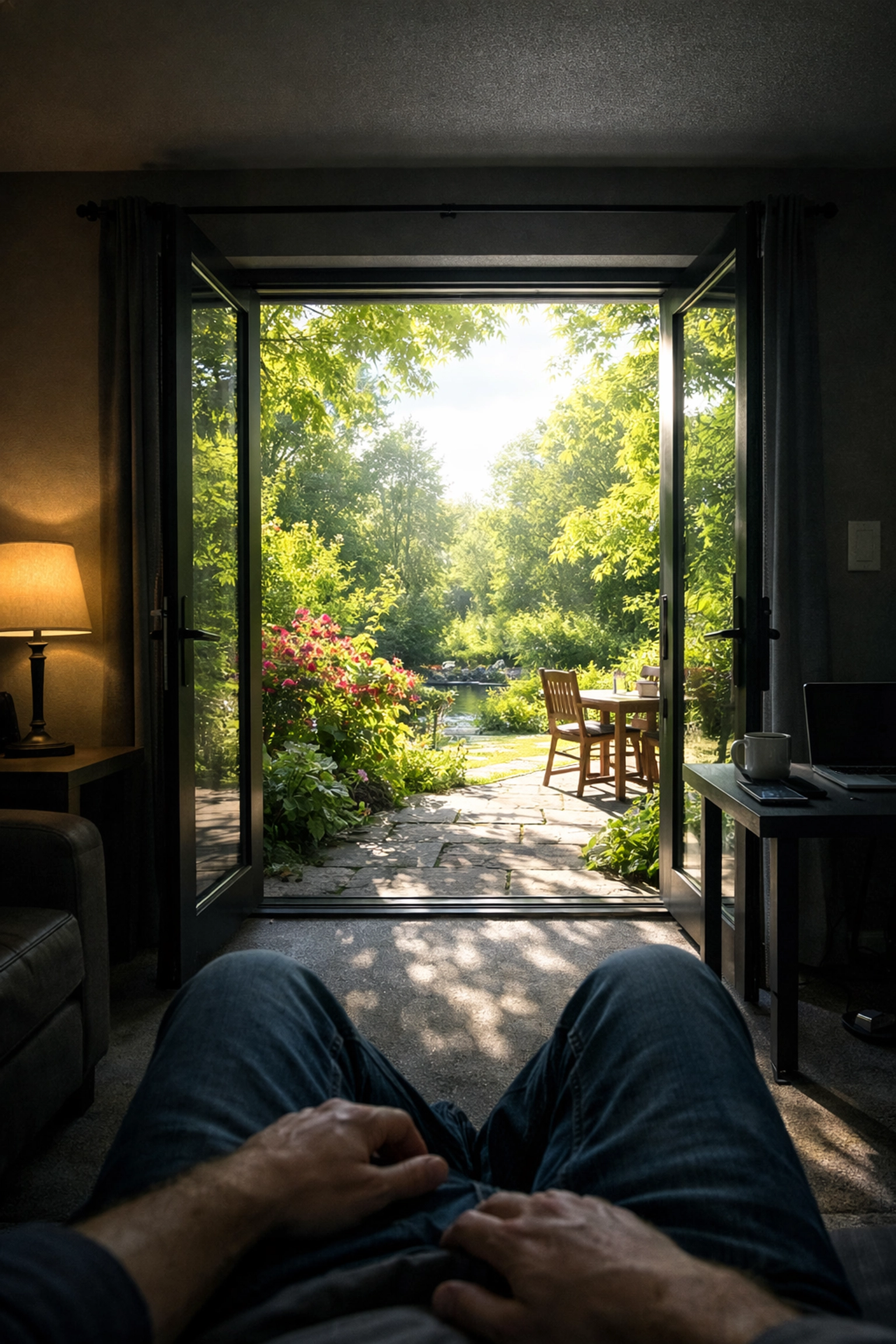
Even on a cloudy day, the light intensity outside is significantly higher than the brightest indoor LED. Windows actually filter out many of the blue-light wavelengths required to trigger the ipRGCs. To get the cognitive benefits, you need to be outside, without sunglasses (though clear glasses/contacts are fine as they don't filter the specific wavelengths required).
Cognitive Performance Metrics: Memory and Attention
Research into "Light Therapy" and natural sun exposure consistently shows that individuals with high morning light exposure outperform others in several key areas:
- Reaction Time: Studies have shown that early morning light exposure decreases reaction times in cognitive tasks, indicating faster neural processing.
- Working Memory: The hippocampus, the part of the brain responsible for memory and spatial navigation, is highly sensitive to circadian rhythms. Regular morning light has been shown to support neuroplasticity in the hippocampus.
- Attention Span: By reducing the "sleep inertia" (that grogginess that lasts for hours after waking), morning sunlight allows for sustained "top-down" attention, which is critical for deep work.
The Practical Sunlight Protocol
To get the most out of this, you don't need a tan. You just need a routine. Here is the technical protocol for maximizing mental clarity through light:
- Timing: View sunlight within 30–60 minutes of waking. If you wake up before the sun, use bright overhead lights until the sun rises, then go outside.
- Duration:
- Clear Day: 5–10 minutes.
- Cloudy Day: 15–20 minutes.
- Very Overcast/Rainy Day: 30 minutes.
- No Sunglasses: You want the photons to hit your eyes. Do not look directly at the sun (that will damage your retinas), but look toward the eastern sky.
- Consistency: Your SCN works on an average. If you miss a day, it's fine, but 5 out of 7 days is the "gold standard" for keeping your mental clarity consistent.
Troubleshooting: Winter, Shift Work, and Eye Health
The "Winter Blues" and SAD
In higher latitudes, the sun might not rise until mid-morning during winter. This often leads to Seasonal Affective Disorder (SAD), which is essentially a chronic state of brain fog and low mood. In these cases, using a SAD Lamp (10,000 Lux) for 20 minutes in the morning can act as a biological substitute for the sun.
Eye Safety
Never stare directly at the sun. The goal is "ambient" brightness. If it’s too bright to look toward the horizon without squinting, look slightly away or wear a hat, but keep your eyes open. The light needs to enter the pupil to reach those specific ganglion cells.
Conclusion: The ROI of 10 Minutes
In the world of productivity and mental performance, we often look for "hacks" that cost money or require complex setups. Morning sunlight is the ultimate exception. By simply taking your morning coffee outside, you are initiating a cascade of neurobiological events that stabilize your mood, sharpen your focus, and ensure a better night's sleep. It is the foundation upon which all other mental clarity strategies are built.
About the Author
Malibongwe Gcwabaza is the CEO of blog and youtube. With years of experience leading high-growth digital teams, Malibongwe is dedicated to exploring the intersection of biological health and professional performance. He believes that the simplest environmental changes often yield the greatest returns in leadership and cognitive output.
About the Author