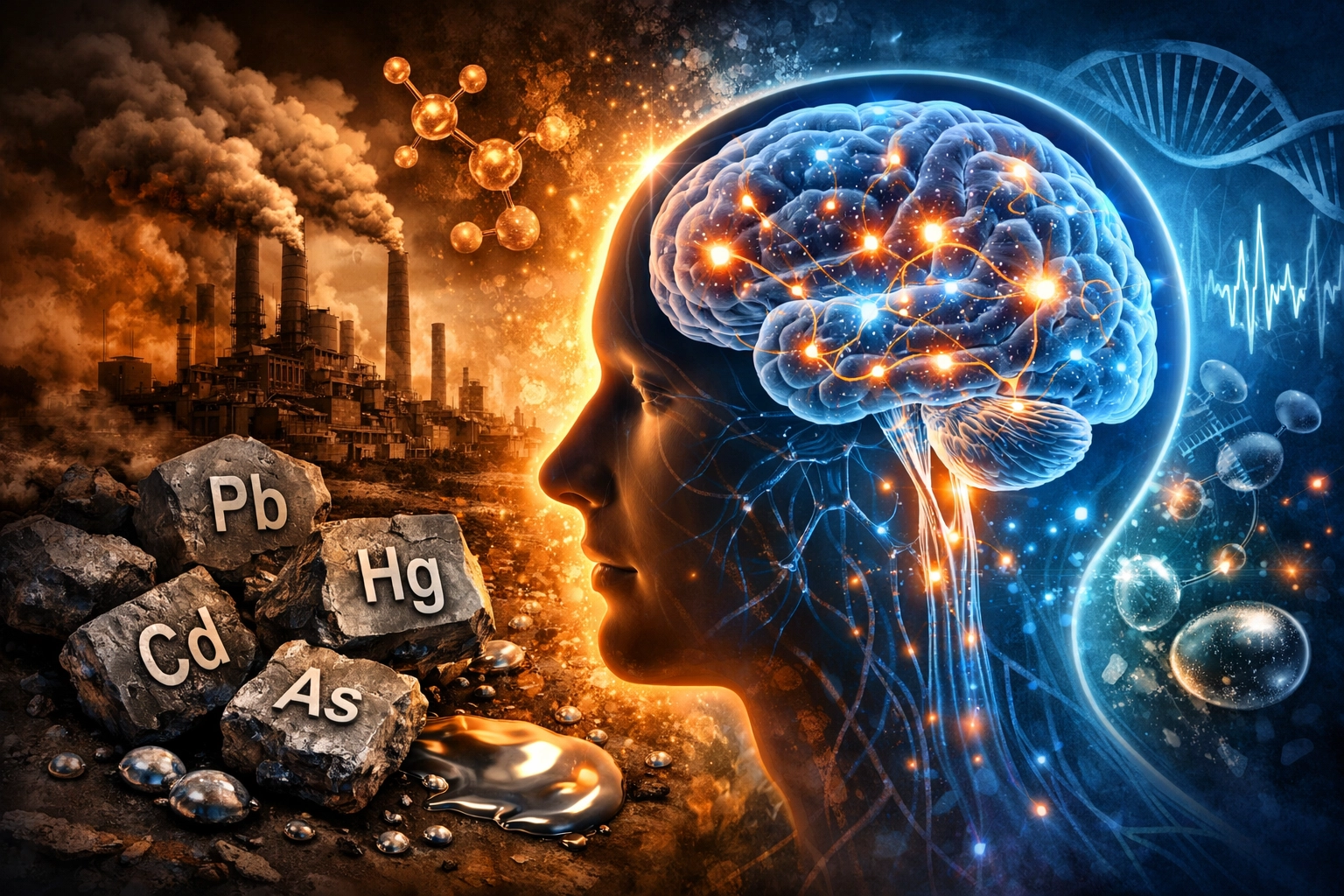
We talk a lot about "optimization" in 2026. We track our sleep, we measure our VO2 max, and we obsess over our macronutrients. But there is a silent, microscopic tax being levied on your brain every single day that most people completely ignore: heavy metal bioaccumulation.
While your body is remarkably resilient, it wasn't designed to handle the sheer volume of industrial byproducts we encounter in the modern world. Metals like lead, mercury, and aluminum aren't just "toxins": they are structural saboteurs. They cross the blood-brain barrier, mimic essential minerals, and essentially "short-circuit" your neurological hardware.
In this deep dive, we’re going beyond the surface-level advice of "don't eat too much tuna." We’re looking at the cellular mechanisms of neurotoxicity, the specific metals currently threatening your cognitive longevity, and how you can actually move the needle on your internal toxic load.
The Molecular Hijacking: How Metals Break the Brain
Your brain is the most energy-demanding organ in your body. It relies on a delicate balance of electrical signaling and chemical messaging. Heavy metals disrupt this balance through four primary "attack vectors."
1. Neurotransmitter Disruption
Heavy metals are masters of disguise. They often possess a similar atomic charge to essential minerals like calcium, zinc, and iron. Because of this, they can "trick" your neurons into letting them in. Once inside, they inhibit the synthesis of critical neurotransmitters like dopamine (your drive), serotonin (your mood), and acetylcholine (your memory). If you've been feeling unmotivated or "foggy" despite a perfect diet, neurotransmitter interference from cadmium or lead could be the culprit.
2. Oxidative Stress and the "Microglial Fire"
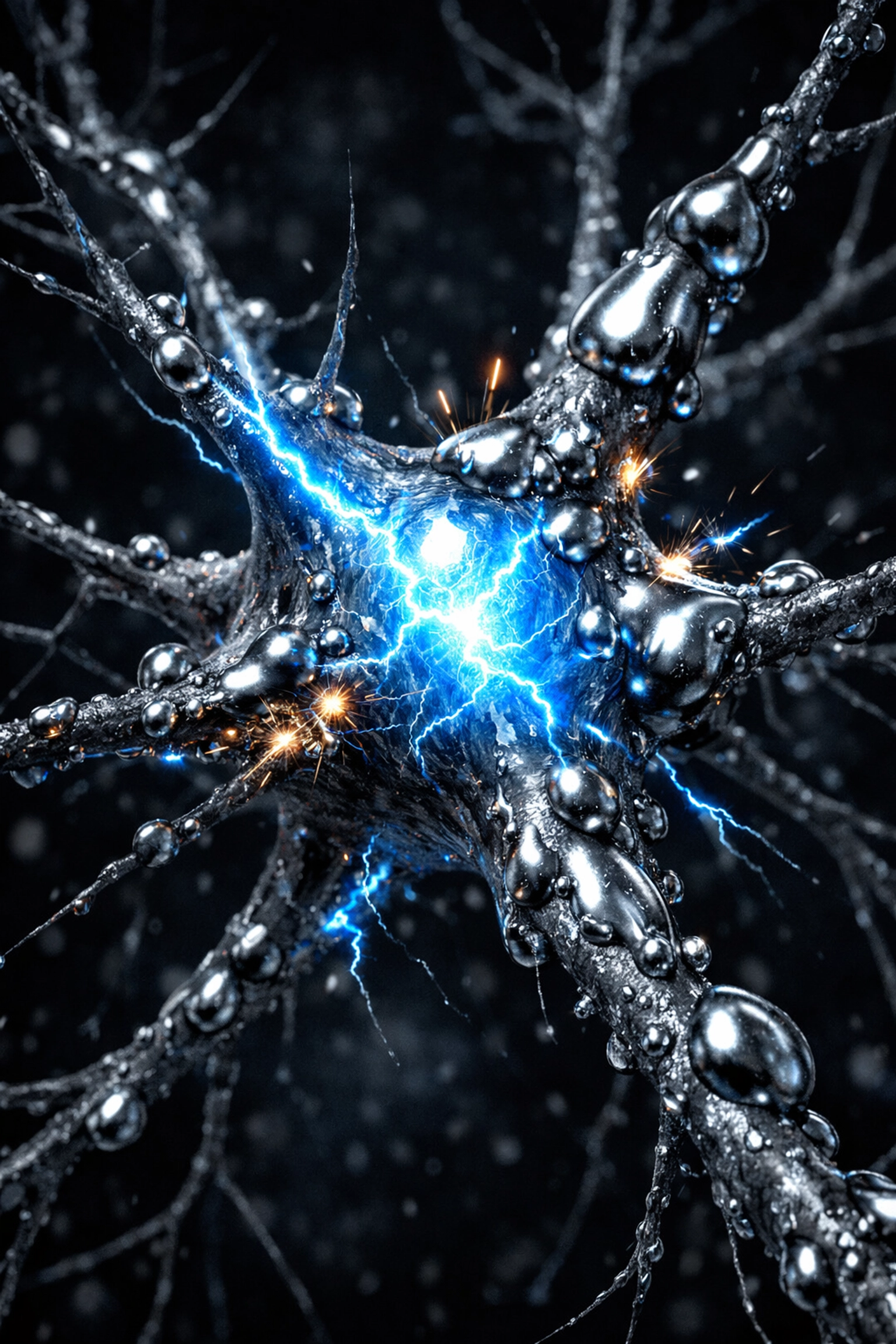
The brain is highly susceptible to oxidative damage because it’s packed with fatty acids that go rancid (peroxidize) easily. Heavy metals act as catalysts for the production of Reactive Oxygen Species (ROS). This triggers your brain's resident immune cells: microglia: into a state of chronic activation. Think of it as a low-grade fire in your skull that never quite goes out, slowly "charring" your neurons over decades.
3. Mitochondrial Sabotage
Neurons require massive amounts of ATP (energy) to function. Heavy metals have a particular affinity for the mitochondria, the power plants of your cells. By binding to mitochondrial enzymes, metals like mercury and arsenic essentially "unplug" the power, leading to cellular exhaustion and, eventually, programmed cell death (apoptosis).
4. The Protein Misfolding Trap
One of the most concerning developments in 2026 research is the link between metals and "zombie proteins." Metals like aluminum and manganese encourage proteins like amyloid-beta and tau to fold into incorrect shapes. These misfolded proteins clump together, forming the plaques and tangles that are the hallmarks of Alzheimer’s and other neurodegenerative diseases.
The "Big Six" Offenders in 2026
Not all metals are created equal. Depending on your geography, occupation, and lifestyle, you likely have a unique "toxic fingerprint."
| Metal | Primary Sources in 2026 | Neurological Impact |
|---|---|---|
| Mercury | Large fish, dental amalgams, industrial emissions | Memory loss, motor tremors, "brain fog," irritability. |
| Lead | Old pipes, contaminated soil, vintage ceramics, some lipsticks | Cognitive decline, reduced IQ in children, peripheral neuropathy. |
| Aluminum | Cookware, antiperspirants, processed foods, some vaccines | Linked to amyloid plaque formation and memory impairment. |
| Cadmium | Cigarette smoke (and e-cigarettes), leafy greens in tainted soil | Mitochondrial dysfunction, disruption of the blood-brain barrier. |
| Arsenic | Groundwater, rice, apple juice, poultry (from feed additives) | Cognitive impairment, mood disorders, peripheral "pins and needles." |
| Manganese | Industrial welding, some well water, over-supplementation | "Manganism" (Parkinson’s-like tremors), emotional instability. |
The Mercury-DHA Paradox
It’s worth noting that while fish is our primary source of DHA (essential for brain health), it’s also our primary source of methylmercury. In 2026, we focus on the Se:Hg ratio (Selenium to Mercury). Selenium acts as a "buffer" for mercury. Fish like wild-caught salmon and sardines have high selenium and low mercury, making them neuro-protective, whereas king mackerel or swordfish are neuro-destructive.
The 2026 Testing Landscape: How Do You Know?
If you suspect heavy metal toxicity, a standard blood test at your GP often isn't enough. Why? Because the body wants to get these metals out of the blood and into the tissues (like the brain and bones) as fast as possible to protect your pH balance.
- Blood Testing: Only useful for very recent, acute exposure.
- Hair Tissue Mineral Analysis (HTMA): Great for looking at "long-term" excretion patterns over the last 3 months. It's non-invasive and provides a window into your metabolic rate.
- Urinary Provocation (Challenge) Test: Often considered the "gold standard" in functional medicine. You take a chelating agent (like DMSA) and then measure what gets "pulled" out of your tissues into your urine.
- Retinal Imaging: An emerging 2026 tech where AI analyzes the back of the eye for specific pigment changes associated with metal accumulation.

Strategic Mitigation: Cleaning the "Hardware"
If you find your levels are high, "detoxing" isn't about a 3-day juice cleanse. It’s a physiological marathon.
Phase 1: Stop the Bleed
You cannot detox while you are still being re-poisoned. This means:
- Switching to high-quality Reverse Osmosis (RO) water filtration.
- Checking your old "silver" fillings (mercury amalgams) with a biological dentist.
- Buying organic for the "Dirty Dozen" (pesticides often contain metal traces).
Phase 2: Open the "Drainage Pathways"
Before you start pulling metals out of your brain, your exit routes must be open. If you are constipated, those metals will just get reabsorbed in the gut.
- Hydration: Critical for kidney clearance.
- Sweating: Using an Infrared Sauna is one of the few ways to excrete cadmium and lead through the skin.
- Bowel Regularity: Ensure you have 1-2 movements a day via high fiber and magnesium.
Phase 3: The Nutritional Shield
Specific nutrients can help "escort" metals out of the body or protect the brain from the damage they cause:
- Glutathione: The "Master Antioxidant." Liposomal versions or precursors like NAC (N-Acetyl Cysteine) are essential for liver detoxification.
- Alpha-Lipoic Acid (ALA): One of the few antioxidants that is both fat and water-soluble, meaning it can enter the brain and help "mop up" oxidative stress.
- Modified Citrus Pectin (MCP): A specialized fiber that binds to metals in the digestive tract without stripping essential minerals.
- Chlorella and Cilantro: While popular, use these with caution. They are "mobilizers": they can stir up metals but aren't always strong enough to bind them and carry them out, potentially causing a "flare" of symptoms.

The Future: 2026 and Beyond
As we move further into the late 2020s, the "Total Toxic Burden" theory is becoming mainstream. It’s rarely just one thing: it’s the synergy of microplastics, heavy metals, and EMFs that creates neurological dysfunction.
The good news? The brain is neuroplastic. Once you remove the "handbrake" of heavy metal toxicity, your cognitive function can: and usually does: rebound. We’re seeing patients in longevity clinics reversing "early-onset" cognitive decline simply by addressing their lead and mercury levels.
Your brain is the only thing you can't replace. Treat it like the high-end hardware it is. Clean the filters, block the intruders, and keep the power on.
Author Bio: Malibongwe Gcwabaza
Malibongwe Gcwabaza is the CEO of blog and youtube, a leading digital health platform dedicated to translating complex longevity science into actionable daily habits. With a background in systems thinking and a passion for bio-hacking, Malibongwe focuses on how environmental factors influence human performance. He believes that the next frontier of health isn't just adding years to our lives, but ensuring our "mental hardware" remains sharp well into our second century. When he’s not deep-diving into toxicology reports, you can find him in a cold plunge or experimenting with Zone 2 training protocols.
About the Author