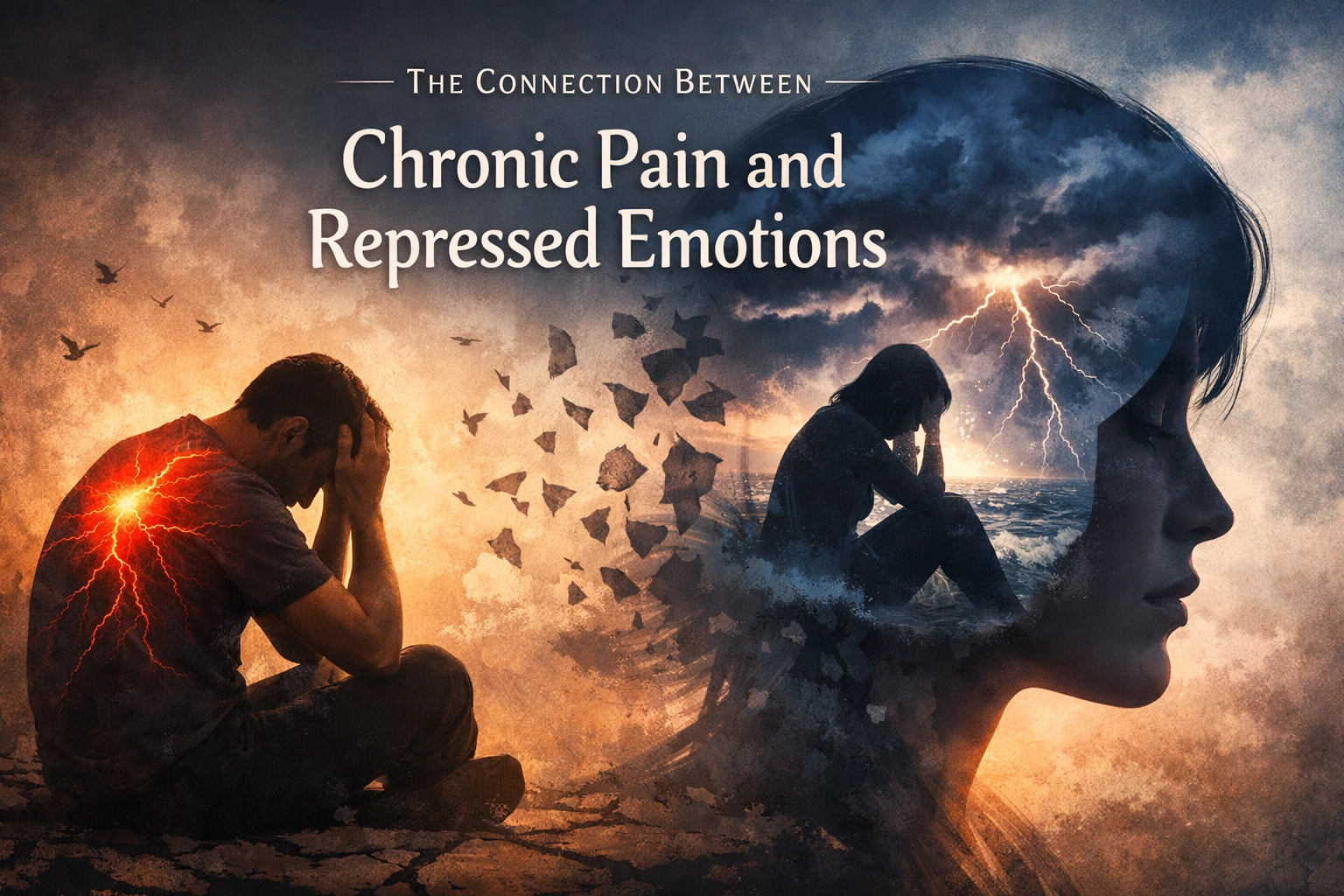
For decades, the medical community approached chronic pain through a purely structural lens. If your back hurt, we looked for a herniated disc. If your joints ached, we looked for inflammation. But as we move through 2026, the frontier of pain science has shifted dramatically toward the "Biopsychosocial" model. We now understand that the brain does not distinguish between a physical wound and an emotional one as clearly as we once thought.
Chronic pain is often less about what is happening in your tissues and more about what is happening in your nervous system. Specifically, the practice of repressing high-arousal emotions: like anger, grief, and fear: can lock the body into a state of physiological "high alert," manifesting as real, debilitating physical pain.
The Neurobiology of Repression
To understand how a feeling becomes a physical sensation, we have to look at the Autonomic Nervous System (ANS). When you experience a powerful emotion like rage, your body prepares for a "fight or flight" response. Your heart rate increases, your muscles tense, and your cortisol levels spike.
In a natural scenario, you would express that emotion or physicalize the energy. However, societal conditioning often teaches us to "keep it together." When you suppress an emotion, you aren't deleting it; you are simply inhibiting the motor output. The muscular tension required to hold that emotion back stays in the body.
The HPA Axis and Cortisol Chronicity
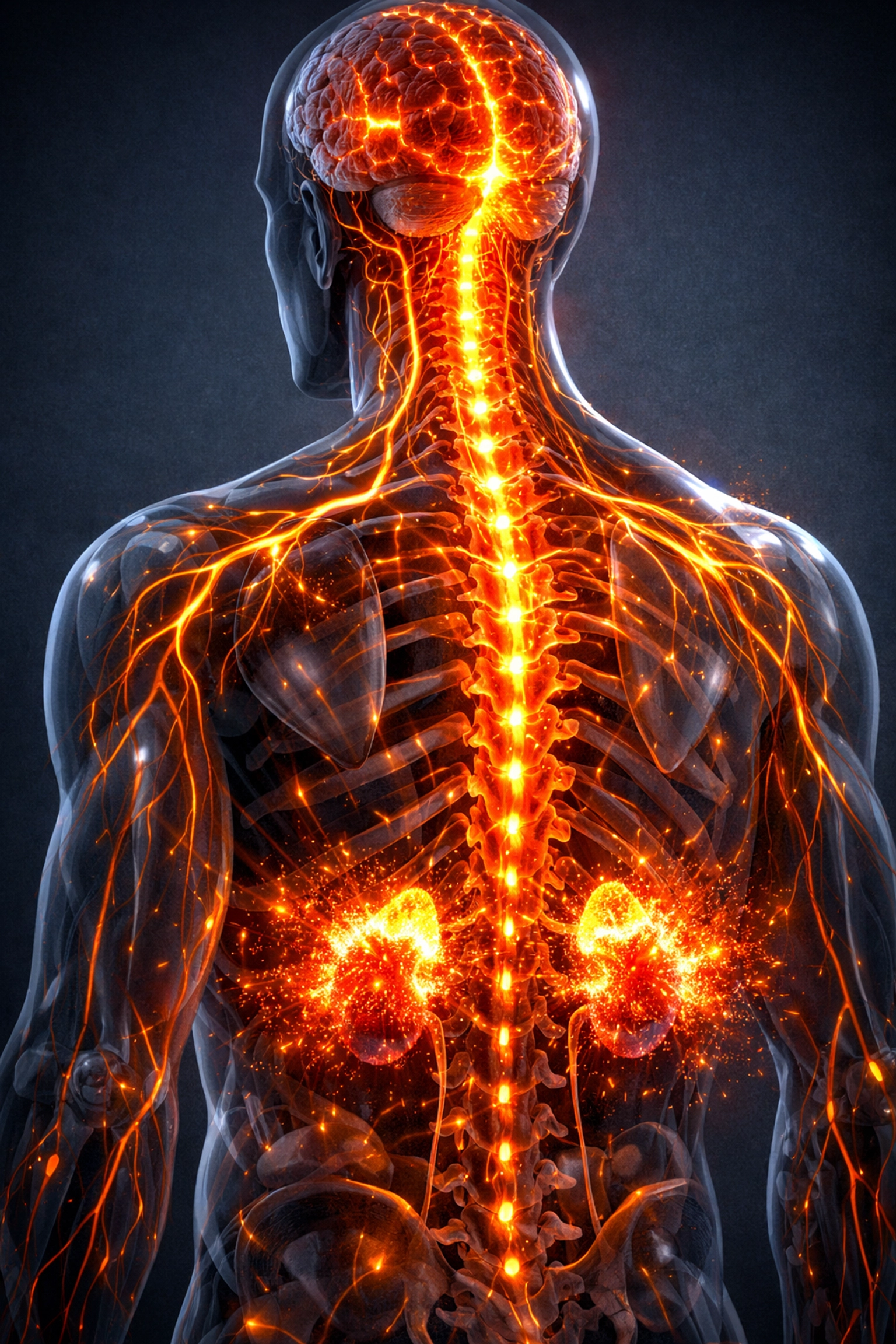
When emotions are repressed over long periods, the Hypothalamic-Pituitary-Adrenal (HPA) axis remains chronically activated. This leads to:
- Systemic Inflammation: Chronic cortisol elevation eventually leads to glucocorticoid resistance, allowing pro-inflammatory cytokines to run rampant.
- Muscle Ischemia: Sustained "micro-tension" in the postural muscles (neck, shoulders, lower back) restricts blood flow, leading to oxygen deprivation in the tissues (ischemia), which the brain interprets as sharp or burning pain.
The Ironic Process Model: Why Hiding Anger Makes Pain Worse
One of the most fascinating developments in 2026 pain psychology is the Ironic Process Model. Research suggests that the mental effort required to suppress negative thoughts actually makes those thoughts more accessible to the subconscious mind.
A study on "trait anger-out" individuals (people who naturally express anger) found that when they were forced to suppress their feelings, their reported pain intensity during physical tasks skyrocketed. By trying to not feel the anger, the brain dedicated more neural resources to the emotional conflict, which "contaminated" the pain processing centers in the brain.
Anger vs. The Nervous System
Anger is a high-energy emotion. When it is repressed, it often manifests in specific ways:
- Tension Headaches: Usually linked to "holding one's tongue" or jaw clenching.
- Lower Back Pain: Often associated with the "weight" of repressed responsibilities or financial fear.
- Fibromyalgia: Increasingly viewed as a condition of central sensitization where the nervous system is "turned up" too high due to past emotional trauma.
Distinguishing Structural Pain from Neural Circuit Pain
Before treating pain as emotional, it is vital to distinguish between structural damage and "Neural Circuit Pain" (also known as nociplastic pain). Use the table below to evaluate your symptoms.
Pain Comparison Table
| Feature | Structural/Acute Pain | Neural Circuit (Psychosomatic) Pain |
|---|---|---|
| Trigger | Specific injury (fall, break, cut) | Stressful life events or repressed conflict |
| Consistency | Consistent with certain movements | Inconsistent; moves around the body |
| Duration | Heals within 3–6 months | Lasts years, long after tissues have healed |
| Weather/Time | Often worse with cold/pressure | Often worse during stress or "let-down" periods |
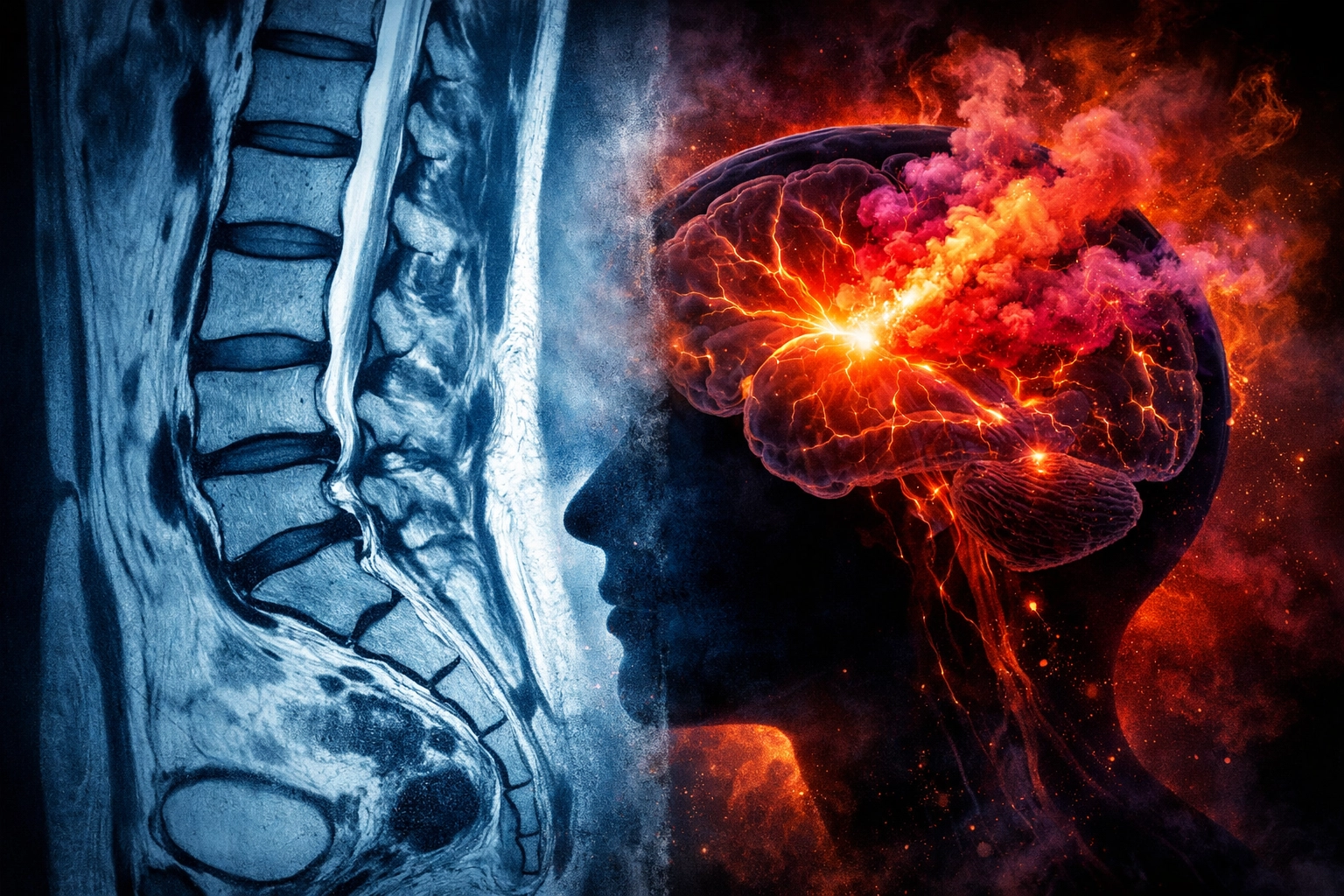
| Imaging (MRI) | Clear correlation between scan and pain | Scans show "normal aging" or unrelated issues |
| Emotional Link | Generally low | High correlation with anxiety or anger |
The Brain’s "Pain Matrix"
The brain processes physical pain and social/emotional rejection in overlapping regions, specifically the Anterior Cingulate Cortex (ACC) and the Insula.
When you experience a "broken heart" or repressed resentment, the ACC lights up exactly as it would if you had broken a bone. In chronic pain patients, the brain creates "pain loops." These are neural pathways that become so efficient at signaling pain that they begin to fire even in the absence of a physical trigger. Repressed emotions act as the fuel for these loops, keeping the ACC in a state of hyper-vigilance.
Somatic Manifestations: Where We Hold Emotion
While everyone is different, clinical observations have shown patterns in where specific repressed emotions tend to settle in the body:
- The Jaw (Temporomandibular Joint): The "silent" reservoir for unexpressed words and anger.
- The Psoas (Hip Flexors): Known as the "muscle of the soul," the psoas is deeply connected to the fight-or-flight response. Repressed fear often leads to chronically tight hips.
- The Shoulders and Upper Back: Often related to the "burden" of emotional labor and the repression of the need for support.
- The Gut: The "second brain" is highly sensitive to repressed anxiety, often manifesting as IBS or non-structural abdominal pain.

2026 Protocols for Releasing Repressed Emotions
If your pain is linked to repressed emotions, traditional physical therapy or painkillers will only provide temporary relief. You must address the source: the nervous system's need to feel safe enough to express.
1. Emotional Awareness and Expression Therapy (EAET)
EAET is a novel approach that moves beyond "talking about" problems. It encourages patients to actually experience the repressed emotion in a controlled environment.
- The Process: Sit in a quiet space, identify a source of resentment, and allow the physical sensation of that anger to rise without judgment.
- The Goal: To show the brain that the emotion is not dangerous, thereby breaking the "danger signal" that causes the pain.
2. Somatic Tracking
Somatic tracking involves observing the pain with a sense of curiosity and safety rather than fear.
- Instead of thinking, "My back is ruined," you think, "I feel a warm, tingly sensation in my lower back, and I am safe."
- This re-evaluative logic helps prune the neural pathways that maintain the pain loop.
3. Therapeutic Journaling (The Pennebaker Method)
Research shows that writing about emotional upheavals for 15 minutes a day can significantly reduce physician visits and pain symptoms.
- The Key: Don't just write what happened. Write how you felt about it, specifically focusing on the raw, "ugly" emotions you wouldn't normally show the world.

The Role of "Secondary Gain" and the Inner Critic
Sometimes, the brain uses pain as a distraction. Dr. John Sarno, a pioneer in this field, argued that the brain creates physical pain to protect us from experiencing overwhelming psychological pain. It is easier to focus on a "bad back" than to face a crumbling marriage or deep-seated childhood trauma.
Furthermore, the "Inner Critic": that voice telling you that you aren't doing enough: acts as a constant stressor. In 2026, we recognize that perfectionism and "goodism" (the need to be liked by everyone) are two of the highest risk factors for developing chronic, emotion-based pain.
Summary: Healing the Whole Self
The connection between chronic pain and repressed emotions is no longer "pseudo-science." It is a measurable, neurological reality. Healing requires a multi-pronged approach:
- Acknowledge that the pain is real (it is not "in your head," but it is being generated by your brain).
- Identify the repressed stressors, particularly anger and the pressure of perfectionism.
- Regulate the nervous system through somatic work and emotional expression.
By addressing the emotional "debt" we carry, we allow our nervous systems to exit the survival state and enter a state of recovery, often leading to the spontaneous resolution of pains that have lasted a lifetime.
Author Bio: Malibongwe Gcwabaza
CEO & Wellness Strategist
Malibongwe Gcwabaza is the founder and CEO of blog and youtube, a platform dedicated to the intersection of high-performance fitness and holistic longevity. With a background in organizational leadership and a deep passion for bio-monitoring and neuro-wellness, Malibongwe focuses on translating complex physiological research into actionable health protocols. His work emphasizes the "Biopsychosocial" approach to health, helping thousands understand that true physical vitality begins with nervous system regulation and emotional clarity. When not leading the team, he explores the latest in VO2 max optimization and longevity science.
About the Author