By 2026, the "biohacking" community has moved past basic supplements and into the realm of precise physiological control. At the center of this movement is breathwork: not as a meditative "vibe," but as a mechanical override for your autonomic nervous system. Your breath is the only part of your nervous system that is both unconscious and controllable. By changing how you breathe, you aren't just taking in oxygen; you are literally hacking your brain’s "gearbox" to shift between high-performance stress and deep cellular recovery.
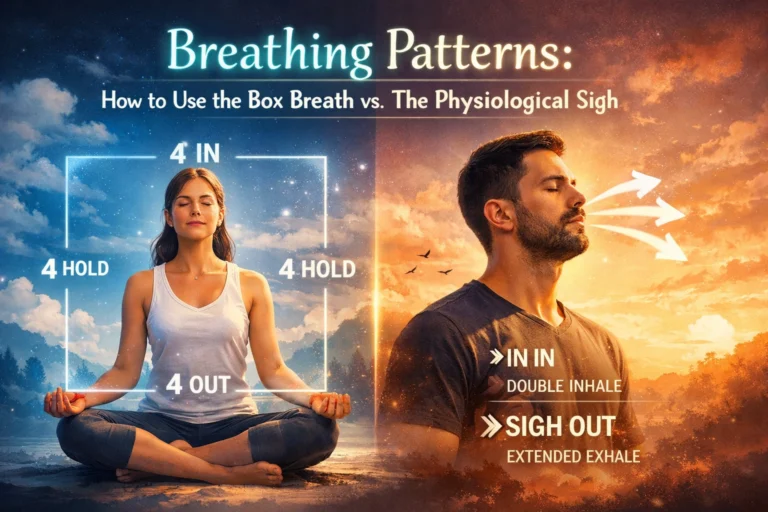
Two techniques have risen to the top of the evidence-based pyramid: Box Breathing and the Physiological Sigh. While both serve to calm the system, they operate on different biological pathways and are optimized for different scenarios. This guide breaks down the mechanics, the peer-reviewed science, and the specific use cases for each.
The Autonomic Gearbox: Why Breath Control Works
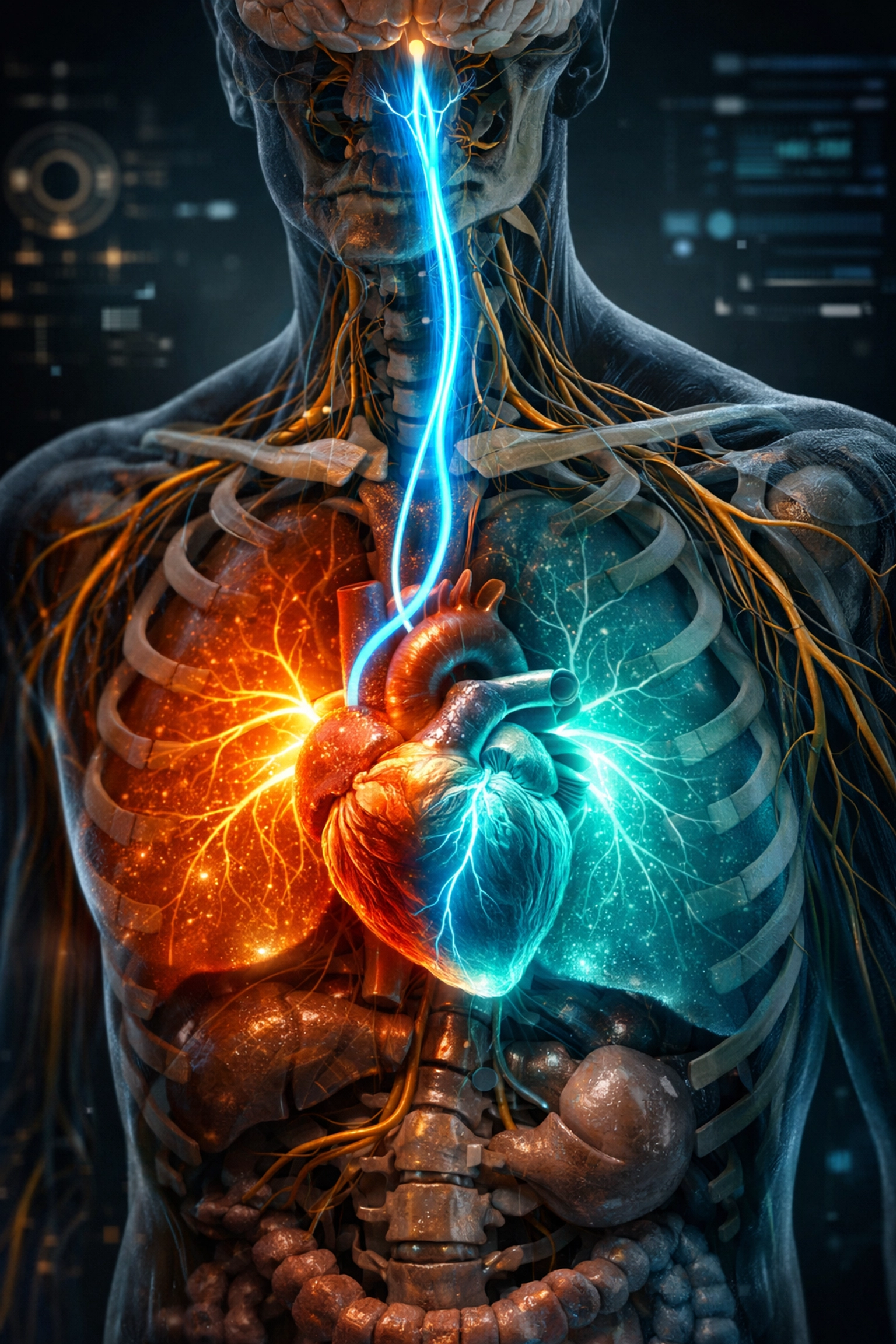
To understand these techniques, you have to understand the Vagus nerve and the "Respiratory Sinus Arrhythmia." When you inhale, your diaphragm moves down, making more room for your heart. This causes the heart to expand slightly and blood flow to slow down. The brain senses this and sends a signal to speed the heart up. When you exhale, the opposite happens: the diaphragm moves up, the heart gets slightly compressed, and the brain signals the heart to slow down.
By manipulating the length and structure of the inhale and exhale, you can manually tilt the scales toward the Parasympathetic (Rest and Digest) or Sympathetic (Fight or Flight) systems.
1. Box Breathing: The "Tactical Steady" Tool
Box Breathing, also known as Four-Square Breathing or Sama Vritti, became famous through its use by US Navy SEALs and elite athletes. It is designed to maintain high performance under extreme pressure.
The Mechanics of the Box
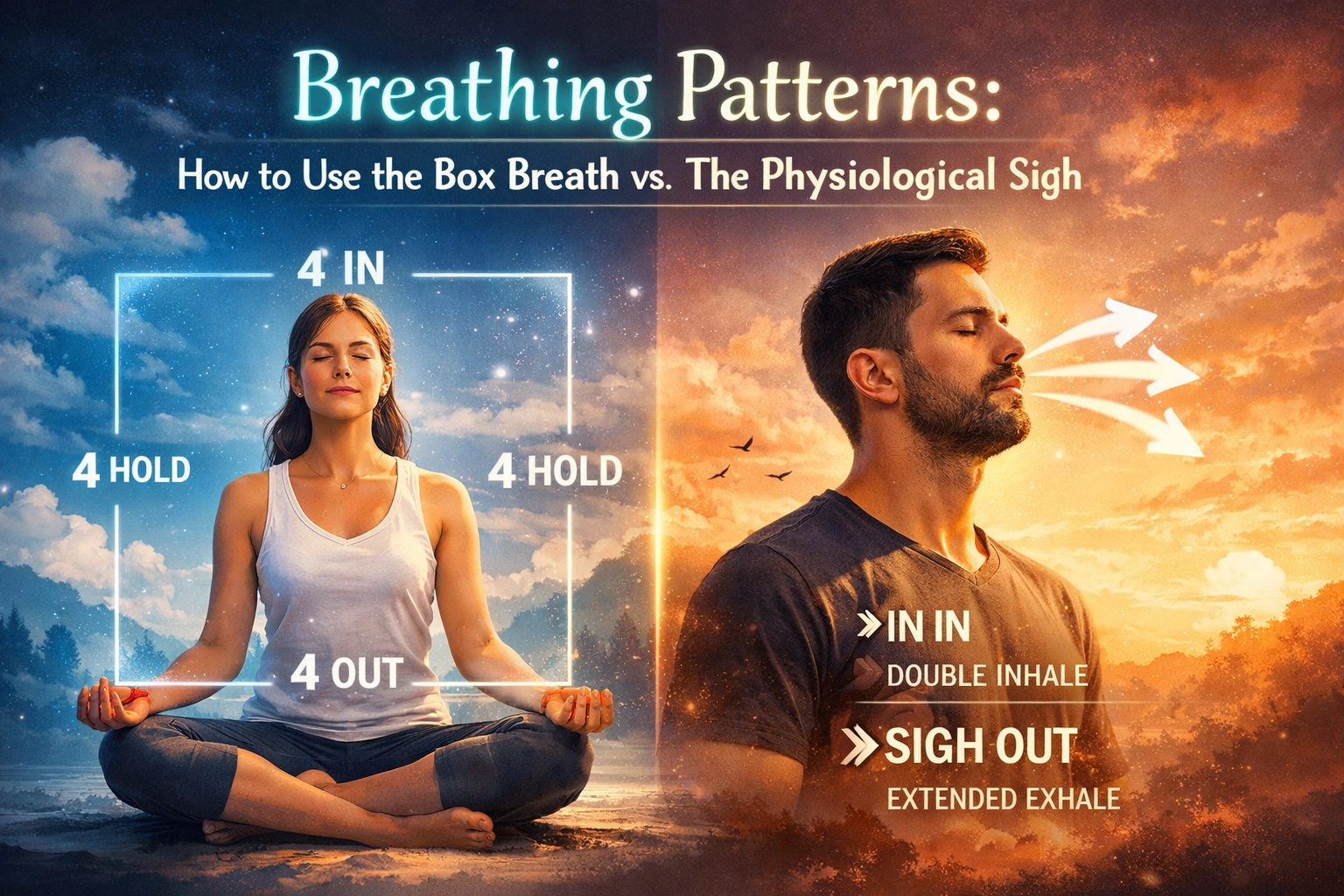
The technique follows a simple 1:1:1:1 ratio.
- Inhale for 4 seconds.
- Hold at the top for 4 seconds.
- Exhale for 4 seconds.
- Hold at the bottom for 4 seconds.
Why the "Holds" Matter
Unlike normal breathing, Box Breathing forces you to hold your breath twice. These "retentions" are the secret sauce.
- The Top Hold: Increases the partial pressure of oxygen in the lungs, allowing for better gas exchange.
- The Bottom Hold: Gently raises the level of Carbon Dioxide (CO2) in the blood. While CO2 is often thought of as a waste product, it is actually the "key" that unlocks oxygen from your hemoglobin so your tissues can actually use it (the Bohr Effect).
Best Use Cases for Box Breathing
- Before a Big Presentation: It keeps you alert but prevents the "shakes."
- During High-Stakes Gaming or Sports: It stabilizes the heart rate without making you drowsy.
- Cognitive Loading: When you need to focus on a complex problem for a long duration.
2. The Physiological Sigh: The "Emergency Brake"
If Box Breathing is a steady cruise control, the Physiological Sigh is your emergency brake. Popularized by Stanford neurobiologist Andrew Huberman, this technique is a naturally occurring pattern that humans (and dogs) do unconsciously to offload excess CO2.
The Mechanics of the Sigh
The Physiological Sigh is a "double inhale" followed by a long, extended exhale.
- Primary Inhale: Take a deep breath through the nose.
- Secondary Inhale: At the very top, take another tiny, sharp "sip" of air to fully expand the lungs.
- Long Exhale: Slowly breathe out through the mouth until your lungs are completely empty.
The Science of Alveoli Expansion
Your lungs are filled with millions of tiny sacs called alveoli. Under stress, these sacs can collapse like a popped balloon (a state called atelectasis). This reduces the surface area available for oxygen-CO2 exchange, causing CO2 to build up in the blood and triggering a panic response in the brain.
The second "sip" of air in the Physiological Sigh reinflates those collapsed sacs. The subsequent long exhale then allows you to dump a massive amount of CO2 all at once. Data from 2023 and 2024 studies suggest that just one to three of these sighs can lower your heart rate and subjective stress levels faster than any other breathing intervention.

Head-to-Head: Box Breathing vs. Physiological Sigh
| Feature | Box Breathing | Physiological Sigh |
|---|---|---|
| Primary Goal | Sustained focus & CO2 tolerance | Rapid stress reduction |
| Difficulty | Moderate (requires counting) | Easy (mechanical) |
| Duration | 3–5 minutes for full effect | 1–3 breaths (30 seconds) |
| Key Biological Driver | Vagal tone & CO2 management | Alveoli reinflation & CO2 offloading |
| Ideal State | "Calmly Alert" | "Instantly Relaxed" |
| 2026 Tech Integration | Best for HRV training | Best for "Stress Alerts" on wearables |
3. Data-Driven Insights: What the Research Says
In a landmark study published in Cell Reports Medicine, researchers compared cyclic sighing (Physiological Sigh), box breathing, and cyclic hyperventilation. The results were clear: Sighing outperformed the others for improving mood and reducing respiratory rate.
However, for those using wearable tech like the Oura Ring or Whoop 5.0 in 2026, Box Breathing showed a more significant long-term impact on Heart Rate Variability (HRV) when practiced daily. This suggests that while the sigh is better for acute stress, Box Breathing is a better "workout" for the nervous system's overall resilience.
4. How to Integrate These into Your 2026 Routine
You shouldn't just do these when you're stressed. You should "train" your nervous system so that these tools are ready when you need them.
The Morning "Nervous System Prime"
Upon waking, perform 5 rounds of Box Breathing. This signals to your brain that you are in control of the day’s upcoming stressors. It provides a "steady-state" foundation for your morning coffee and emails.
The "Micro-Break" during Work
Every 90 minutes, or whenever you feel your shoulders creeping toward your ears, perform two Physiological Sighs. This clears the "cognitive fog" caused by shallow chest breathing and high CO2 levels from sitting at a desk.
The Post-Workout Recovery
After a high-intensity session, your body is in a state of high sympathetic drive. To jumpstart the recovery process (and move into an anabolic state), lay on your back with your legs up a wall and perform 3 minutes of the Physiological Sigh. This is the fastest way to tell your body that the "threat" of the workout is over.

5. Common Mistakes to Avoid
- The "Shoulder Shrug": When inhaling, many people lift their shoulders. This uses "accessory muscles" and actually triggers more stress. Ensure your belly expands outward; keep your shoulders down and relaxed.
- Rushing the Exhale: In both techniques, the exhale is the "relaxation" phase. If you blow the air out too fast, you lose the parasympathetic benefit. Think of breathing out through a thin straw.
- Mouth Breathing: Unless you are doing the final exhale of a Physiological Sigh, your breath should always be through the nose. The nose filters, warms, and humidifies the air, and it also produces Nitric Oxide, a potent vasodilator that improves oxygen delivery.
Conclusion: Mastering Your Internal State
In 2026, wellness isn't about avoiding stress; it’s about managing your response to it. Box Breathing and the Physiological Sigh are the two most potent, science-backed tools in your arsenal.
Use Box Breathing when you need to stay in the pocket: focused, steady, and resilient. Use the Physiological Sigh when you need to dump stress instantly and reset your system. Mastering these patterns is the difference between being a passenger in your own body and being the pilot.
About the Author: Malibongwe Gcwabaza
CEO of blog and youtube
Malibongwe Gcwabaza is a leader in the intersection of high-performance health and digital wellness. With a focus on bio-mechanical optimization and evidence-based longevity, Malibongwe has spent years distilling complex physiological research into actionable strategies for professionals. His mission is to bridge the gap between clinical science and daily habit formation, helping people achieve peak mental and physical states through simple, accessible tools. When he’s not exploring the latest in 2026 health tech, he’s an advocate for "The Centenarian Decathlon": training today for a vibrant, mobile life at 100.
About the Author