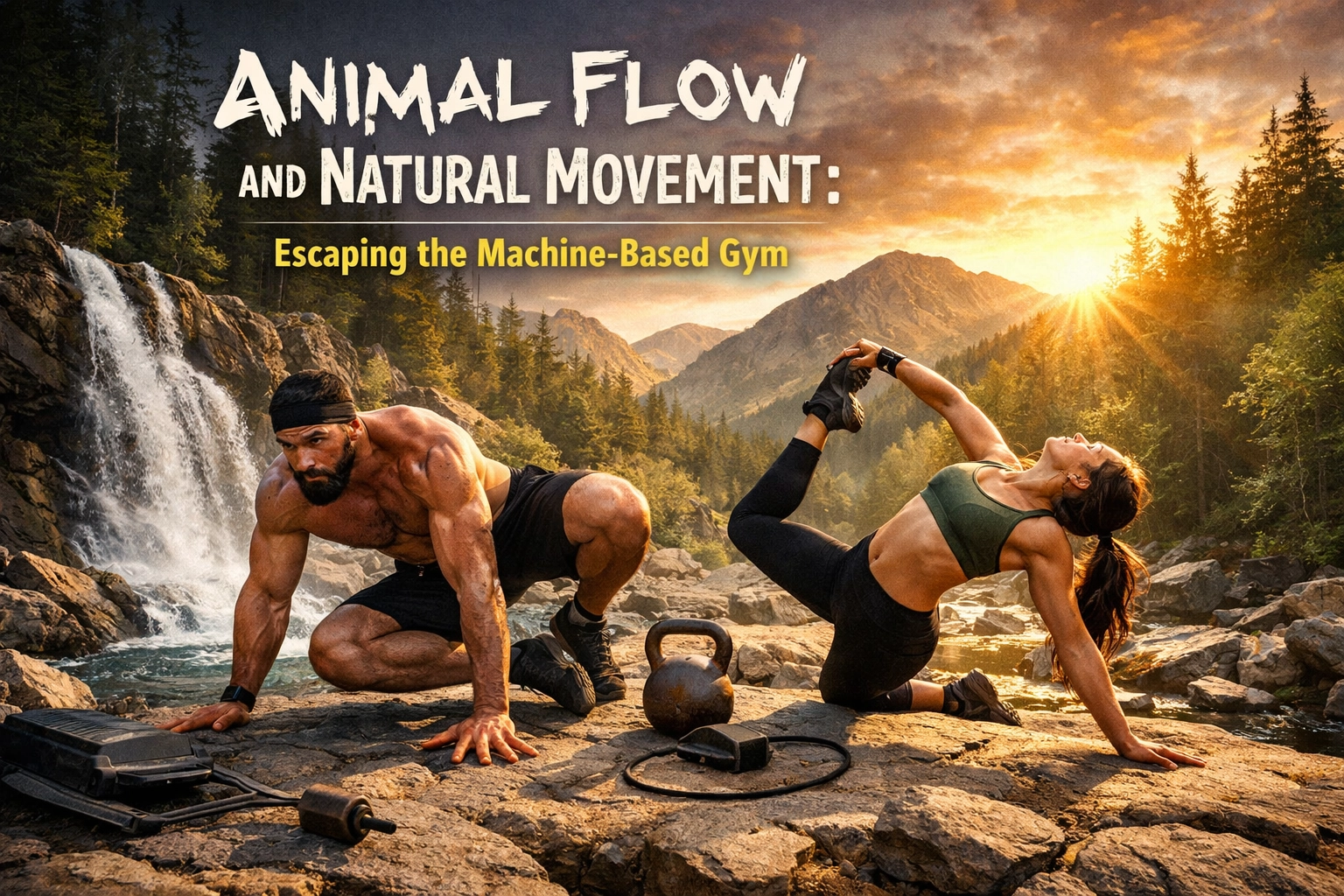
![[HERO] Animal Flow and Natural Movement: Escaping the Machine-Based Gym](https://cdn.marblism.com/iQVGU=BWa53.webp)
For decades, the fitness industry has convinced us that the only way to get fit is to sit on a padded chair and push a lever in a fixed path. We move from our office chairs to our car seats, only to finish the day sitting on a leg press machine. We’ve become "zoo humans": creatures designed for complex, multi-planar movement who are now confined to linear, repetitive motions.
Animal Flow and the broader "Natural Movement" (MovNat) philosophy represent a jailbreak from this machine-based confinement. By 2026, the trend has shifted away from isolated aesthetics toward "functional longevity." It’s no longer just about how big your biceps are; it’s about how well your body navigates the physical world.
This guide dives deep into the science, the system, and the "why" behind crawling, jumping, and flowing your way to a more resilient physique.
The Problem with the "Machine" Paradigm
Standard gym machines operate on the principle of isolation. If you want bigger quads, you do leg extensions. If you want a bigger chest, you do a machine press. While this is effective for hypertrophy (muscle growth), it creates a fundamental disconnect.
Machines stabilize the weight for you, which means your stabilizer muscles: the ones that prevent injury and provide "real-world" strength: stay dormant. Furthermore, machines often force your joints into paths that may not align with your specific skeletal structure, leading to the chronic "wear and tear" many long-term gym-goers experience.
Machine Training vs. Natural Movement: A Comparison
| Feature | Machine-Based Training | Animal Flow / Natural Movement |
|---|---|---|
| Plane of Motion | Primarily Sagittal (forward/backward) | Multi-planar (rotational, lateral, vertical) |
| Stability | Provided by the machine | Provided by your core and stabilizers |
| Neurological Demand | Low (repetitive, predictable) | High (requires coordination and focus) |
| Equipment | Expensive, stationary machines | Bodyweight / Minimalist |
| Joint Health | Risk of repetitive strain | Improves mobility and "bulletproofs" joints |
| Translatability | Low (isolated strength) | High (improves daily life and sports) |
What is Animal Flow?
Created by Mike Fitch, Animal Flow is a ground-based movement system that combines elements from gymnastics, parkour, yoga, and breakdancing. It isn’t just "acting like an animal"; it is a highly structured discipline centered around six components designed to improve communication between your brain and your muscles.
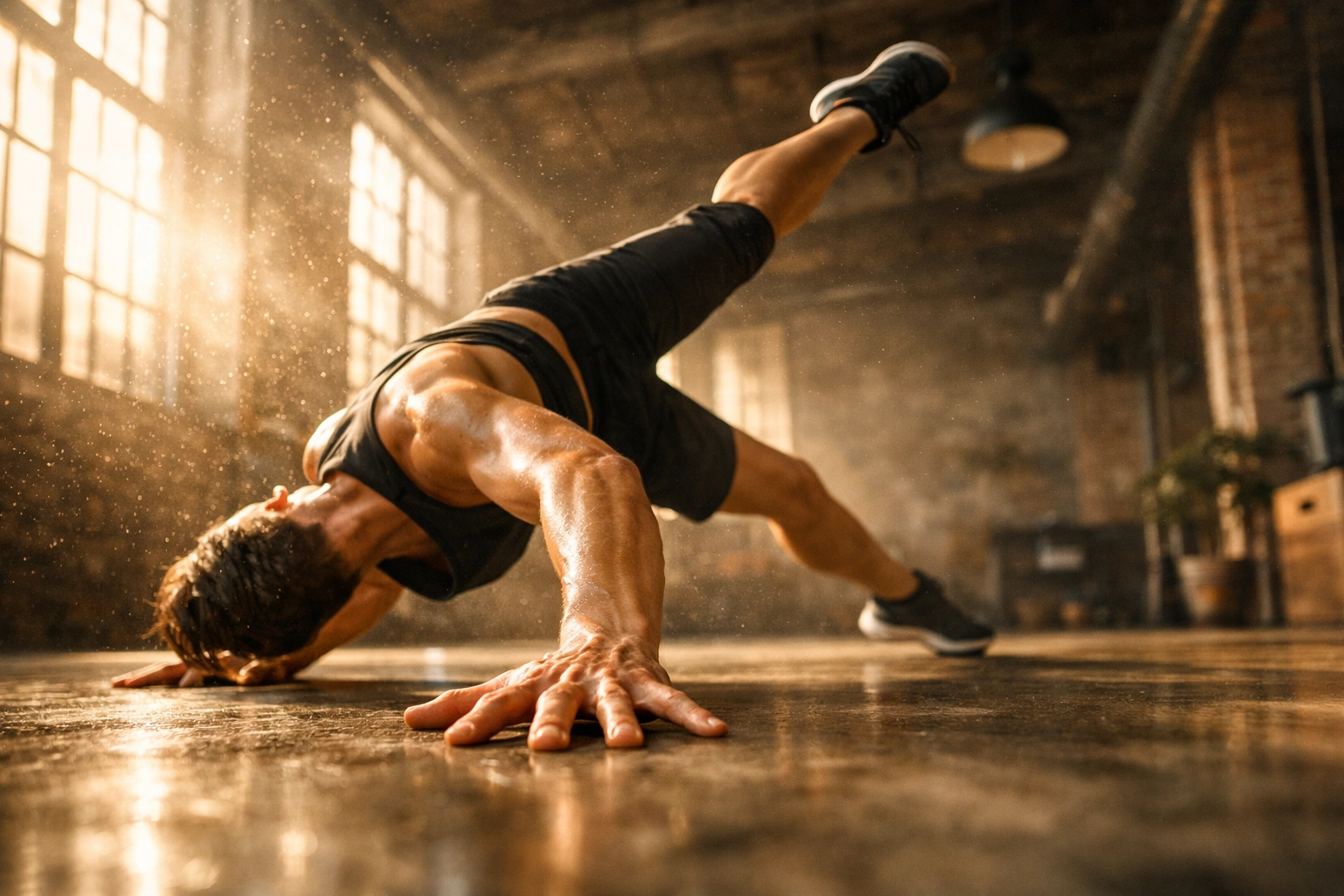
The 6 Components of Animal Flow
- Wrist Mobilizations: Because much of the work is ground-based, preparing the wrists is non-negotiable. This prevents the common "gym wrist" soreness and builds incredible forearm resilience.
- Activations: Static holds like the "Beast" and "Crab." These are designed to "wake up" the kinetic chain and tell the nervous system that it’s time to move.
- Form-Specific Stretches (FSS): These are full-body movements that start in a base position and move through a wide range of motion. Think of them as "stretching with a purpose."
- Traveling Forms: This is where the animal mimicry comes in: Ape, Beast, and Crab walks. These mimic primal locomotion and are deceptively exhausting.
- Switches and Transitions: These are the dynamic movements that link the positions together. They require timing, power, and coordination.
- Flows: When you combine all the above into a seamless sequence. This is the "dance" of natural movement.
The Science: Why Your Brain Loves to Crawl
Natural movement isn’t just a workout for your muscles; it’s a software update for your brain.
1. Proprioception and Vestibular Health
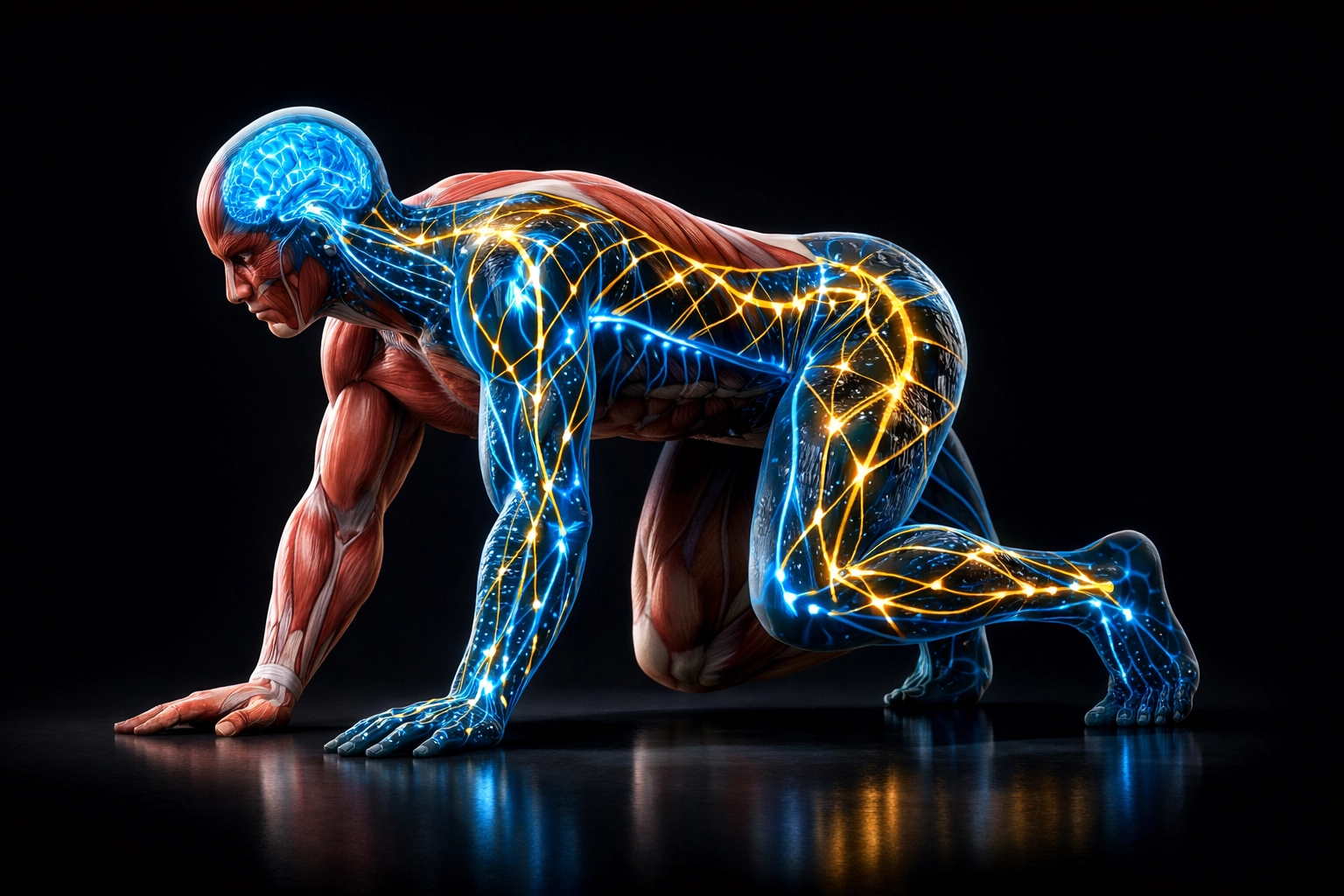
Proprioception is your body's ability to sense its location, movements, and actions. When you are on all fours (quadrupedal movement), your brain receives a massive influx of data from your hands and feet. This strengthens the vestibular system, which governs balance. By 2026, research into "Neuro-Athletics" has shown that ground-based movement can actually help maintain cognitive sharpness as we age.
2. Fascial Integrity
Traditional lifting focuses on muscles. Natural movement focuses on fascia: the connective tissue that wraps around everything in your body. Fascia thrives on varied, bouncy, and rotational movements. Animal Flow helps keep this tissue hydrated and elastic, which reduces the "stiffness" associated with aging.
3. Closed Kinetic Chain Exercise
Animal Flow is almost entirely "Closed Kinetic Chain" (CKC) training, meaning your hands or feet are in a fixed position (the floor) and your body moves. CKC exercises are scientifically proven to recruit more muscle fibers and provide better joint stability than "Open Kinetic Chain" exercises (like a seated leg extension).
How to Start: The 4-Week "Zoo Human" Detox
If you’ve spent the last decade on a treadmill or a bench press, jumping straight into a 15-minute "Flow" might result in some very sore wrists and a bruised ego. Here is how to transition safely.
Week 1: The Foundation
- Focus: Wrist mobility and "Static Activations."
- The Drill: Practice the "Set Beast" and "Set Crab" positions. Hold for 30 seconds each, focusing on keeping your knees only one inch off the ground.
- Frequency: 10 minutes, 4 times a week.
Week 2: Primal Locomotion
- Focus: Moving while maintaining tension.
- The Drill: The Forward Beast Walk and the Lateral Ape. These movements teach your opposite arm and opposite leg to work in harmony (cross-lateral loading).
- Frequency: 15 minutes, 3 times a week.
Week 3: Introducing Transitions
- Focus: The "Underswitch."
- The Drill: Moving from Beast to Crab and back again by pivoting on one hand and the opposite foot. This builds incredible core and shoulder stability.
- Frequency: 20 minutes, 3 times a week.
Week 4: The First Flow
- Focus: Linking 3-4 movements together without stopping.
- The Drill: Beast Walk -> Underswitch -> Crab Reach -> Underswitch -> Beast.
- Frequency: 25 minutes, 3 times a week.
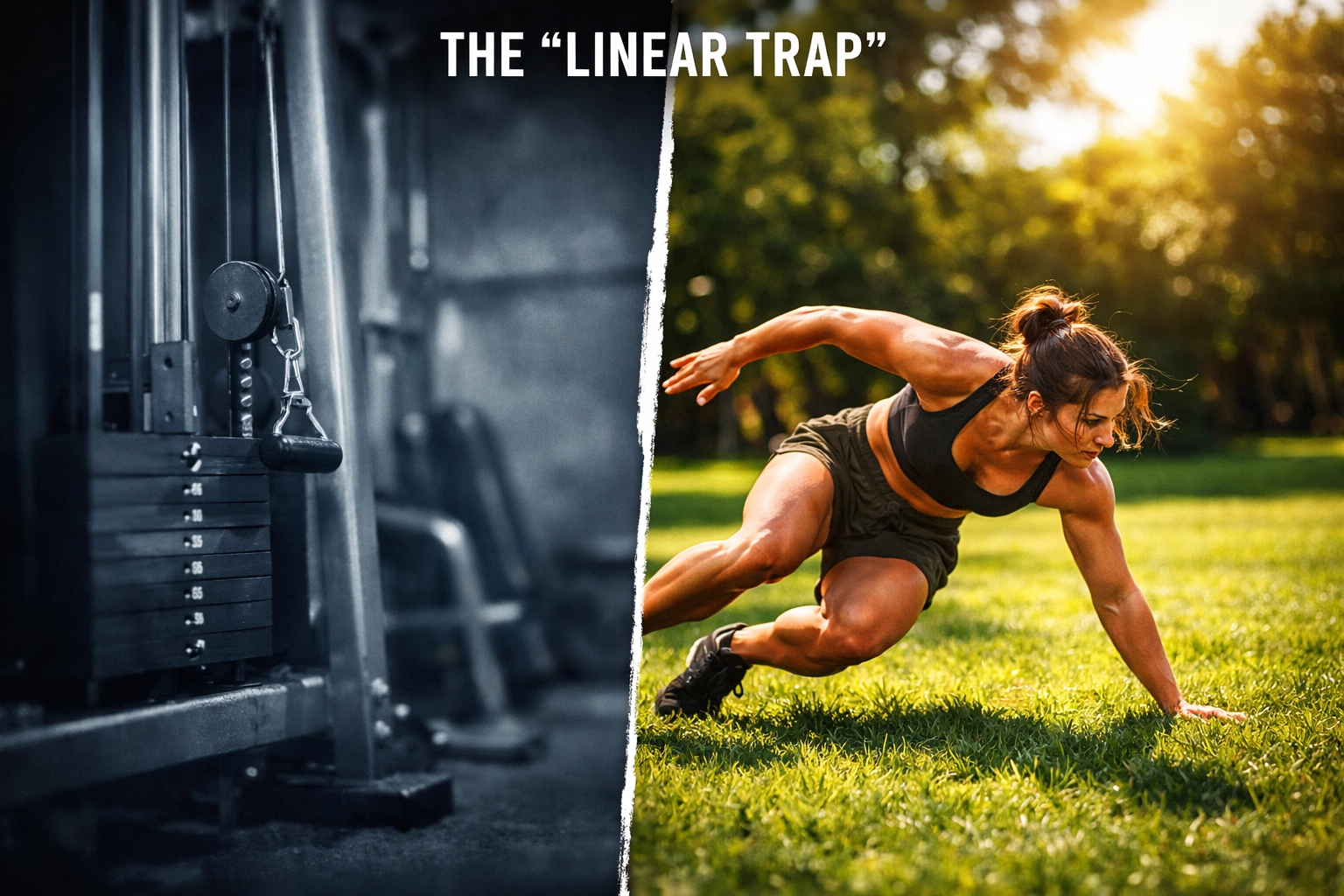
Escaping the "Linear" Trap
Most gym injuries happen because we only train in the Sagittal plane (moving forward and back). But life happens in the Frontal (side to side) and Transverse (rotational) planes. You don’t blow out your back picking up a grocery bag; you blow it out when you pick it up and turn.
Natural movement systems force you into these "weak" planes. When you perform a "Scorpion Reach" in Animal Flow, you are moving through a massive rotational arc that opens the hip flexors and strengthens the obliques in a way a crunch never could.
The 2026 Perspective: Longevity and the "Centenarian Decathlon"
As popularized by longevity experts, the "Centenarian Decathlon" is the idea of training today for the movements you want to be able to do when you are 100 years old.
Can you get up off the floor without using your hands? Can you squat deeply to play with a great-grandchild? Can you catch yourself if you trip?
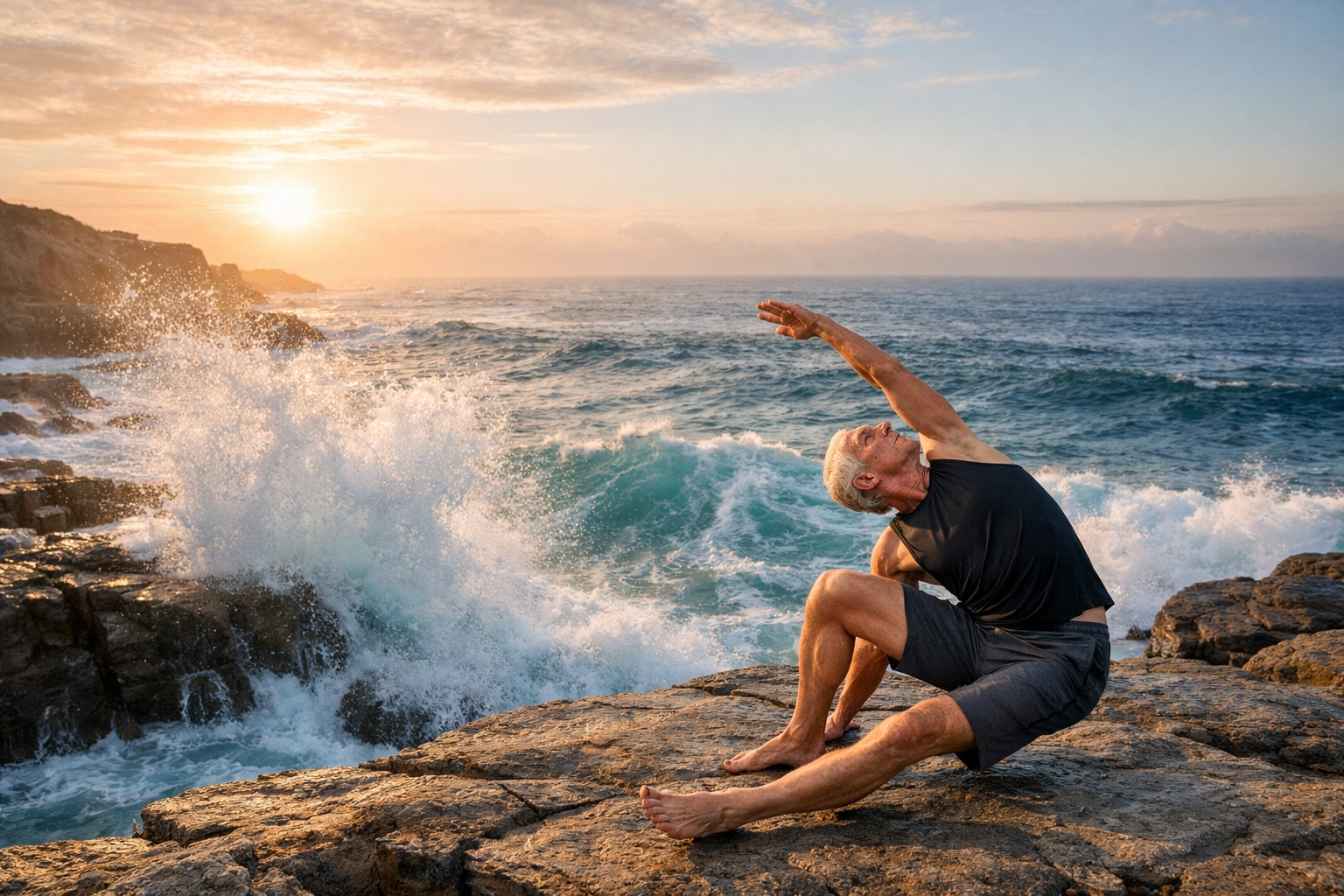
Machine-based training rarely prepares you for these specific needs. Animal Flow, however, is a direct investment in these skills. It builds "functional reserve": the extra strength and coordination that acts as an insurance policy against the frailty of old age.
Practical Tips for Your First Session
- Barefoot is Best: To truly tap into the benefits of ground-based movement, you need the sensory feedback from your feet. Leave the thick-soled running shoes at the door.
- Film Yourself: What feels like a "straight back" often looks like a "mountain" in your first week. Use your phone to check your form.
- Respect the Wrists: Do not skip the mobilizations. Your wrists are likely weak from typing; give them time to adapt to bearing weight.
- Focus on "The Link": The magic of the flow isn’t in the static positions; it’s in the space between them. Move slowly and with intention.
Conclusion: The World is Your Gym
The ultimate goal of escaping the machine-based gym isn't to never lift a weight again: it’s to ensure that the strength you build in the gym is actually usable in the wild. Whether you are a high-level athlete looking for an edge in coordination or a desk worker trying to reclaim your posture, incorporating natural movement is a game-changer.
The floor is the most versatile piece of equipment you own. It’s time to get down on it.
About the Author: Malibongwe Gcwabaza
CEO & Wellness Strategist
Malibongwe Gcwabaza is the founder and CEO of "blog and youtube," a platform dedicated to demystifying high-level health and fitness science for the modern professional. With over 15 years of experience in the wellness industry, Malibongwe focuses on the intersection of longevity, functional movement, and bio-optimization. He is a certified proponent of natural movement philosophies and believes that true fitness is the ability to navigate any environment with grace and power. When he's not optimizing business workflows, you'll find him practicing Animal Flow in the parks of Johannesburg.
About the Author