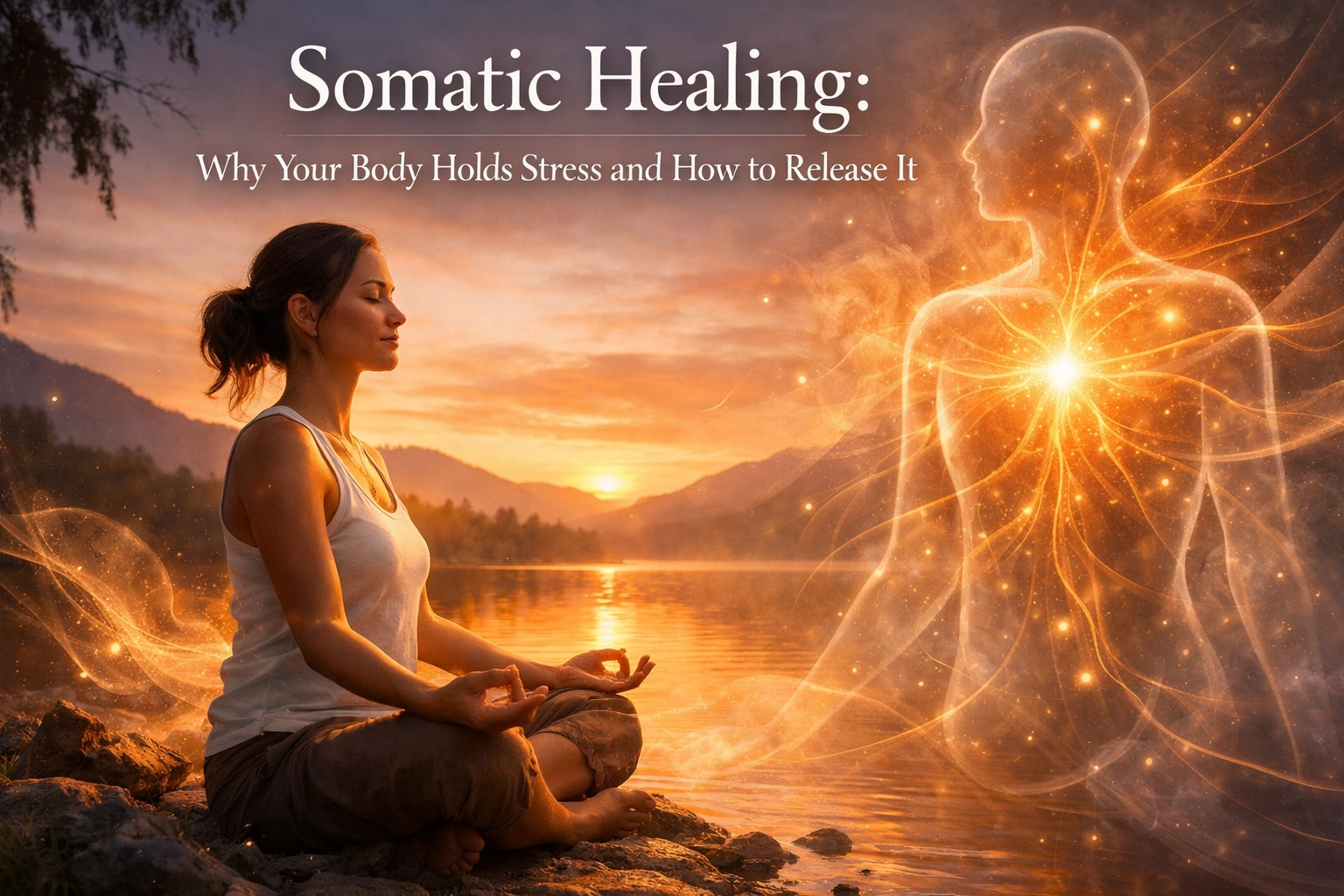
You’ve likely heard the phrase "the body keeps the score," popularized by Dr. Bessel van der Kolk. But in 2026, we’ve moved past acknowledging that stress exists in the body to actively "editing" that score through somatic healing. While traditional talk therapy works from the "top-down" (using the mind to change the body), somatic healing is a "bottom-up" approach. It recognizes that your nervous system often traps survival energy from past stressors long after the actual threat has vanished.
If you’ve ever felt a "weight" on your chest during a deadline, or noticed your jaw is permanently clenched even when you're on vacation, you’re experiencing somatic storage. This guide dives deep into the neurobiology of stored tension and provides a technical roadmap for releasing it.
The Science of Somatic Storage: Why the Mind Isn't Enough
To understand somatic healing, we have to look at the Autonomic Nervous System (ANS). When we face a threat: whether it’s a car swerving into our lane or a passive-aggressive email: our body enters a state of high arousal. This triggers the "Fight, Flight, or Freeze" response.
Ideally, once the threat passes, the body completes the cycle. Think of a gazelle that escapes a lion; it will literally shake its entire body to "discharge" that survival energy before returning to grazing. Humans, however, have evolved to suppress these natural discharge mechanisms. We sit still at our desks, we "keep a stiff upper lip," and we bottle the adrenaline.
The Biological "Freeze" and the Psoas Muscle
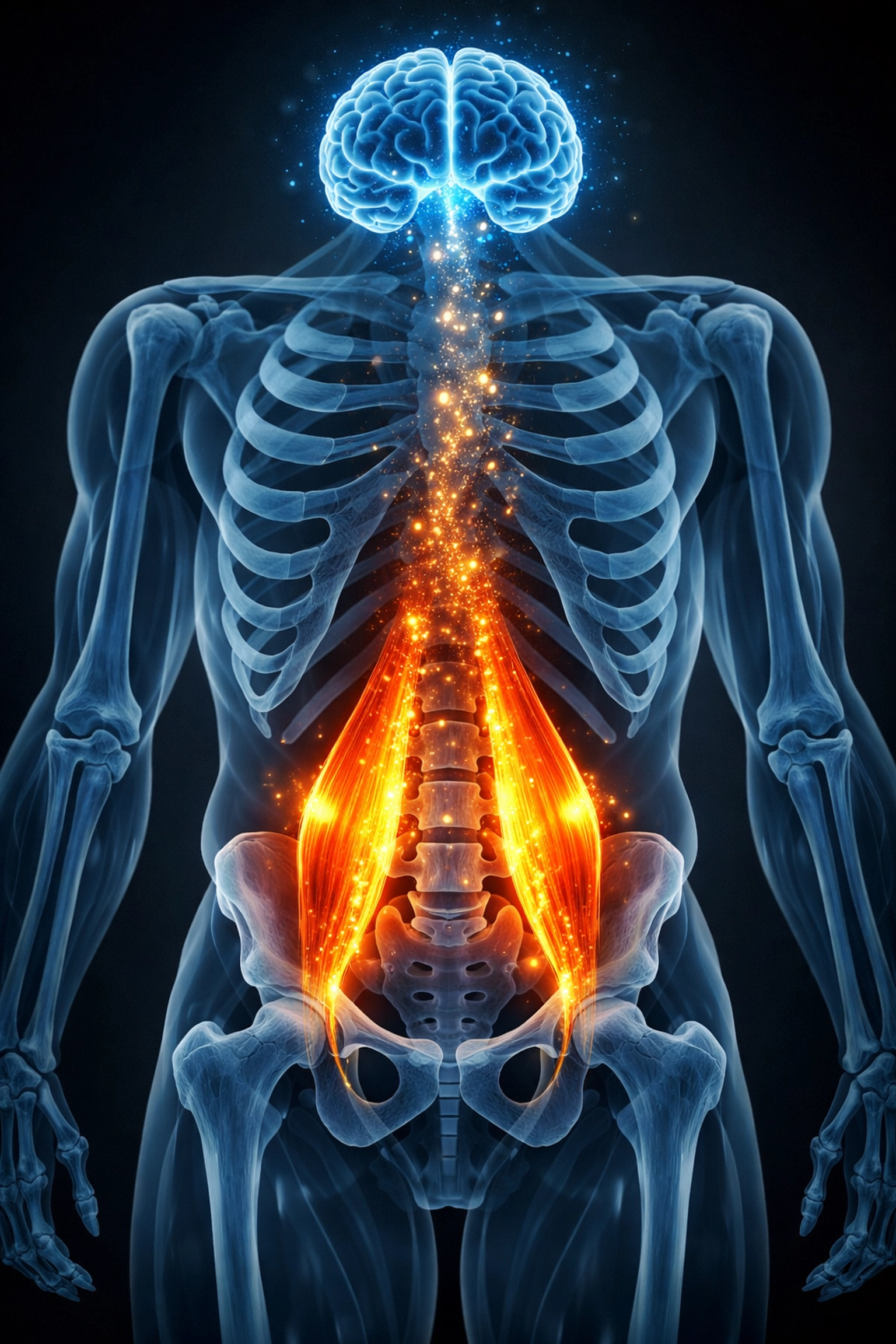
When the fight-or-flight energy isn't used, it doesn't just disappear. It gets "stored" in the form of chronic muscular tension and fascial restrictions. The primary culprit is often the Psoas major, a deep-seated core muscle connecting the lumbar spine to the femur. Because it is the primary muscle responsible for "fleeing" or "curling into a ball" for protection, it is the first to contract under stress. Over time, a chronically tight psoas sends a constant feedback loop to the brain saying, "We are still in danger," leading to elevated cortisol levels and systemic inflammation.
Mapping Your Stress: Where the Body Holds Emotion
Different types of stress tend to manifest in specific anatomical regions. While everyone is unique, clinical observations in somatic psychology have identified common patterns.
Table: Common Somatic Storage Patterns
| Body Region | Associated Stress/Emotion | Physical Symptom |
|---|---|---|
| Jaw (Masseter) | Suppressed anger, "biting your tongue," micro-management stress. | TMJ, teeth grinding, tension headaches. |
| Shoulders/Traps | Over-responsibility, carrying the "weight of the world." | Chronic tightness, restricted range of motion. |
| Chest/Diaphragm | Grief, anxiety, shallow breathing patterns. | Tightness in the ribcage, heart palpitations. |
| Gut/Abdomen | Fear, "gut-wrenching" decisions, lack of safety. | IBS, bloating, digestive stagnation. |
| Hips/Pelvis | Deep-seated trauma, repressed creativity, sexual frustration. | Lower back pain, pelvic floor dysfunction. |
The 2026 Approach: Bio-Monitoring Somatic Release
In 2026, we no longer guess if a somatic exercise is working. High-fidelity wearables now track Heart Rate Variability (HRV) and Galvanic Skin Response (GSR) to provide real-time feedback on nervous system regulation.
A successful somatic release is usually marked by a "parasympathetic shift." You might notice:
- An involuntary deep breath (the "physiological sigh").
- Stomach gurgling (the "rest and digest" system coming back online).
- Heat moving through the limbs.
- Spontaneous yawning or tearing up.
5 Deep-Dive Techniques for Somatic Release
If you want to move beyond basic stretching and actually reprogram your nervous system, these five techniques are the gold standard.
1. Therapeutic Tremoring (TRE)
Developed by Dr. David Berceli, Tension & Trauma Releasing Exercises (TRE) involve a specific sequence of exercises that fatigue the leg muscles to induce a natural "neurogenic tremor." This is the same shaking mechanism seen in animals.
- The Goal: To allow the psoas and deep core muscles to vibrate, which physically "shakes loose" the trapped survival energy in the nervous system.
- How to start: Lie on your back with your feet together and knees open (butterfly pose). Lift your hips slightly until your legs begin to shake involuntarily. Allow the shake to travel up into your pelvis and torso for 5–10 minutes.
2. Body Scanning and Interoception
Interoception is the ability to sense the internal state of your body. Research shows that people with high interoceptive awareness have better emotional regulation.
- The Practice: Close your eyes and move your attention slowly from your toes to your head. Instead of saying "my neck hurts," try to describe the sensation: "I feel a hot, pulsing tightness at the base of my skull." By witnessing the sensation without trying to change it, you decrease the amygdala's "alarm" response.
3. Vagus Nerve Stimulation (The "Vagal Brake")
The Vagus nerve is the "superhighway" of the parasympathetic nervous system. You can manually "hack" this nerve to force your body into a state of calm.
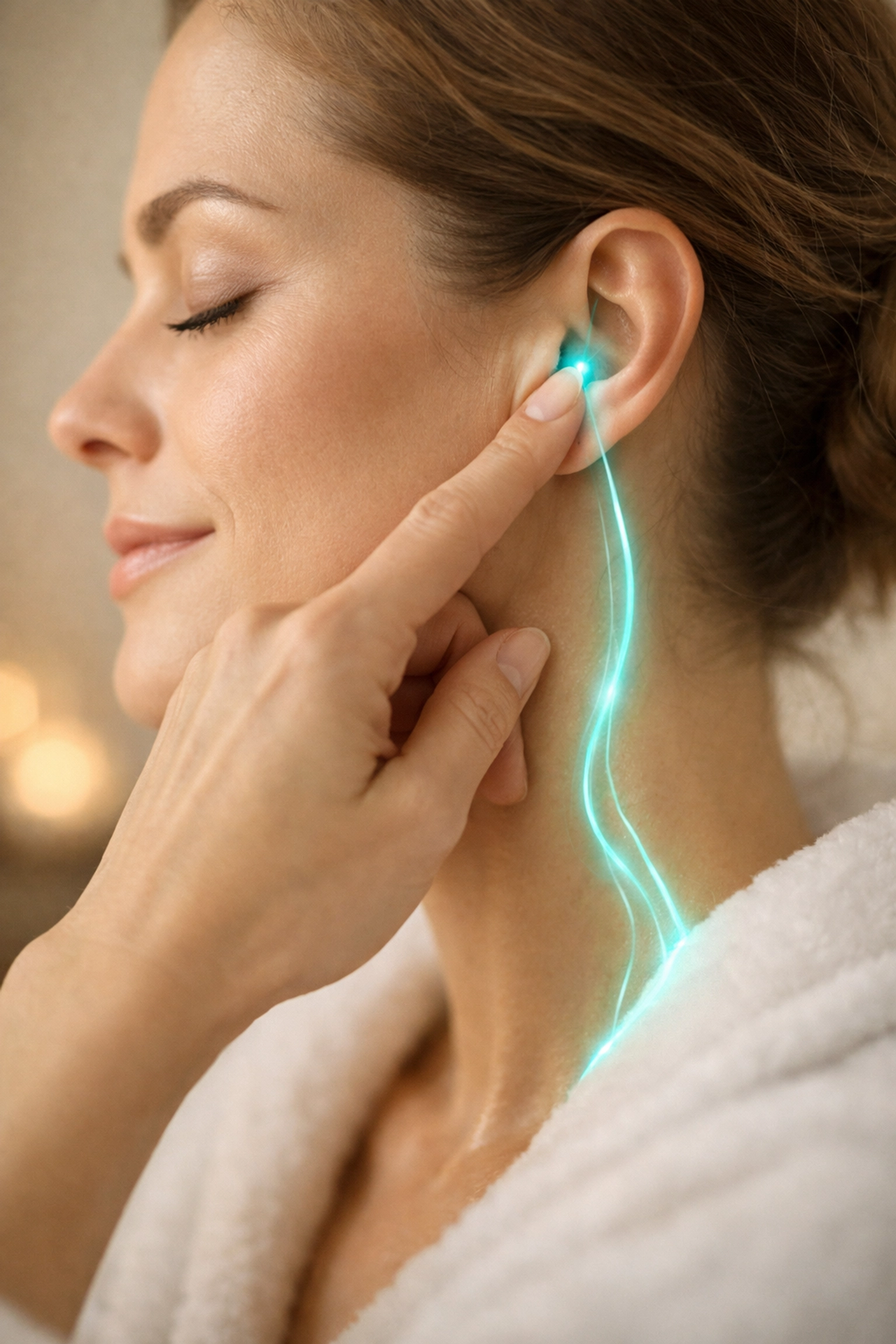
- The Technique: The Auricular Massage. The Vagus nerve has a branch that reaches the outer ear. Using your index finger, gently massage the "concha" (the hollow part of the ear just outside the ear canal) in circular motions.
- Why it works: This sends an immediate signal to the brainstem to lower the heart rate and reduce blood pressure.
4. Pandiculation vs. Stretching
Most people try to fix tension by stretching. However, the brain eventually "resets" the muscle to its tight state (the stretch reflex). Pandiculation is what cats do when they wake up: they actively contract a muscle before lengthening it.
- The Practice: If your shoulders are tight, shrug them up toward your ears as hard as you can for five seconds, then very slowly (taking 10 seconds) release them down. This "re-educates" the sensorimotor cortex on how to fully relax the muscle fiber.
5. Somatic Breathwork: The Physiological Sigh
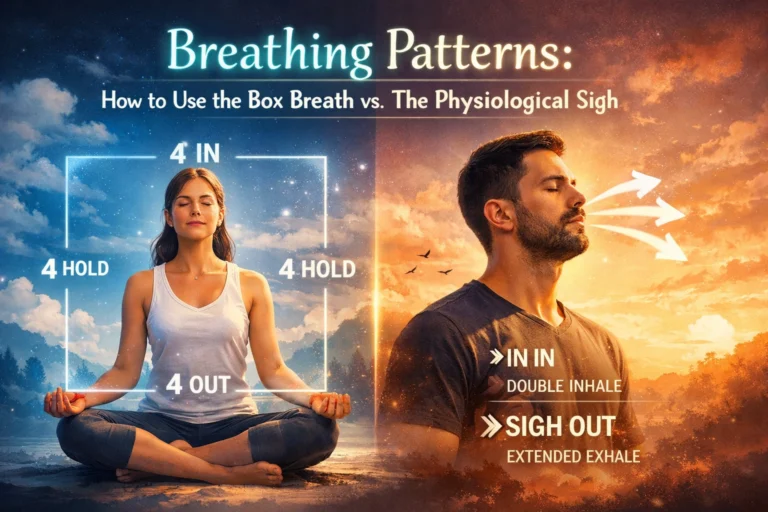
The fastest way to change your blood chemistry and somatic state is through breath. The "Physiological Sigh," popularized by neurobiologist Andrew Huberman, is a specific pattern used to offload carbon dioxide and pop open collapsed alveoli in the lungs.
- The Method: Take a deep inhale through the nose, followed by a second, shorter "sharp" inhale on top of the first to fully inflate the lungs. Then, exhale slowly through the mouth. Repeat 3 times for an immediate somatic reset.
Integrating Somatics into a Fitness Routine
Somatic healing isn't just for therapy; it’s a performance enhancer. A body that is "locked" in a stress response cannot achieve optimal hypertrophy or endurance because it is constantly diverting resources to survival rather than repair.
The "Somatic Warm-Down" Protocol:
- Post-Workout: Instead of rushing to the shower, spend 5 minutes on the floor.
- Rocking: Gently rock your body back and forth or side to side. This rhythmic movement mimics the soothing motions used to calm infants and helps regulate the vestibular system.
- Grounding: Place your bare hands or feet on the ground. Focus entirely on the pressure and texture. This pulls your "proprioception" (the sense of where you are in space) away from internal anxious loops and back to the physical environment.
The Long-Term Impact: Why This Matters for Longevity
Chronic somatic tension leads to "Inflammaging": the acceleration of the aging process through constant low-grade inflammation. By releasing stored stress, you are effectively lowering your systemic load. Clinical studies have shown that consistent somatic practice can improve HRV, which is one of the strongest predictors of all-cause mortality.
Releasing your body's "score" isn't a one-time event; it's a hygiene practice. Just as you brush your teeth to remove plaque, you must move your body to remove the "somatic plaque" of modern life.

Author Bio: Malibongwe Gcwabaza
CEO & Wellness Strategist
Malibongwe Gcwabaza is the CEO of blog and youtube, a leading platform dedicated to the intersection of high-performance fitness and holistic wellness. With over a decade of experience in the health tech and biohacking space, Malibongwe specializes in translating complex neurobiological research into actionable protocols for busy professionals. His work focuses on longevity, nervous system regulation, and the future of personalized health. When he isn't deep-diving into the latest 2026 health trends, he can be found practicing Zone 2 training or exploring the rugged landscapes of South Africa.
About the Author