For decades, the public health message around sleep was simple: get eight hours. But as we move into 2026, the conversation has evolved from "quantity" to "composition." Science now shows that how those hours are structured, your sleep architecture, is the primary determinant of your emotional resilience, impulse control, and mental health.
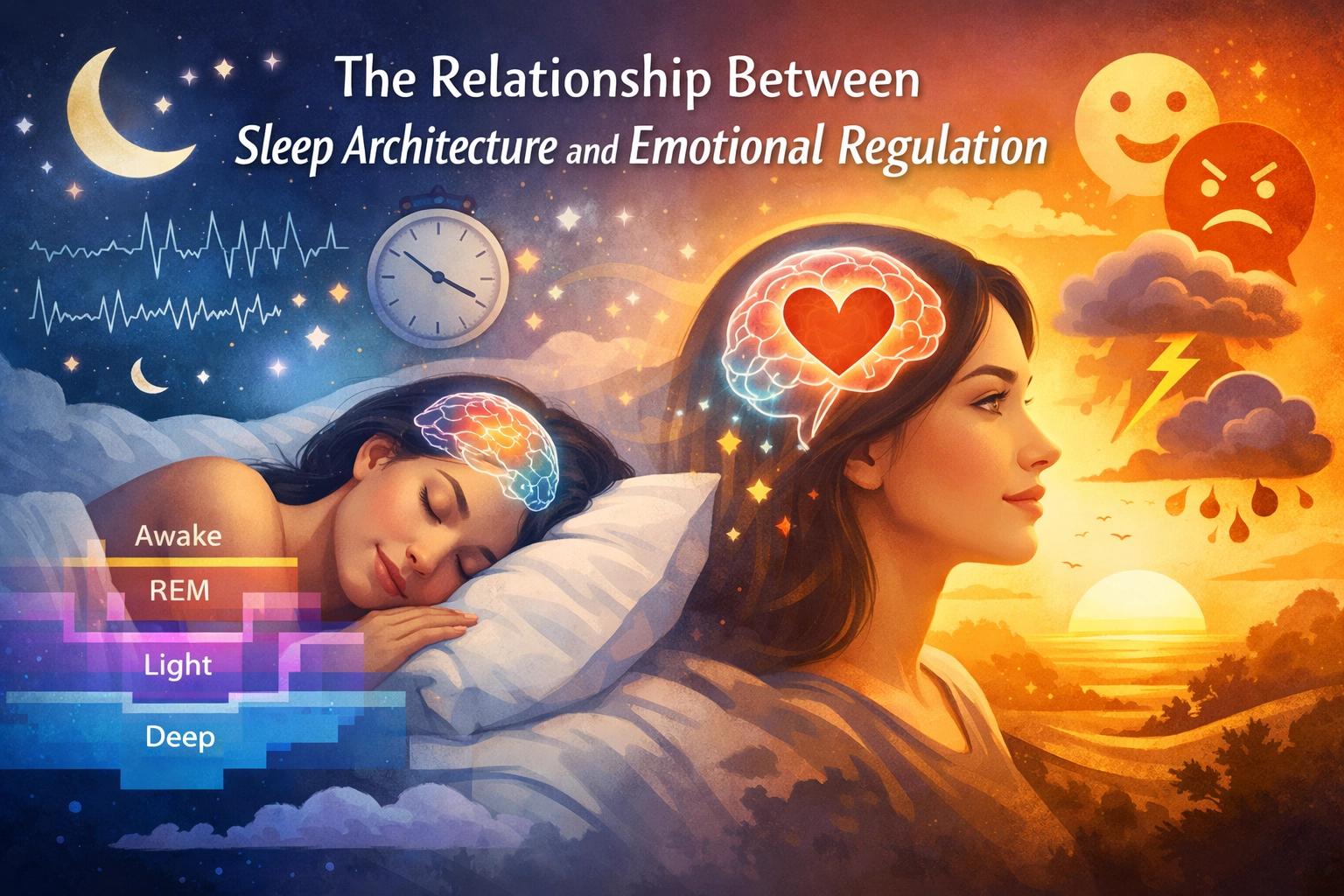
Sleep architecture refers to the cyclical pattern of sleep stages you progress through each night: Light Sleep (N1 and N2), Deep Sleep (Slow-Wave Sleep or SWS), and Rapid Eye Movement (REM) sleep. When this architecture is fractured, even if you are technically "unconscious" for eight hours, your brain loses its ability to regulate emotions. This deep dive explores the neurobiological mechanisms that link sleep stages to your mood and why modern life is systematically dismantling our emotional foundations by disrupting these cycles.
Decoding the Blueprint: The Stages of Sleep Architecture
To understand emotional regulation, we first have to understand the mechanics of a "normal" sleep night. A healthy adult typically goes through four to six sleep cycles, each lasting about 90 minutes. However, these cycles are not identical. The first half of the night is dominated by Deep Sleep (SWS), while the second half is heavily weighted toward REM sleep.
| Sleep Stage | Primary Physiological Function | Emotional/Cognitive Impact |
|---|---|---|
| N1 & N2 (Light Sleep) | Transition and memory filing | Initial sensory gatekeeping |
| N3 (Slow-Wave Sleep) | Physical repair & Glymphatic drainage | Cognitive resilience; stress hormone reduction |
| REM Sleep | Neural integration & Dreaming | "Emotional First Aid"; decoupling emotion from memory |
Disrupting this architecture, whether through a late-night "revenge bedtime procrastination" session or an early alarm, doesn't just make you tired; it surgically removes specific cognitive functions. If you cut your sleep short by two hours in the morning, you aren't just losing 25% of your sleep; you might be losing 60-90% of your REM-rich emotional processing time.

The Amygdala and the CEO: A Brain Under Siege
The relationship between sleep and emotion is governed by two main players: the Amygdala and the Prefrontal Cortex (PFC).
- The Amygdala: This is the brain’s "alarm system." It processes threats and generates emotional responses like fear, anger, and anxiety.
- The Prefrontal Cortex: Think of this as the "CEO" or the "Adult in the room." Its job is to provide top-down regulation, telling the amygdala, "Hey, that person cutting you off in traffic isn't a mortal threat. Calm down."
Research using functional MRI (fMRI) has shown that after a night of fragmented sleep architecture, the functional connectivity between the PFC and the amygdala is severed. Without this "brake" system, the amygdala becomes hyper-reactive. In fact, studies have demonstrated a 60% increase in amygdala reactivity to negative stimuli in sleep-deprived individuals compared to those with intact sleep architecture.
When your sleep architecture is broken, you are effectively operating with an "all-gas, no-brakes" emotional engine. This is why minor inconveniences feel like catastrophes when you haven't slept well.
REM Sleep: The "Overnight Therapy" Session
If Slow-Wave Sleep is for the body, REM sleep is for the soul. One of the most groundbreaking discoveries in recent sleep science is the role of REM as a form of "overnight therapy."
During REM sleep, the brain is the only time it is completely devoid of norepinephrine (the brain's version of adrenaline). At the same time, key emotional centers like the amygdala and hippocampus are highly active. This creates a unique neurochemical environment where the brain can process difficult, traumatic, or stressful memories without the "sting" of the associated stress hormone.
This process is known as "Sleep to Forget, Sleep to Remember." We remember the details of an event, but we forget the visceral emotional charge. When your sleep architecture is disrupted: specifically when REM is suppressed by alcohol, SSRIs, or early wake times: you fail to strip that emotional tone away. You wake up the next day still "carrying" the stress of the previous day as if it just happened.

Slow-Wave Sleep (SWS) and Cognitive Resilience
While REM processes the "feelings," Slow-Wave Sleep (N3) builds the "fortress." SWS is characterized by high-amplitude delta waves. This is the stage where the Glymphatic System: the brain’s waste-management system: becomes ten times more active, flushing out metabolic byproducts like beta-amyloid.
From an emotional standpoint, SWS is critical for:
- Cortisol Regulation: Deep sleep is the primary period where cortisol (the stress hormone) production is inhibited. Fragmented SWS leads to a "leakage" of cortisol into the next day, keeping you in a state of high-alert/low-grade anxiety.
- Systemic Inflammation: SWS suppresses pro-inflammatory cytokines. High inflammation is strongly linked to "sickness behavior," which manifests as irritability, social withdrawal, and depressive symptoms.
The 2026 Perspective: Sleep Architecture as a Biomarker
In 2026, we no longer view mood disorders and sleep disorders as separate entities. Instead, we see altered sleep architecture as a biomarker.
Clinical data now suggests that changes in sleep structure: such as a shortened REM latency (entering REM too quickly) or a significant reduction in SWS: often precede the clinical onset of major depressive disorder or generalized anxiety disorder by weeks or months. By monitoring sleep architecture through high-fidelity wearables and AI-driven analysis, we can intervene before an emotional crisis occurs.
The Bidirectional Loop
It is important to acknowledge that this is a "chicken and egg" scenario. Emotional distress (anxiety) leads to hyperarousal, which prevents the brain from entering Deep Sleep. This lack of Deep Sleep then increases amygdala reactivity, which further fuels the anxiety. Breaking this loop requires a dual approach: addressing the psychological stressors while aggressively protecting the physical architecture of sleep.

How to Optimize Your Sleep Architecture for Emotional Stability
If you want to fix your emotional regulation, you have to stop focusing on "hours" and start focusing on "cycles." Here is the protocol for protecting your neural blueprint:
1. Temperature Manipulation (The 65°F Rule)
Your brain needs to drop its core temperature by about 2-3 degrees Fahrenheit to initiate Slow-Wave Sleep. A room that is too warm will keep you in N1 and N2 (Light Sleep), robbing you of the physical and emotional restoration found in N3.
2. The Alcohol/REM Trade-off
Alcohol is perhaps the most effective "REM-killer" in modern society. Even one drink with dinner can fragment your sleep architecture. While alcohol acts as a sedative (helping you fall unconscious), it is not a sleep aid. It suppresses REM sleep, leading to "REM Rebound" the next night: often characterized by intense, anxious dreams and morning irritability.
3. Light Hygiene and the Suprachiasmatic Nucleus
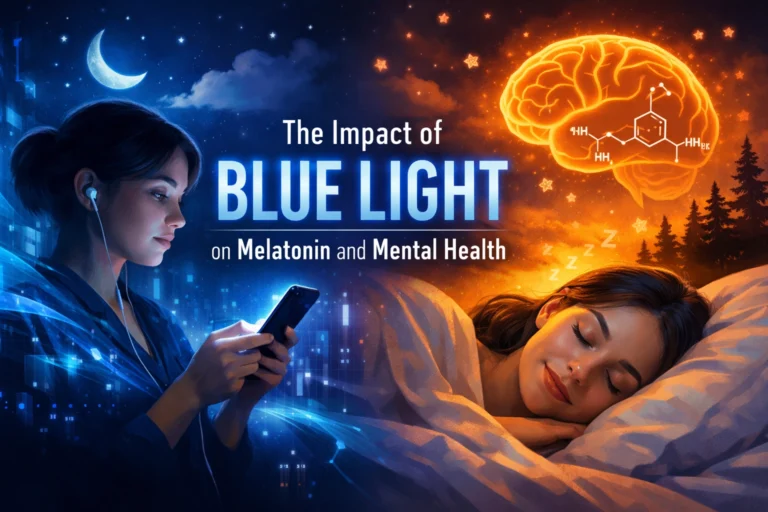
Your sleep architecture is governed by your circadian rhythm. Viewing sunlight within 30 minutes of waking sets a timer for melatonin production 14-16 hours later. Conversely, blue light exposure after 9:00 PM signals the brain to stay in a "high-beta" state, preventing the transition into the deep, delta-wave sleep required for emotional cooling.
4. Magnesium and Micronutrient Support
As of 2026, the use of Magnesium Threonate has become a gold standard for sleep architecture. Unlike other forms of magnesium, Threonate crosses the blood-brain barrier effectively, helping to regulate GABA (the inhibitory neurotransmitter) and facilitating the transition from Light Sleep to SWS.
Summary: The Cost of a Sleepless Society
We are currently living through an era of unprecedented emotional volatility. While political, social, and economic factors play a role, we cannot ignore the biological reality: we are a sleep-deprived species.
When we sacrifice our sleep architecture on the altar of productivity or entertainment, we aren't just losing rest. We are losing our empathy, our patience, and our ability to process the complexities of the human experience. Protecting your sleep architecture is not a luxury; it is a fundamental act of emotional self-preservation.
About the Author: Malibongwe Gcwabaza
Malibongwe Gcwabaza is the CEO of blog and youtube and a leading voice in the 2026 longevity and bio-optimization movement. With a background in executive leadership and a passion for human performance, Malibongwe focuses on translating complex neurobiological research into actionable strategies for the modern professional. His work emphasizes the "Sovereignty of Health," advocating for a proactive, data-driven approach to mental and physical wellness. When he isn't deep-diving into the latest sleep science, he can be found exploring the intersection of AI and personalized medicine.
About the Author